List of 500+ Accommodations and Strategies for your IEP or 504 (Free PDFs)
I need ideas….what does my child need for….what can help my child with….How many times have you asked yourself these questions? You want ideas to submit to the IEP team, but you just don’t know where to start. You asked for it, you got it! I’ve received many, many reader requests for a list of SDIs or strategies. This resource has turned into one of the most widely used posts on this site.
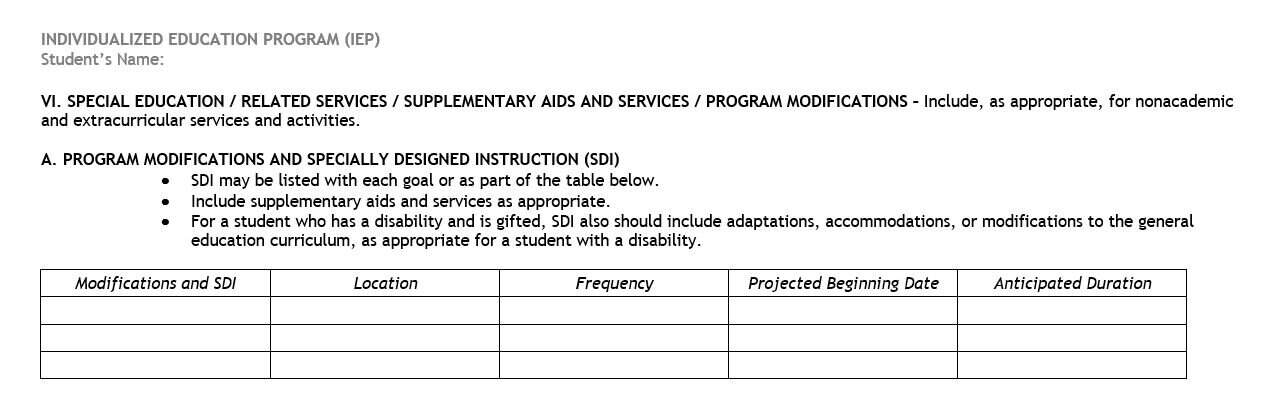
SDI stands for Specially Designed Instruction. It is anything specific and unique to your child. They are determined by their areas of need, to help them access their education. It is based on the evaluations done on your child, to determine their areas of need.

This list is a mix of IEP and 504 accommodations and IEP strategies or SDIs. A child does not learn how to read with accommodations. They need a teaching strategy, which is the specific teaching program or curriculum. It’s essential for all IEP teams to understand the accommodations allow access, but they do not teach.
SDIs are used to help your child achieve the goals listed in the IEP. Most SDIs should be applied across all environments, not in just one class or classroom. They are adaptations or modifications to the regular curriculum. SDIs are in place to help your child reach their IEP goals and objectives.
The goal should always be both:
- accommodate for the missing skill
- while teaching the skill
Not either/or. Both at the same time. Unfortunately, this is one of the most common sticking points I see with IEP teams. Schools want to accommodate without addressing the underlying skill deficit. But the student needs access and instruction.
SDI Examples for IEPs
When considering SDI, it’s important to differentiate between instructional changes (SDI) and environmental or procedural supports (accommodations).
SDI for Reading
- Multi-sensory Reading Programs: Using Orton-Gillingham or Wilson Reading System to teach phonics and decoding with a multi-sensory approach.
- Modified Reading Materials: Providing text at a lower reading level while still maintaining grade-level content for comprehension.
- Direct Instruction in Fluency: Teaching specific strategies for reading fluency through repeated readings or timed drills.
- Chunking and Scaffolded Texts: Breaking text into smaller, more manageable sections and explicitly teaching comprehension strategies.
- Structured Word Study: Systematic instruction in morphology (roots, prefixes, and suffixes).
SDI for Math
- Explicit Instruction in Problem-Solving: Teaching step-by-step approaches for solving word problems with visual models or graphic organizers.
- Number Sense Development: Providing direct instruction on foundational math concepts using manipulatives and visual aids.
- Modified Math Curriculum: Breaking down multi-step math problems into discrete steps with direct teaching of each step.
- Re-teaching in Small Groups: Conducting daily or weekly small-group sessions to reteach challenging math concepts.
- Math Fact Strategies: Teaching alternative strategies for memorization, such as touch math or mnemonic devices.
SDI for Social Skills
- Direct Social Skills Instruction: Using role-playing and modeling to teach conversation skills, turn-taking, and perspective-taking.
- Video Modeling: Using pre-recorded videos to demonstrate appropriate social behaviors in various settings.
- Social Narratives: Creating personalized stories that outline social expectations and appropriate responses in specific situations.
- Peer Coaching Programs: Structured activities pairing the student with a peer for guided practice in social interactions.
- Self-Monitoring Techniques: Teaching students to use checklists or visual aids to reflect on their social interactions.
SDI for Behavior
- Functional Behavior Skills Training: Teaching replacement behaviors through explicit instruction based on the student’s behavior plan.
- Self-Regulation Instruction: Teaching students specific strategies to recognize and regulate their emotions, such as Zones of Regulation.
- Behavioral Modeling: Providing direct teaching and practice for expected behaviors in different settings (e.g., transitioning between classes).
- Structured Behavior Interventions: Implementing teaching sequences to address skills like waiting, requesting help, or problem-solving conflicts.
- Individualized Visual Schedules: Explicitly teaching the student to follow and adapt to a personalized daily schedule.
SDI for Executive Functioning
The differences between an accommodation and an SDI can be subtle. Think of it this way– you can either tell a kid to “use a graphic organizer” or you can teach them how to use a graphic organizer. You could insert almost any accommodation in for the graphic organizer.
As an advocate, I see a lot of accommodations being granted to students, but they have no idea how to implement them. And, that’s the problem.
- Task Analysis Instruction: Teaching students to break larger tasks into smaller, manageable steps with explicit guidance.
- Time Management Strategies: Using timers, calendars, and direct instruction to plan and complete assignments.
- Goal-Setting and Reflection Skills: Teaching students to set realistic goals, track progress, and reflect on their work.
- Organization Instruction: Teaching how to use color-coded folders, binders, or digital tools to organize materials and assignments.
- Memory Aids and Chunking: Direct instruction in using mnemonic devices, visual organizers, or breaking tasks into smaller parts.
Understanding SDI is essential for parents advocating for their child’s IEP. Unlike accommodations, which change how a student accesses learning, SDI modifies how instruction is delivered to meet the child’s unique needs.
Student Sensory Accommodations
I have a 4-page list at the bottom of this post, of just sensory accommodations for an IEP. This is just a screenshot of one page, just to give you an idea.
- give sensory breaks-have child carry down attendance sheets or just a few envelopes down to the office to allow for movement
- timed bathroom breaks (every 60, 90 120 minutes)
- awareness of sensory issues–smells, sounds, lighting; adjust as appropriate
- scheduled sensory breaks
- Add a Sensory Diet

Student Classroom Accommodations
- Access to a quiet area to complete work or take tests
- Tests or directions read aloud to the student
- Preferential seating (near the front, near instruction, or in a preferred visual field)
- Preferential seating away from distractions (windows, doors, speakers, high-traffic areas)
- Preferential seating to support hearing or audio access
- Extended time to complete assignments, tests, or reading tasks
- Early dismissal from class to allow extra time to get to lockers or the next class
- Identify and reduce distractions in the classroom environment
- Opportunities for practice and repetition before independent work or assessments
- A “cool-off pass” or break card allowing the student to leave class briefly to regulate with a designated staff member
- High-contrast materials and reduced visual clutter in instructional materials
- Structured classroom routines and predictable schedules
- Structured seating arrangements to support attention and engagement
- Access to a resource room or learning support room when needed
- Adapted lunch environment to reduce sensory stressors
- Adapted recess or structured recess activities led by an adult to support peer interaction
- Recess and group activities aligned with IEP goals
Student Accommodations for Difficult Transitions
- Visual cues in hallways to help guide the student to the correct classroom, cafeteria, or other locations
- Scheduled breaks or personal time-out to regroup and prepare for transitions
- Advance notice of transitions between activities or classes
- Time warnings before transitions (for example, 5-minute and 2-minute reminders)
- Extra time for transitions between classes or activities
- A visual daily schedule posted on the board or displayed digitally for students to reference
Language-Based Accommodations
- Use clear, concise instructions that match the student’s ability level
- Break verbal instructions into smaller steps (“chunking”)
- Give one instruction or question at a time if the student struggles with multi-step directions
- Allow processing time (for example, 5–10 seconds) after giving instructions or asking a question
- Speak at a slower pace when giving directions
- Use literal, direct language and avoid sarcasm, idioms, or implied meanings
- Explain metaphors, idioms, or double meanings when they occur in instruction
- Use simple prompts and concise verbal cues
- Limit open-ended questions if the student has difficulty responding to them
- Limit the number of oral questions to what the student can reasonably manage
- Use “First…, then…” language to clarify expectations and sequencing
- Provide direct feedback to the student in an appropriate and supportive setting
- Allow text or material to be read aloud when needed
- Incorporate hands-on or activity-based learning when possible
People and Peer-Based Accommodations and Interventions
- Use a pre-arranged signal or cue between teacher and student to communicate reminders or redirection privately
- Encourage—but do not require—eye contact, as forcing eye contact may disrupt the student’s processing
- Implement a buddy system during unstructured times (recess, lunch, transitions)
- Provide peer tutoring or peer support when appropriate
- Use peer modeling to demonstrate appropriate play, interaction, and classroom behavior
- Provide structured social skills groups for practicing communication and interaction skills
- Create opportunities for the student to practice self-advocacy
- Use role-playing activities to practice social situations and problem solving
- Practice role-playing with both successful and challenging scenarios to troubleshoot responses
- Pair the student with a peer or adult before introducing new tasks or activities
- Encourage cooperative games and activities rather than competitive win/lose formats
- Provide facilitated or supported social interaction during recess, lunch, or other breaks
- Offer disability awareness or education sessions for peers when appropriate
- Use social stories or videos demonstrating social interactions, followed by discussion or explanation
Behavior Accommodations
- Provide frequent positive reinforcement for desired behaviors
- Intersperse preferred and non-preferred tasks to maintain engagement
- Use a task strip or visual task sequence with a preferred activity at the end
- Use an agenda checklist with scheduled check-ins with a preferred staff member
- Provide structured check-ins with a trusted adult throughout the day
- Implement a buddy system during unstructured times (recess, lunch, transitions)
- Provide peer tutoring or peer support when appropriate
- Use peer modeling to demonstrate appropriate play, interaction, and classroom behavior
- Provide structured social skills groups for practicing communication and interaction
- Create opportunities for the student to practice self-advocacy
- Use role-playing activities to practice social situations and problem-solving
- Role-play both successful and challenging scenarios to troubleshoot responses
- Pair the student with a peer or adult before introducing new tasks or activities
- Encourage cooperative games and activities rather than competitive win/lose formats
- Provide facilitated social interaction during recess, lunch, or other breaks
- Offer disability awareness or peer education sessions when appropriate
- Use social stories or videos to model social interactions and discuss expected responses
- Use a pre-arranged signal or cue between teacher and student for reminders or redirection
- Encourage (but do not force) eye contact, as forcing eye contact may interrupt processing
Testing and Assignments-Accommodations
- Regular parent–teacher communication (weekly, bi-weekly, or monthly phone calls, emails, or meetings) for progress monitoring
- Chunk homework assignments into clearly defined steps
- Allow the student to write down questions to help with processing and organization
- Break tests into smaller sections completed over time
- Use pre-teaching of key concepts, followed by review or re-teaching after instruction
- Provide alternative ways to complete assignments (typed instead of handwritten, verbal responses, recorded responses, etc.)
- Provide facilitated learning experiences or guided practice when needed
- Allow frequent breaks during testing, including opportunities for movement
- Provide separate or reduced-distraction testing environments (study carrel, small group room, etc.)
- Schedule testing during the morning or other optimal times for the student
- Mask or cover test items so only one question is visible at a time
- Allow flexible or extended deadlines for assignments, as predetermined by the team
- Modify assignments to focus on essential content or learning objectives
- Mix easier and more difficult tasks (for example, an 80/20 ratio) to maintain engagement
- Break large assignments into smaller parts with a visual or written schedule for completion
IEP and 504 Accommodations (Lists and Examples)
- 500 IEP and 504 Accommodations List (Free PDF Download)
- IEP and 504 Accommodations for Distance and Online Learning
- IEP Accommodations for Transitions: 70 Ideas for School, Lunch, and Class Changes
- Extended Time Accommodation Examples
- 25 Homework Accommodations to Implement on a 504 or IEP
Executive Functions and Learning Supports
- Executive Functioning Accommodations for an IEP or 504 Plan (PDF List)
- Working Memory Accommodations: 40 Examples for a 504 or IEP
- List of Time Management Accommodations in IEPs
- 17 Work Completion Accommodations (Preferred and Non-Preferred Tasks)
- Study Skills and Note-Taking: IEP and 504 Plan Accommodations and Strategies
- Improve Focus and Attention: 10 Strategies for Students
- Pomodoro Method Time: 10 Ways to Use It on an IEP
- Task Avoidance Behavior: Replacement Behaviors, IEP Accommodations and More
- 20 Executive Functioning Strategies to Add to Your IEP
- 8 Study Skills Strategies to Include in an IEP
- Note Taking Strategies for Students with IEPs: ADHD, Dyslexia, and Executive Functioning
Behavior and Emotional Supports
- Preventing Behavior Crises at School: What to Add to Your Child’s IEP
- 24 IEP Accommodations and Strategies for Self Regulation in the Classroom
- 48 Accommodations for Depression, Trauma or PTSD to add to a 504 or IEP
- 504 Accommodations for Anxiety: Printable List of Ideas to Add to an IEP or 504 Plan
- School Refusal: IEP Goals and Interventions for School Avoidance
Social Skills and Communication
- 15 Evidence-Based Social Skills Interventions That Actually Work in IEPs
- 9 Perspective-Taking Activities for Kids: IEP-Friendly Tools That Work
- How to Start a Conversation (When It Feels Impossible)
- Teaching Pragmatics: How to Teach Pragmatic Language Skills
Reading, Writing and Academic Skills
- 10 Research-Based Vocabulary Interventions for an IEP or RTI/MTSS
- 20 Common Reading Intervention Programs for Schools (+how to get one on your IEP)
- How to Teach Inference to Kids (Strategies & Accommodations)
- How to Help Students with Dysgraphia
- Structured Literacy: What It Is, Who Needs It, and Why It’s Still Controversial
- Orton Gillingham Curriculum: Does It Exist?
Sensory and Processing Needs
- Sensory Processing Disorder: 50 School Accommodations Ideas
- Auditory Processing Disorder: 35 Practical Accommodations
- Proprioceptive Seeking Behaviors: Practical Strategies to Support this Sensory Need
Disability-Specific Supports
- 504 Accommodations for ADHD: Practical Examples for School Support
- 45 IEP Accommodations for ADHD Impulsivity and Impulse Control
- Cortical Visual Impairment + Your IEP: Access, Accommodations, and Progress
- 30 Accommodations for Deaf and Hard of Hearing Students
- Common 504 Plan Accommodations for Epilepsy and Seizures
- 25 Food Allergy Accommodations to Include in your 504 Plan
- 504 Plan Accommodations for Juvenile Arthritis
- How to Include Medical Needs in an IEP or 504 Plan
- 30 IEP Strategies for PDA and Masking Behaviors
Life Skills and Independence
- 3 Sample Student Toilet Protocols for an IEP (PDF)
- How to Teach Self-Advocacy Skills: Strategies and Accommodations for an IEP
- Community Based Instruction on your IEP
504 Accommodations List PDF
This is an ultimate guide or IEP accommodations list PDF. It is an IEP modifications list, or list of accommodations and modifications PDF for disabled students.
This is the master document (shared with permission) and it’s 90 pages.
You Need IEP Data. You Also Need to Teach.
IEP progress monitoring has to get done, but it shouldn’t take hours. You need a system that’s simple enough to actually use in a real classroom.
Get teacher-created, ready-to-use tools that help you track IEP goals, document meaningful progress, and write progress reports faster, without adding more paperwork to your day. Save time, stay compliant.
Next up is the printable list of sensory accommodations