Welcome!
IEP Tools and Resources that Help Teachers Stay Organized, Compliant, and Confident
This resource hub is designed for teachers and school staff who support students with IEPs. You’ll find practical tools, templates, and guidance to help you collect meaningful data, write clear Present Levels, monitor progress, and stay organized throughout the IEP process, all in ways that fit real classrooms and real schedules.
IEP Goals + Accommodations

Comprehensive IEP Goal Bank
A collection of IEP goals across multiple skill areas, written to support measurable progress, data collection, and defensible documentation. Designed to be adapted, so goals align with individual student needs.

IEP Accommodations Bank
Commonly used accommodations organized by need area, with language that supports access to instruction while remaining aligned with IEP goals and Present Levels.

IEP Interventions Bank
A practical collection of intervention ideas and instructional supports designed to align with IEP goals and data collection—useful for planning, team discussion, and progress monitoring.
Core IEP Tools for Teachers
IEP Data Collection Tools
Simple, classroom-friendly tools to help you collect consistent, meaningful IEP data during instruction—without adding more paperwork to your day effective iep data collection methods can enhance your ability to track student progress efficiently. Utilizing technology can streamline this process, making it easier for educators to focus on individual student needs. By implementing diverse strategies tailored to each learning environment, you can ensure that no significant insights are overlooked.
Present Levels Writing Support
Templates to help you write clear, data-driven Present Levels that accurately reflect student performance and support defensible IEP decisions.
IEP Progress Monitoring Tools
Resources designed to help you track progress over time, identify trends, and clearly document whether IEP goals are being met.
IEP Case Management & Organization
Tools to support documentation, timelines, and IEP organization—so nothing falls through the cracks during the school year.
Learn More About Effective IEP Practice
On-Demand IEP CEC Trainings
Short, focused trainings on data collection, Present Levels, and progress monitoring—created for educators who need practical guidance, not theory.
Don’t IEP Alone Academy
Ongoing support, tools, and professional learning for educators who want a more structured approach to managing IEPs across the school year.
IEP Guidance + Articles
Evidence-informed articles addressing common IEP challenges—written to support decision-making, documentation, and team discussions.
Don’t IEP Alone Podcast
Practical conversations about IEPs, data, documentation, and advocacy—designed to support educators doing this work in real schools, not ideal conditions.
Free IEP Resources for Teachers
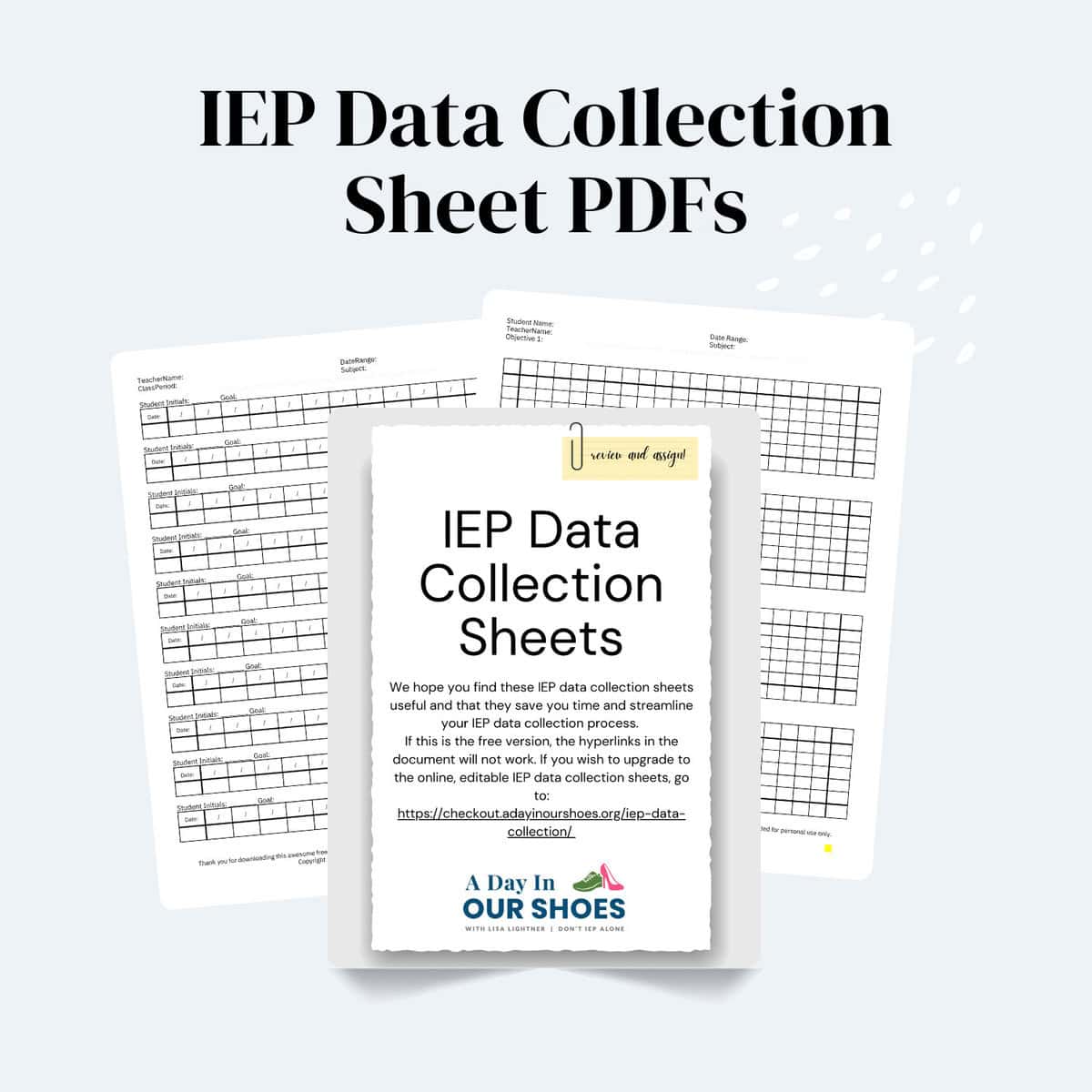
IEP Data Collection Sheets
Get Free PDF IEP Data Collection Sheet templates.
- Single or multiple data points
- Single student or multiple students
- Single or concurrent goals
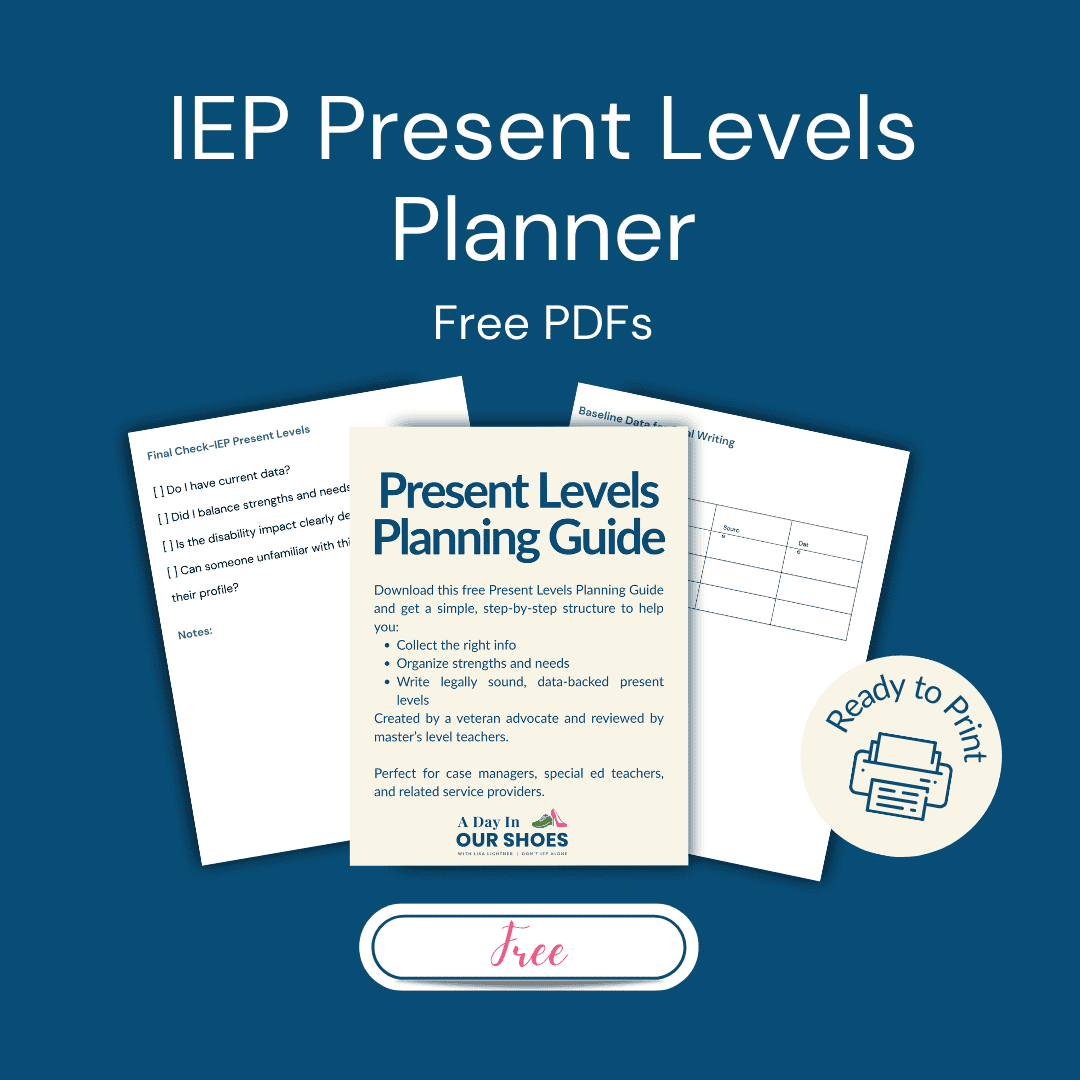
IEP Present Levels Planning Guide
- Designed to help you write Present Levels that are clear, compliant, and goal-aligned
- A simple, fill-in-the-blank structure to help you organize data before you write
- Prompts for strengths, needs, disability impact, and baseline data—so you don’t forget a thing.