State of School Refusal: What Parents and Schools Report
School refusal is a growing concern for families and schools, yet there is little consistent guidance on how it is being identified or addressed in practice. To better understand what is happening on the ground, this report compiles responses from parents and school staff about their experiences with school refusal, IEPs, and school-based supports. As a special education advocate for 16 years, this is now one of the most common reasons that parents reach out to me–school refusal.
Anecdotally, it sure felt to me as if school refusal is increasing, so I decided to poll my readers. I surveyed my email list of more than 87,000 parents and school staff, and hundreds responded. While it’s a small sample of my overall community, the responses were detailed and consistent, and matched what I’ve seen in hundreds of IEP meetings and advocacy cases over the years.
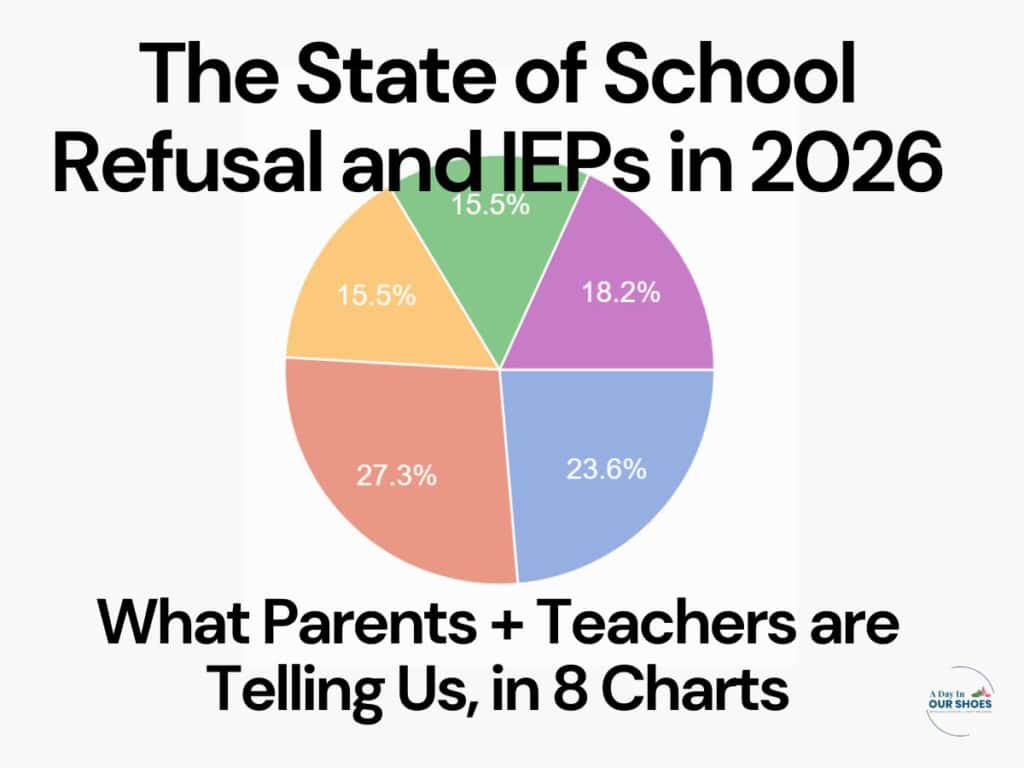
The findings highlight patterns in identification, service delivery, decision-making, and the broader impact on students and families. Rather than speculating, this report reflects what families and educators are actually encountering in real situations, offering a clearer picture of current challenges and gaps.
If you’re new to school refusal, start here.
I am going to share the survey results, but know that it is only half of the survey. The other half of the questions were fill-in-the-blank type responses. I will present those in future posts as solutions or interventions for school refusal, as the group had some really great suggestions. And, while the landscape of school refusal is overall bleak, there were many success stories shared by parents and teachers–and I will be sharing those with you so that you may implement them.
I sent parents and teachers the same survey, and asked that they only answer the questions applicable to them. This was so that IEP parents who also work at schools could do both. I listed above the results if it was a parent or staff response. The completion rate was about 50/50. I used “staff” instead of teacher because I know I have paras and related service providers on my email list.
How many students with school refusal have IEPs?
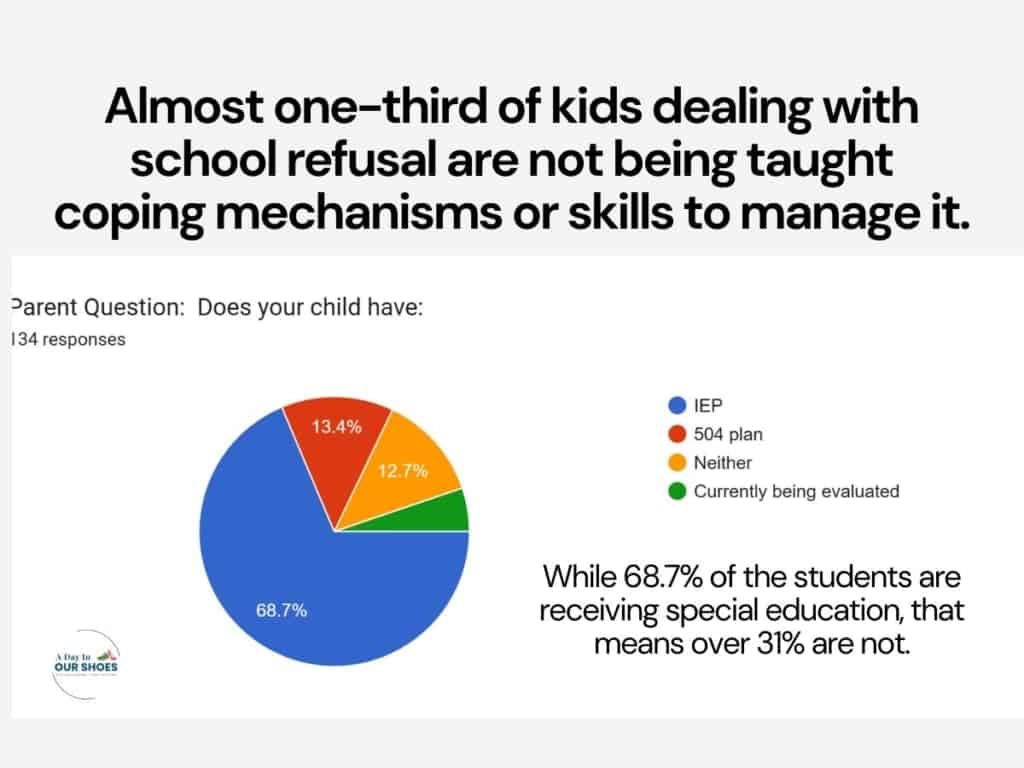
The data shows that while a majority of students experiencing school refusal are receiving special education services (68.7%), a significant portion—over 31%—are not. This suggests that nearly one-third of students struggling with school attendance may not have formal supports in place to address the underlying issues contributing to their refusal. Without structured intervention, including skill-building and coping strategies, these students are likely navigating school-related challenges without targeted support systems.
For students with school refusal, how many days do they miss?
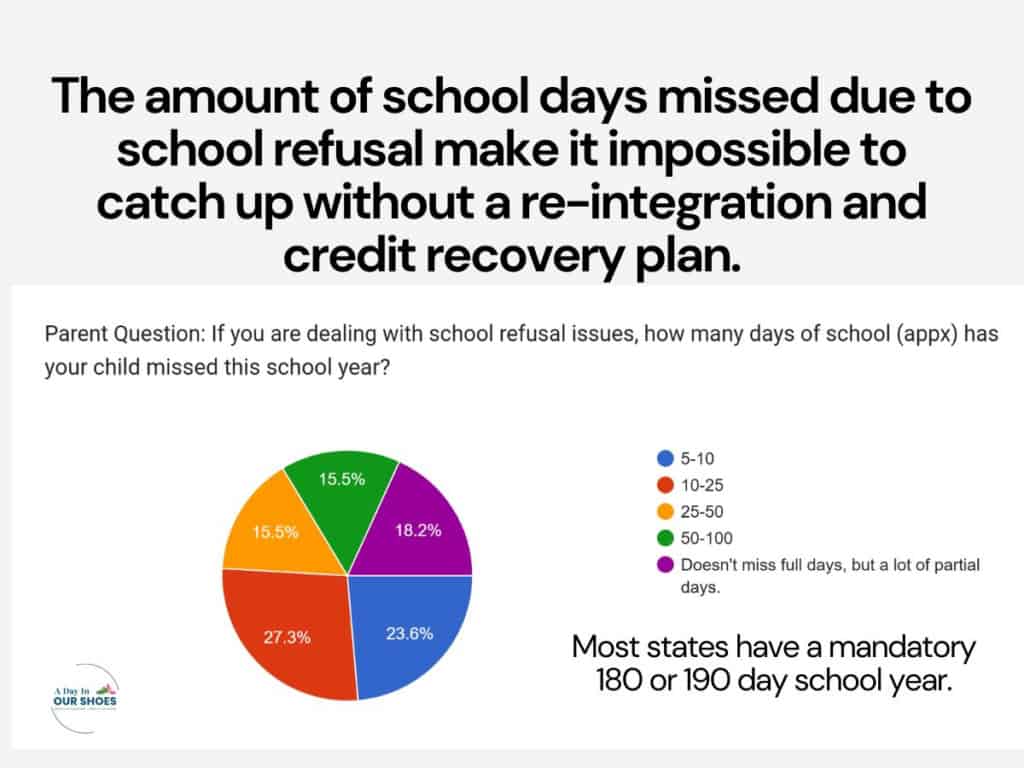
The number of school days missed due to school refusal presents a substantial barrier to academic progress. Responses indicate a wide range of absenteeism, from partial-day absences to extended periods of 25, 50, or even 100 missed days. Given that most states require 180–190 instructional days per year, these levels of absence make it extremely difficult for students to recover academically without intentional reintegration plans or credit recovery options.
Does your school have a plan for school refusal?
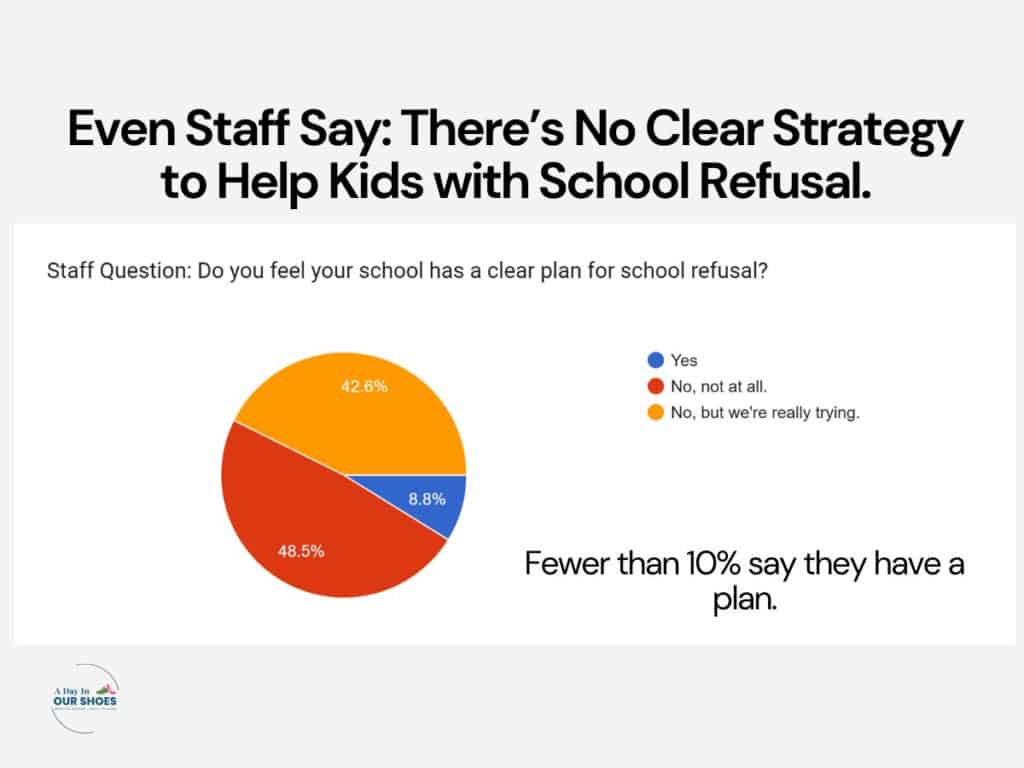
Staff responses indicate a lack of clear, consistent strategies for addressing school refusal. Fewer than 10% report having a defined plan in place, while the majority indicate either no plan or uncertainty. This reflects a broader systems-level gap, where schools may be responding to individual cases without established frameworks or protocols to guide intervention and support.
Parents Ask for Help with School Refusal
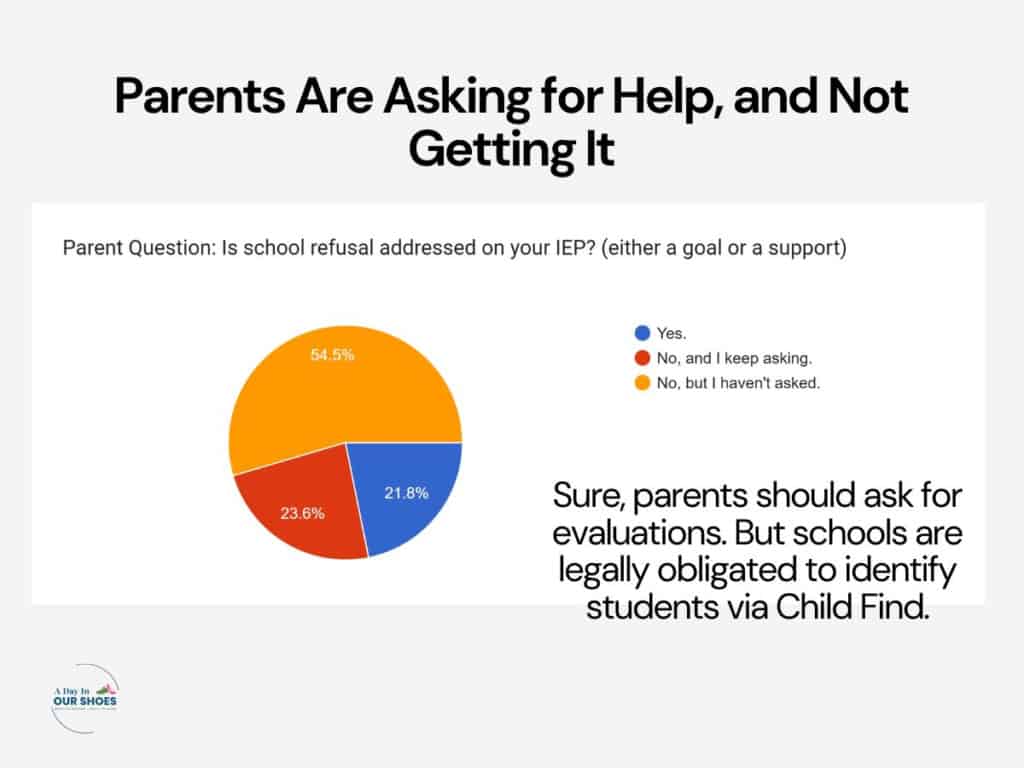
Parents report that school refusal is often not being addressed within existing IEPs or support plans. More than half indicated that it is not included at all, and a notable portion are actively requesting support but not receiving it. This raises concerns about identification and response processes, particularly given schools’ obligations under Child Find to proactively identify and evaluate students who may need services.
Is your school addressing school refusal?
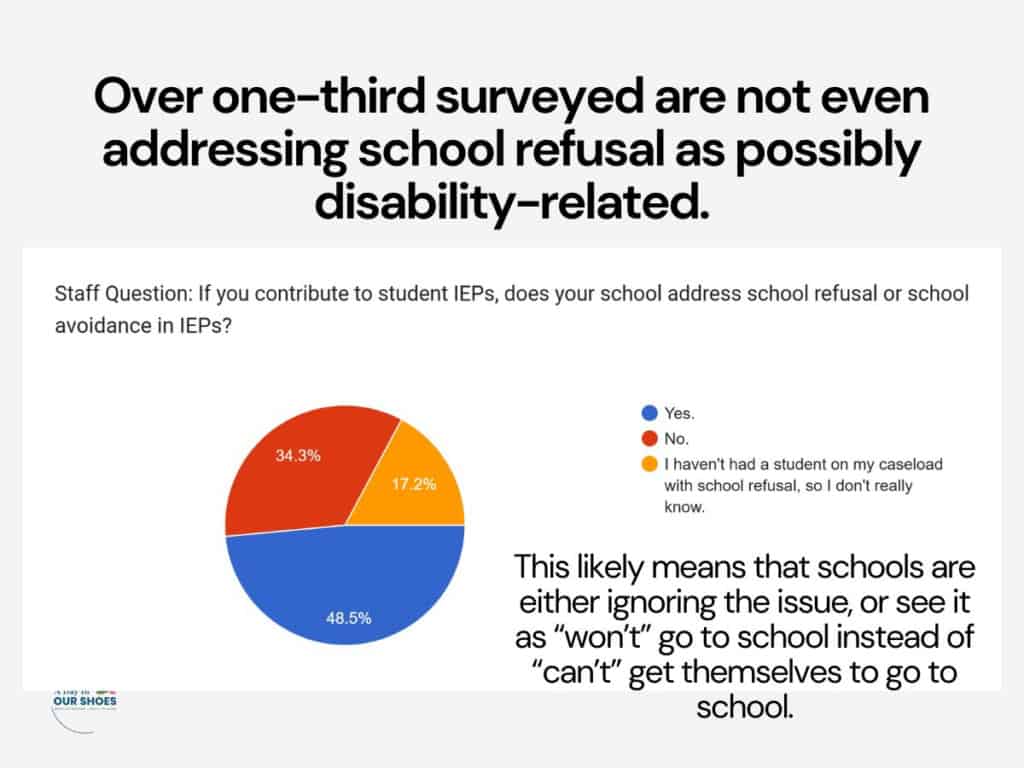
From the staff perspective, over one-third report that school refusal is not being addressed as a potential disability-related issue within IEPs. This suggests inconsistency in how school refusal is interpreted and supported across teams. In some cases, it may not be formally recognized as connected to a student’s disability, which can limit access to appropriate services, accommodations, or interventions.
Are schools prioritizing attendance in school refusal?
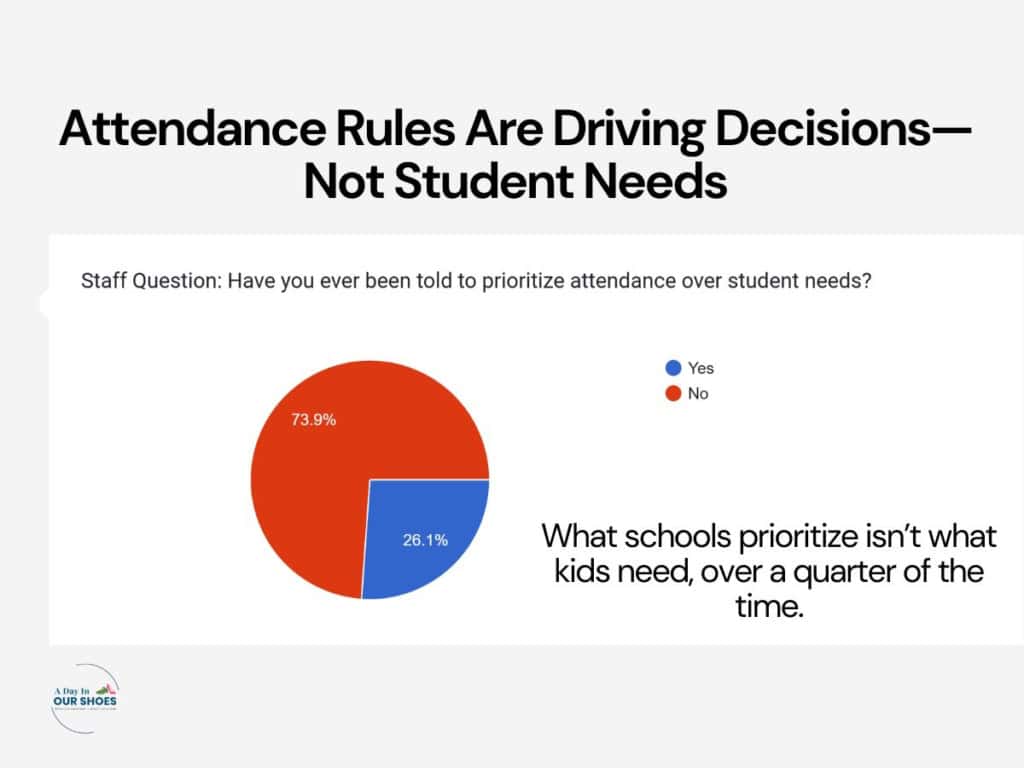
Survey responses suggest that attendance requirements can influence school decision-making, sometimes in ways that do not align with student needs. Over a quarter of staff reported being told to prioritize attendance over other considerations. This tension highlights the challenge schools face in balancing compliance with attendance policies and addressing the underlying causes of school refusal.
What drives staff school refusal decisions?
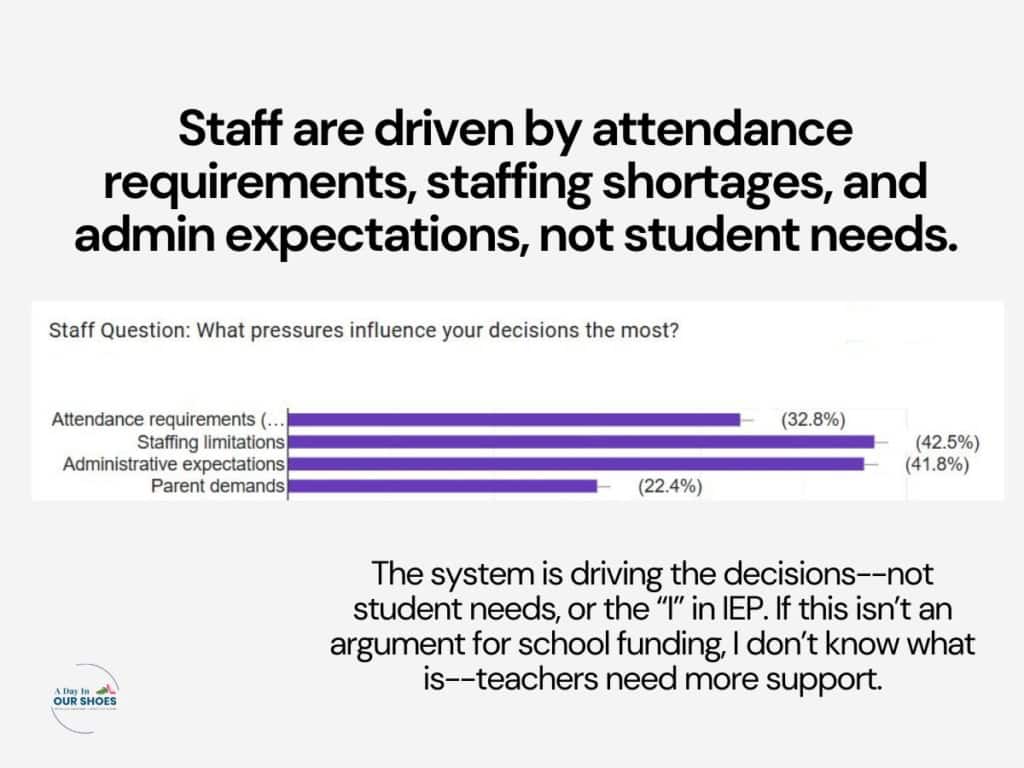
Staff identified multiple external pressures that influence decision-making, including attendance mandates, staffing limitations, and administrative expectations. These factors appear to shape how supports are implemented, sometimes more than individual student needs. The data suggests that systemic constraints—such as limited resources and competing priorities—play a significant role in how school refusal is addressed within schools.
What else does school refusal affect?
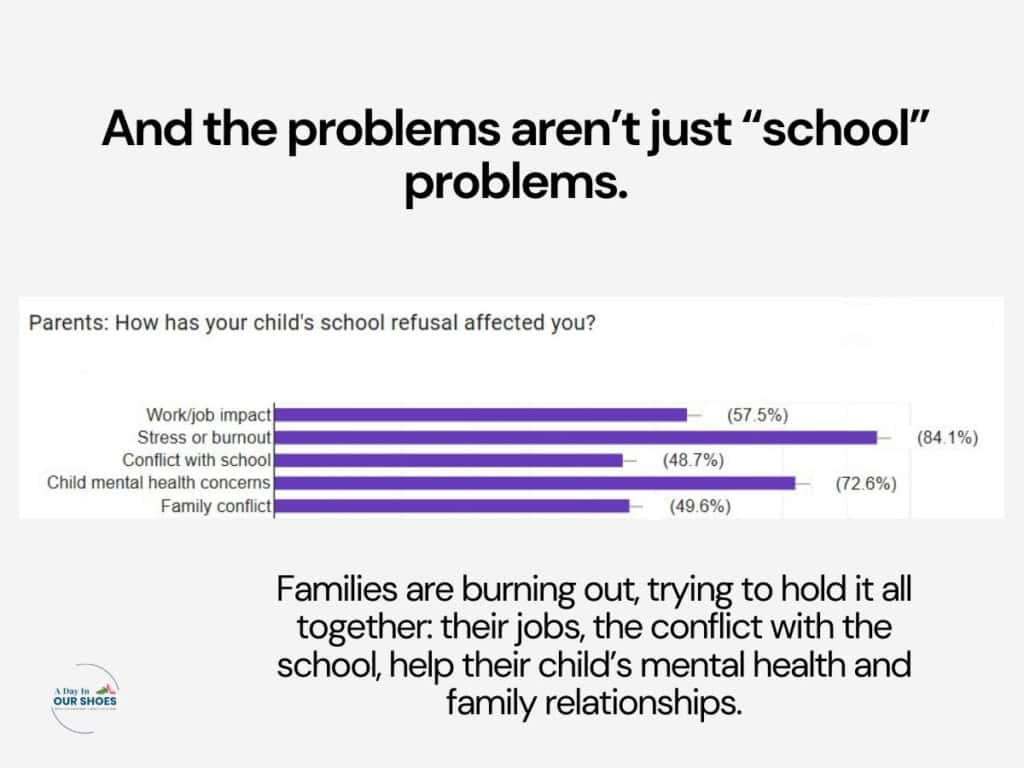
The impact of school refusal extends beyond academics and affects families in multiple areas. Parents report high levels of stress and burnout, as well as effects on employment, family relationships, and their child’s mental health. These findings indicate that school refusal is not solely an educational issue, but one that has broader implications for family stability and well-being.
How to Interpret This Data
This report is intended to reflect patterns and experiences among families and educators navigating school refusal within the context of special education. While the findings may not represent all students or school settings, they highlight recurring themes that appear across multiple responses. These insights are best understood as directional rather than definitive; illustrating common challenges, gaps, and areas for further attention, rather than serving as universal conclusions.
Survey Bias: It is important to note that this survey was conducted within a community focused on IEPs and special education advocacy. Families and professionals who engage with these resources are more likely to be seeking support due to challenges with identification, services, or implementation. This creates a selection bias in the data, as the responses are weighted toward individuals navigating more complex or unresolved situations, rather than representing the full spectrum of student experiences.
These findings are not meant to generalize all schools or situations, but to provide visibility into experiences that are often underreported or inconsistently addressed.