30 Accommodations for Deaf and Hard of Hearing Students
Let’s talk about something that doesn’t get nearly enough attention: accommodations for Deaf and Hard of Hearing (DHH) students in the classroom.
These students often face unique barriers to accessing instruction, participating in discussions, and connecting with peers, not because they can’t learn, but because the environment isn’t set up to support them. And no, just “sitting them up front” isn’t enough.
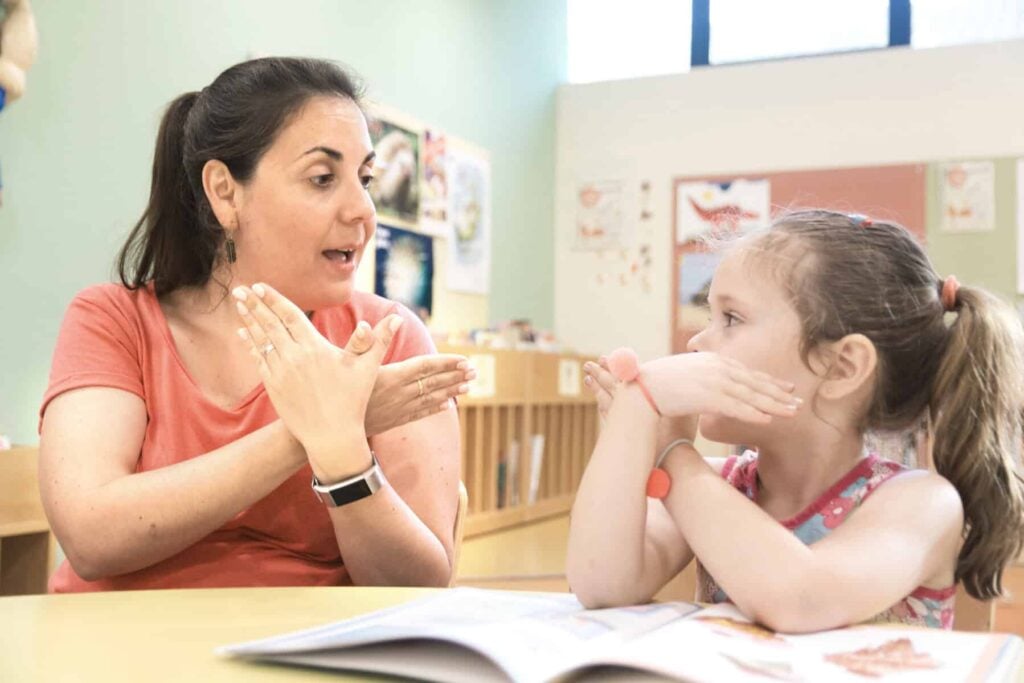
When I was in college, I had the chance to visit Rochester Institute of Technology (RIT) to support a student organization made up entirely of Deaf and hard-of-hearing students. It was an incredible learning experience. From fire alarms that used flashing lights and vibrating beds, to music turned up higher than I was used to, it was eye-opening to see how a few thoughtful accommodations can create a truly inclusive college environment for DHH students.
What Does “Deaf or Hard of Hearing” Mean?
“Deaf” and “Hard of Hearing” are umbrella terms for students with hearing loss that affects their ability to process spoken language. This can range from mild to profound hearing loss, and not all students identify the same way. Some use sign language as their primary mode of communication, others use hearing aids or cochlear implants, and many rely on a combination of tools and strategies.
You Need IEP Data. You Also Need to Teach.
IEP progress monitoring has to get done, but it shouldn’t take hours. You need a system that’s simple enough to actually use in a real classroom.
Get teacher-created, ready-to-use tools that help you track IEP goals, document meaningful progress, and write progress reports faster, without adding more paperwork to your day. Save time, stay compliant.
If I could get on my soap box for one moment, as I have worked with several clients who cannot hear. Not all DHH students require IEPs. They are not always learning disabled. It is not uncommon for hearing loss to be their only disability.
I have had clients who, their only accommodation was a full-time ASL interpreter. That’s it. That person accompanied them throughout their day, translating. It always astounds me that schools will tap-dance around this and do anything but a translator. I get it–they’re expensive. But sometimes, that is all a kid needs to access their education.
There is no need to “try an FM system” first or any other garbage they tell you. It might be their policy, but IDEA does not say this.
Who Evaluates Hearing Needs?
An audiologist or an ENT (ear, nose, and throat doctor) typically diagnoses hearing loss. Within the school setting, a Teacher of the Deaf and Hard of Hearing (TDHH), speech-language pathologist (SLP), or special education team member helps assess how hearing loss affects access to learning—and what supports are needed.
Common Disabilities/Conditions It’s Connected To
While hearing loss can be a stand-alone disability, it’s also sometimes seen in students with:
- Down Syndrome
- Usher Syndrome
- Auditory Processing Disorder (APD)
- Craniofacial conditions (e.g., Treacher Collins syndrome)
- CMV-related hearing loss
- Other syndromes with sensory loss
Why Accommodations Matter
When hearing-related needs aren’t supported, you may see:
- Academic delays
- Language and communication challenges
- Social isolation
- Increased fatigue (from constantly trying to listen or lip-read)
- Behavioral issues (due to frustration or misunderstanding)
The goal isn’t to “fix” the student. It’s to adjust the environment so they can access and participate in learning, just like everyone else.
Accommodations for Deaf and Hard of Hearing Students
Let’s get practical. These accommodations can be part of an IEP, a 504 Plan, or just good inclusive teaching practice.
Communication Access
- ASL interpreter or Cued Speech transliterator
- CART (real-time captioning) services
- Closed captioning on all videos
- Visual/printed instructions to support spoken directions
- Speech-to-text apps or devices
- Note-taker for lectures or group discussions
- Use of sign language by staff (if student uses ASL)
Environmental Modifications
- Preferential seating (to see teacher’s face clearly)
- Teacher wears FM system or sound-field amplification
- Quiet seating area to reduce background noise
- Reduce ambient noise with rugs, curtains, etc.
- Use of visual alarms (e.g., for fire drills)
- Avoid seating near fans, windows, or HVAC units
Instructional Strategies
- Always face the student when speaking
- Check for understanding, not just “did you hear me?”
- Avoid talking while writing on the board
- Allow extra time for processing auditory instructions
- Use visuals, diagrams, and written material to reinforce content
- Provide transcripts or captions for audio materials
Testing & Assessments
- Provide extended time on tests
- Test in a quiet, distraction-free environment
- Allow use of interpreter or captioning during assessments
- Offer written versions of oral test instructions
Social/Behavioral Supports
- Facilitate peer communication with visuals or role-play
- Allow breaks to avoid listening fatigue
- Teach self-advocacy skills (e.g., requesting clarification)
- Educate peers about hearing loss and inclusion
- Assign a peer buddy for group work or transitions
School-Wide Access
- Visual school announcements (digital board, print copies)
- Interpreter or captioning available for assemblies, field trips, etc.
- Inclusion in emergency planning with visual alert systems
Accommodations for Deaf and Hard of Hearing students aren’t about giving an advantage, they’re about leveling the playing field. Whether your student uses sign language, reads lips, or benefits from captioning and amplification, the key is flexibility, communication, and collaboration between families and schools.
Free Sign Language PDFs
- American Sign Language Matching Activities for Kids (42 Free PDFs)
- American Sign Language Puzzles: Free 5-page PDF for Kids
- ASL Flashcards (Free Printable PDFs for Common ASL Words)
- Colors in ASL: Free Sign Language PDFs
- Fingerspelling Practice for ASL: 14 Free Worksheets to Communicate Basic Needs
- Numbers in ASL: Free PDF Worksheets
- Sign Language Alphabet Worksheets: Free PDFs
- Sign Language Animals: Learn ASL Animals with this Free Printable
- Sign Language Coloring Pages: 27 Free PDFs
- Sign Language Words for Beginners: 12 Words for Daily Skills
- St. Patrick’s Day ASL PDF Activity