Teaching Pragmatic Language Skills: How to Improve Social Communication
So many kids (and adults!) struggle with pragmatic language skills, including autistic students and students with other communication and learning disabilities. And when those skills are lagging, it’s often painfully obvious to everyone involved, even if nobody can quite put their finger on what is happening.
When we talk about language skills, we tend to think about vocabulary, grammar, or how clearly someone speaks. But pragmatic language is different. It’s how we use language with other people, like how we start and maintain conversations, ask for clarification, understand context and sarcasm, repair misunderstandings, and figure out what someone else is trying to communicate.
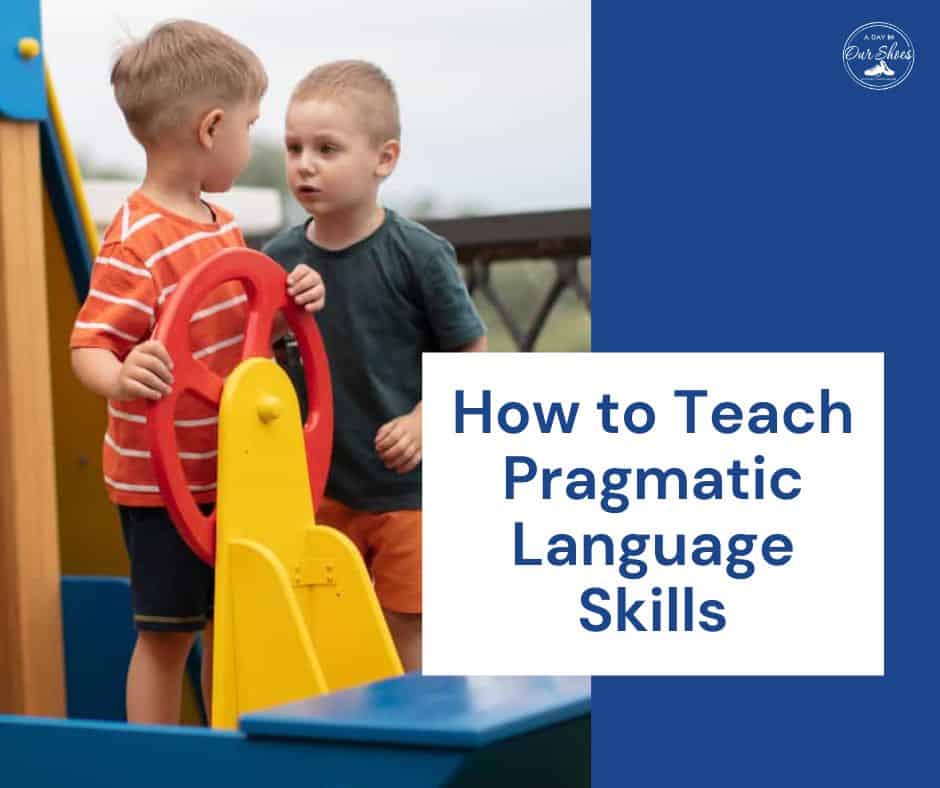
These are also sometimes called social communication skills, and they’re a huge part of navigating school and everyday life. It’s near impossible to develop social skills or friendships if you lack pragmatic language skills–because it’s those first few conversations you have with a person that lead to friendship.
Maybe a student doesn’t realize the other person is confused. Maybe they have trouble figuring out when it’s their turn to talk. Or maybe they really, really need to tell you that dinosaur fact in the middle of math class.
When pragmatic language skills are lacking, kids are often labeled “rude,” “awkward,” “disrespectful,” or “behavioral.” But labeling the child doesn’t teach the skill.
With the right pragmatic language activities and teaching strategies, we can help students build social communication skills they can actually use…in the classroom, with peers, with adults, and everywhere else life happens.
I also want to add that it isn’t my goal here to tell special ed teachers or SLPs how to do their jobs. This is to give you some ideas that maybe you haven’t done yet, especially if this is a new task for you. And, for parents to have ideas for doing this at home and in the community.
- Teenager Lacking Social Skills? What Schools Must Address in an IEP (and What Parents Can Do)
- 40 Conversation Starters for Kids Who Struggle with Social Skills (Free PDFs)
What are pragmatic language skills?
Pragmatic language skills are the social rules of communication. Think of them as the “how” and “when” we say things, not just the “what.”
They’re a major part of what makes conversations feel natural, respectful, and appropriate in different settings. Some teens aren’t being rude or withdrawn on purpose. They may genuinely need support building age-appropriate communication skills.
Here’s a quick breakdown of pragmatic language skills:
Using Language for Different Purposes
One of the first pragmatic language skills kids learn is that we use communication for lots of different reasons. We don’t just talk to answer questions or tell someone what we want.
We communicate to: ask for help, share information, greet someone, protest or say no, ask questions, tell stories, make jokes, express an opinion, set a boundary, or let someone know we don’t understand.
For some kids, using language for these different purposes comes naturally. For others, it needs to be taught and practiced.
For example, a student may be great at telling you everything there is to know about dinosaurs but have difficulty saying, “I don’t understand what I’m supposed to do,” when they’re confused in class.
When teaching pragmatic language skills, the goal isn’t to teach kids a list of “right” things to say. It’s to give them more ways to communicate what they think, need, know and feel; and help them learn which communication strategies work in different situations.
Changing Language Based on the Listener or Setting
We don’t communicate exactly the same way with every person in every situation. We naturally change how much information we give, the words we use, and sometimes our tone or volume depending on who we’re talking to and what’s happening around us.
For example, a student might explain a favorite video game one way to a friend who plays it every day and very differently to a teacher who has absolutely no idea what they’re talking about.
Teaching this pragmatic language skill can include helping students recognize what their communication partner already knows, what information they might need, and whether their message is being understood.
It’s also about understanding things we say in public, or in a formal setting vs when we don’t. I actually curse, often. But I certainly don’t do it in IEP meetings!
Following the Rules of Conversation and Storytelling
Conversation involves a whole bunch of pragmatic language skills happening at once. We have to listen, respond, share information, figure out when someone else wants to talk, notice misunderstandings and somehow remember what we were talking about in the first place. It’s actually a lot when you stop and think about it.
Some of the pragmatic language skills used in conversations include taking turns, introducing or changing topics, adding relevant information, asking social emotional questions, telling a story in a way the listener can follow, and recognizing when a conversation is starting or ending.
Another really important skill is communication repair: knowing what to do when the other person doesn’t understand you. A student might rephrase what they said, provide more information, show the person what they mean, use AAC or another communication method, or ask what part wasn’t clear.
These skills are critical for making and keeping friends, navigating school, and just being understood in everyday life. And yet, schools often overlook them unless a parent brings it up, or it’s leading to disruptive behavior. (I’m in the camp of teaching lagging skills before it becomes a problem)
Lack of Pragmatic Language Skills
Kids with pragmatic language difficulties may struggle to:
- Stay on topic
- Pick up on social cues
- Wait their turn to speak
- Understand sarcasm, idioms, or indirect requests
When a child lacks pragmatic skills, it’s the quickest way to misunderstandings, discipline, bullying, ostracization and more. Children who lack pragmatic language skills may experience various consequences that can impact their social, academic, and emotional development.
Some students need replacement behaviors for emotional outbursts that are practiced repeatedly across settings, which are often caused by pragmatic language deficits.
Some potential consequences include:
- Difficulty Establishing and Maintaining Relationships: Without effective pragmatic language skills, children may struggle to initiate and sustain friendships. They may have difficulty engaging in reciprocal conversations, interpreting social cues, and understanding others’ perspectives, which can hinder their ability to form meaningful relationships with peers and adults.
- Social Isolation: Children who struggle with pragmatic language skills may feel isolated or excluded from social interactions and activities. They may avoid social situations altogether or experience rejection from peers due to their communication difficulties, leading to feelings of loneliness and low self-esteem.
- Misunderstandings and Conflict: Misinterpreting social cues or using inappropriate language can lead to misunderstandings and conflict in social interactions. Children who lack pragmatic language skills may unintentionally offend others, disrupt conversations, or violate social norms, resulting in negative interactions and strained relationships.
- Academic Challenges: Pragmatic language skills are essential for success in academic settings, as they support communication with teachers, participation in classroom discussions, and collaboration with peers on group projects. Children who struggle with pragmatic language may have difficulty following instructions, asking for help when needed, and advocating for themselves academically, which can impact their learning outcomes.
- Behavioral Problems: Difficulty communicating effectively can contribute to behavioral problems such as frustration, anxiety, and aggression. Children who lack pragmatic language skills may become easily overwhelmed in social situations, leading to meltdowns or withdrawal. They may also exhibit challenging behaviors as a way to cope with their communication difficulties or express their needs and emotions.
- Limited Opportunities for Learning and Growth: Poor pragmatic language skills can limit children’s opportunities for learning and growth, both academically and socially. They may struggle to participate in extracurricular activities, collaborate with peers on projects, or engage in meaningful conversations with adults, which can hinder their overall development and potential for success.
- Impact on Mental Health: The challenges associated with pragmatic language difficulties can take a toll on children’s mental health and well-being. They may experience feelings of frustration, embarrassment, or inadequacy due to their communication struggles, leading to anxiety, depression, or other mental health issues if left unaddressed.
Pragmatic language difficulties can affect so much more than conversation. They can affect friendships, classroom participation, asking for help, working in groups and even how a child’s behavior is perceived by others.
That’s why it’s important to identify these needs and actually teach pragmatic language skills, rather than assuming a child will just pick them up along the way. Some kids do. Some kids don’t.
Early intervention can help, but kids of any age can benefit from individualized instruction and support from parents, teachers, SLPs and other members of the IEP team. The important part is figuring out which communication skills the child actually needs and giving them meaningful opportunities to learn and practice those skills in real life.
Ways to Teach Pragmatic Language Skills
Teaching pragmatic language skills involves various strategies and techniques to help individuals understand and use language effectively in social contexts. Here are five ways to teach pragmatic language skills:
Direct Instruction and Modeling: Teaching social communication starts with being super clear. Provide explicit instruction on what the “hidden rules” of conversation are, like taking turns, looking at the speaker (as much as is comfortable), and using respectful language. And don’t just tell, show. Model the behavior you want to see:
- “Let me show you what it looks like to ask for a turn.”
- “Watch how I say ‘excuse me’ when I need help.”
Use real examples from daily life (like what to say when asking a teacher for help vs. a friend to play) and explain why those differences matter.
Tip: Use role-playing regularly. It gives students a chance to practice new skills in a low-stakes, supportive setting.
Social Stories and Scripts: These are short, personalized stories that walk a child through a specific social situation, step by step. For example:
- What to do when someone is already using the swing
- How to ask for help when you feel overwhelmed
- What to say when someone gives you a gift you don’t like
Use first-person language (“I can say…”) and keep it positive. Add visuals if needed. You can also write scripts for tricky situations so the student has a “go-to” sentence bank when emotions run high.
Tip: Tailor the stories around their real-life situations or obsessions (yes, even if it’s Pokémon or tornado sirens) to make it stick.
And listen, let me just cut this off at the pass–I know that there will be some parents who think, “Well, I want my child to learn the skills, not memorize scripts.” I get that, really I do. Because it’s impossible to have a memorized script for every possible scenario they’ll encounter.
I am a “fake it till you make it” believer. Successfully navigating situations gives a person confidence to navigate others. And, the scripts aren’t intended to be used in isolation.
Video Modeling: Show short videos of people using good social communication, like waiting their turn, joining a group conversation, or even calmly asking for space. Then, pause the video and talk about it:
- “What did you notice about her voice?”
- “Why do you think he looked away when he got upset?”
Students can then try to imitate the behaviors, and you can record them (if appropriate) so they can see themselves improve.
Tip: Many kids respond really well to video modeling because it’s visual, repeatable, and non-threatening.
Structured Social Skills Training: This is your formal approach. Use a curriculum or create your own mini-lessons focused on one skill at a time, like:
- Initiating conversation
- Joining a group activity
- Handling being told “no”
Each skill should be broken down into clear steps with practice and feedback built-in.
Use visual aids, like social cue cards (“Is it a good time to talk?”) or checklists (“Did I say hi? Did I listen?”), and practice in small groups to build confidence.
Tip: Practice often, praise the attempts (even if imperfect), and reteach as needed.
Real-Life Practice and Generalization: This is where progress really happens, but also the hardest part. Pragmatic language doesn’t really click until it’s used outside of therapy rooms or teaching moments. Find chances for students to use their skills:
- In class discussions
- At lunch or recess
- With a trusted adult in the hallway
- Or even during community-based instruction (shopping, library visits, etc.)
Support them in the moment when needed, but also back off when they’re ready to try it on their own. What helps:
- Pre-teach what they’ll encounter (“If it’s noisy, and you need help, you can tap me and say ‘I’m not okay.’”)
- Debrief afterwards (“How did it feel when you asked for help? Did the teacher understand you?”)
- Celebrate progress….even the smallest win.
There isn’t one magic activity that’s going to teach pragmatic language skills. Wouldn’t that be nice? “Do this worksheet three times and we’re done here.” Doesn’t work that way.
What works will depend on the student, the specific communication skill they need, and where they’re having difficulty. And whatever we teach needs to make its way out of the therapy room or classroom and into real life. A student being able to demonstrate a skill on a worksheet doesn’t necessarily mean they can use it during group work, at lunch, or when a conversation actually goes sideways.
The goal is to give kids useful pragmatic language strategies, plenty of opportunities to practice them, and support as they learn to use those skills with different people and in different situations. That’s how we help build communication skills that are actually useful, not just skills that look good on an IEP data sheet.