Natural Disasters for Kids: Printable Foldable Science Activity
Natural disasters are one of those science topics that kids tend to have questions about before you even start teaching. How does a tornado form? Can an earthquake happen here? What’s the difference between a tsunami and a flood? And, inevitably, which natural disaster is the worst?
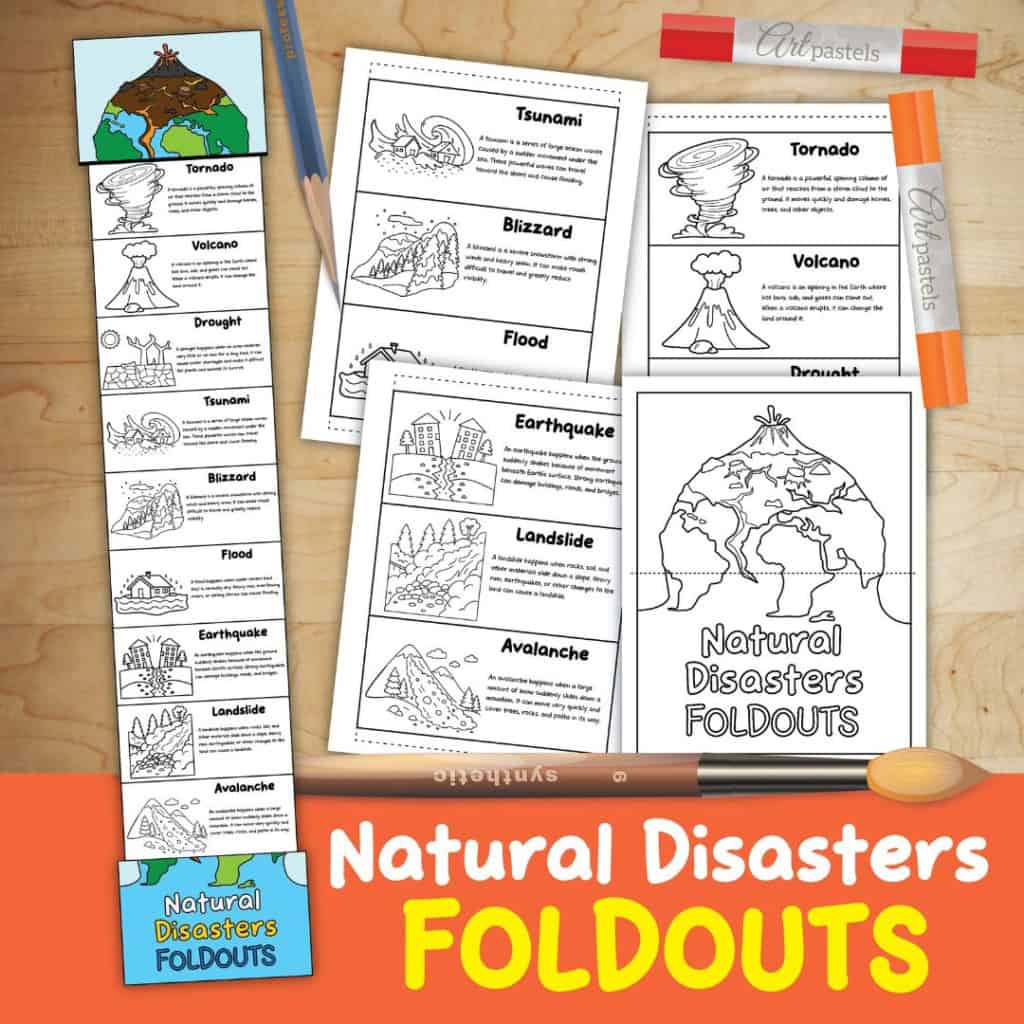
This natural disasters for kids printable gives students a simple introduction to nine different natural disasters using short definitions and illustrations. Instead of another traditional worksheet, students create a foldout they can color, assemble and use as a reference during a weather, Earth science or natural hazards unit.
What Are Natural Disasters?
Natural disasters are damaging events caused by natural processes or hazards.
But even that definition deserves some discussion with kids.
A volcano erupting somewhere without people or property nearby is a natural event. We generally use the word disaster when an event causes significant harm to people, communities, property or the environment.
For younger students, you can start more simply by exploring the different natural events, what causes them and what happens when they affect communities.
- Types of Clouds Worksheets
- Weather Worksheets for Kids
- School/Child Care Emergency Plan PDF (not a kids’ activity, adult resource for storms and emergencies)
9 Natural Disasters for Kids
The printable introduces nine different natural disasters:
Tornado, volcano, drought, tsunami, blizzard, flood, earthquake, landslide and avalanche.
Each one has an illustration and a short description written for younger learners.
For example, students learn that a drought occurs when an area receives very little or no rain for a long period, while a flood occurs when water covers land that is normally dry. The earthquake section explains that earthquakes involve sudden ground shaking caused by movement beneath Earth’s surface.
Make a Natural Disasters Foldable
The format is what I like about this particular activity.
The three interior pages each contain three natural disasters with illustrations and descriptions. Students can color the pictures, then assemble them with the cover to make a natural disasters foldable.
The cover is included in both color and black and white, so you can choose whether you want a ready-to-use version or one students can color themselves.
Once it’s assembled, students have a compact reference they can revisit rather than a stack of loose worksheets.
Download the Natural Disasters for Kids Printable
This printable natural disasters foldable introduces students to tornadoes, volcanoes, droughts, tsunamis, blizzards, floods, earthquakes, landslides and avalanches.
Each disaster includes an illustration and a short description, and the foldout cover is available in color and black and white.
Use it during elementary science, Earth science, weather and natural hazards lessons, homeschool, small groups or as a reference students can keep during a larger natural disasters unit.
Compare Natural Disasters Instead of Just Memorizing Them
Nine new vocabulary words can turn into a memorization exercise pretty quickly. I’d spend more time comparing them.
For example, tsunamis and floods both involve water, but they aren’t the same event. The printable describes a tsunami as a series of large ocean waves caused by sudden movement under the sea, while flooding occurs when water covers normally dry land and can have several causes.
You can do the same with landslides and avalanches. Both involve material moving rapidly down a slope, but one involves rocks, soil and other materials while an avalanche involves snow.
Ask students:
- What is moving?
- What might cause it?
- Where might it happen?
- What could it affect?
Now they’re thinking about the concepts instead of memorizing nine definitions for Friday’s quiz and promptly evicting them from their brains on Saturday.
Natural Disaster Vocabulary and Language Support
There’s quite a bit of vocabulary packed into this small printable.
Words like drought, avalanche, landslide and tsunami may be completely unfamiliar to some students. Other students may recognize the word tornado but have difficulty explaining what one actually is.
For students with language, reading or processing needs, introduce only a few terms at a time.
Keep the pictures visible while you discuss the words. Match words to pictures. Compare two events rather than presenting all nine at once. Let students point to or select a picture instead of requiring them to independently retrieve the vocabulary word every time.
You can also pull important words from the descriptions, such as ash, lava, visibility, slope, flooding, storm, snow and earthquake, and preteach those before reading.
Knowing the science and being able to explain the science in a complete verbal sentence are not the same skill.
Natural Disasters Can Be a Sensitive Topic
This is one I’d be thoughtful about. For many kids, tornadoes and earthquakes are fascinating.
For some kids, natural disasters are something they have actually experienced.
A student may have evacuated from a hurricane, lived through a flood, lost a home to wildfire, experienced an earthquake, or have family living somewhere recently affected by a disaster.
So I’d avoid unnecessarily dramatic videos and images just because they get everyone’s attention. You can teach what natural disasters are, how they happen and how communities prepare for them without turning destruction into entertainment.
And if a student seems anxious about the topic, take that seriously.
Add Geography to Your Natural Disasters Lesson
Another easy extension is to add a map.
- Where are earthquakes more common?
- Where might avalanches occur?
- Can drought happen where you live?
- What conditions are needed for a blizzard?
Younger students can simply locate examples on a map. Older students can begin looking at why particular natural hazards are more common in some geographic areas than others.
You could also choose one natural disaster from the foldable and research it more deeply.
That keeps this printable doing what it does best: introducing the vocabulary and giving students a reference point for further learning.
Use the Foldable as a Reference Tool
I wouldn’t necessarily assess students on whether they can memorize the definition of all nine natural disasters.
Let them use the foldable. Ask students to find the natural disaster that involves snow moving down a mountain.
- Which one involves a lack of rain?
- Which two might involve water?
- Which one involves movement beneath Earth’s surface?
Now the foldable becomes a learning tool instead of a craft they made, took home and eventually rediscovered crumpled underneath a granola bar in their backpack (or an invitation to an IEP meeting!).