Social Skills Questions for Kids: Conversation Starters PDF and Social-Emotional Questions.
Social skills questions can help kids practice starting conversations, sharing ideas, learning about others, and handling everyday social situations.
Below are social skills questions and conversation starters for elementary students, middle schoolers, and older students. I’ve separated them by age because the conversation starter that works with a 7-year-old may earn you nothing but an eye roll from a 15-year-old.
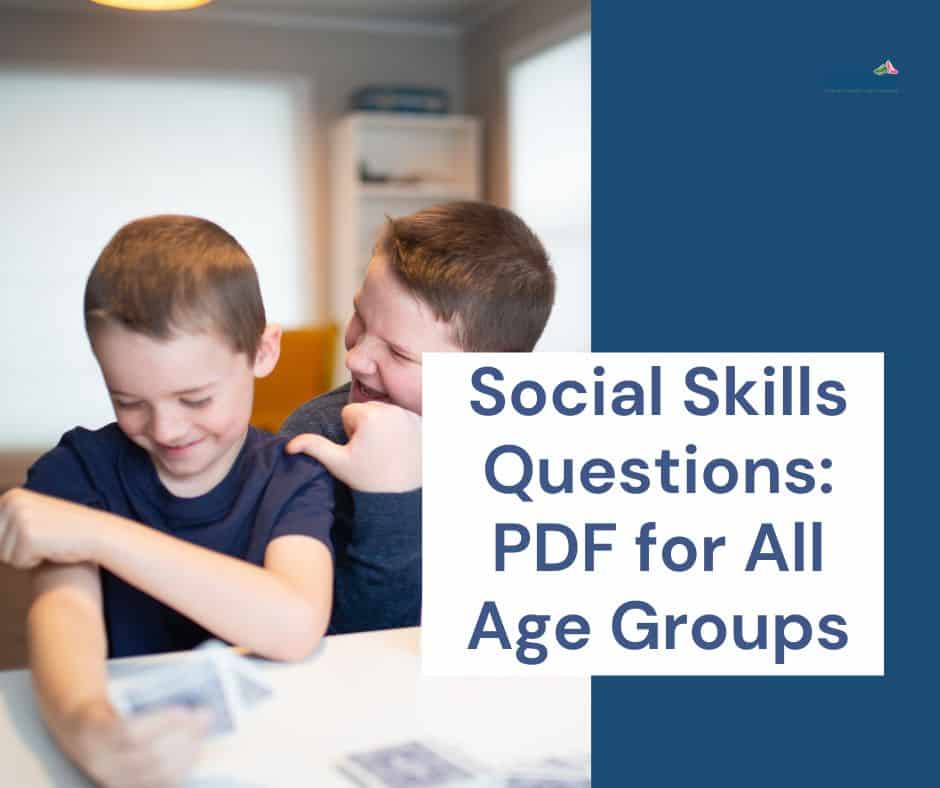
These social emotional questions aren’t about teaching kids the one “right” way to socialize. For autistic and other neurodivergent students, social skills support should help them communicate and connect, not teach them to mask who they are.
You’ll find these resources below:
You Need IEP Data. You Also Need to Teach.
IEP progress monitoring has to get done, but it shouldn’t take hours. You need a system that’s simple enough to actually use in a real classroom.
Get teacher-created, ready-to-use tools that help you track IEP goals, document meaningful progress, and write progress reports faster, without adding more paperwork to your day. Save time, stay compliant.
- Social skills questions for elementary-age kids
- Conversation starters and social-emotional questions for middle and high school students
- Social skills questions and social emotional question flash cards, can be adapted to any age group.
How to Use Social Questions for Kids
Social skills questions and conversation starters can be used in lots of different ways. Parents can use them at home, teachers can use them in the classroom, and they can also be used during social skills instruction or when working on social communication IEP goals.
You don’t have to work through the lists from top to bottom. Pick a few questions that make sense for the child, their age, and the situation. Some kids may answer verbally, while others may prefer writing, AAC, drawing, or simply having more time to think about their answer. Communication does not have to look one specific way to count as communication.
For autistic and other neurodivergent kids, the goal should never be to teach them to act more neurotypical or memorize the “right” social response. These questions should create opportunities to practice starting conversations, sharing interests, asking questions, understanding different perspectives, and navigating situations that matter in their real lives.
And remember that social skills change as kids get older. That’s why I’ve included separate social skills questions for elementary students and conversation starters for middle and high school students. You’ll also find the social skills conversation starter PDFs below.
Conversation Starters for Younger Kids (Elementary)
When working with younger students, it’s all about simplicity and fun. They’re still figuring out the world, so questions that spark curiosity or let them share what they love are the way to go. Here are 20 conversation starters that will get the ball rolling:
- What’s your favorite game to play at recess?
- If you could be any animal, which one would you be and why?
- What’s the best snack ever?
- Do you have a favorite superhero? Who is it?
- If you had a pet dragon, what would you name it?
- What’s your favorite color and why?
- If you could only eat one food for the rest of your life, what would it be?
- What do you like more: playing outside or playing video games?
- Who is your favorite character in a book or TV show?
- What would you do if you found a treasure chest?
- What’s something you’re really good at?
- Do you have a favorite song? Can you sing it?
- If you could fly, where would you go first?
- What’s your favorite thing to do on weekends?
- Would you rather be really fast or really strong? Why?
- What’s your favorite kind of weather?
- If you could have any superpower, what would it be?
- Who makes you laugh the most?
- Do you have a best friend? What do you like to do together?
- What’s the coolest thing you’ve ever built?
Conversation Starters for Older Kids (Middle and High School)
Teens can be tricky. They’re navigating a lot—social circles, identity, and everything in between. These prompts aim to dig a little deeper, encouraging them to share thoughts, opinions, and experiences in a way that feels relevant and safe. Trouble with friendships during adolescence can sometimes point to bigger concerns around emotional regulation, executive functioning, or social communication.
- What’s a song that you could listen to on repeat?
- If you could travel anywhere in the world, where would you go?
- What’s something you’re really passionate about right now?
- Do you have a favorite app or game? Why do you like it?
- If you could trade places with anyone for a day, who would it be and why?
- What’s something you wish adults understood about teens?
- If you could have dinner with any celebrity, who would it be?
- What’s the best movie you’ve seen recently?
- What do you do when you feel stressed out?
- What’s a skill you wish you could learn overnight?
- Who’s your biggest role model?
- What’s something you’re proud of that most people don’t know about you?
- If you could start a business, what would it be?
- What’s your favorite thing to do when you hang out with friends?
- What’s a recent challenge you’ve faced and how did you handle it?
- If you could instantly become an expert in anything, what would it be?
- Do you think social media is more helpful or harmful? Why?
- What’s something that makes you feel confident?
- If you could change one thing about the world, what would it be?
- What’s your dream job?
Printable List of Social Skills Questions
Here are those lists again–conversation starters for younger students and one for older students.
Social Questions for Kids
These printable cards make a really good activity for the classroom or any group. You can download the PDF, print them on cardstock (and laminate) for longevity.
Then, any time you have a few extra minutes, get them out and let the kids pick one. When you’re waiting for dismissal or lunch or anywhere that you have a little bit of time, but not enough to run a full fledge lesson or activity, these can really fill in the gaps.
This set of social conversation questions is great for the end of the day. It can give closure to the end of the day, prepare a child for the transition to go home, and encourage mindfulness by reflecting on the day’s activities.
Conversation skills are so much more than just words exchanged—they’re the foundation of friendships, self-expression, and navigating the world. For many kids, especially those with social skills deficits, these skills aren’t instinctive.
Social skills questions can be a useful tool, but the goal isn’t to teach kids to memorize a script or come up with the “correct” response.
The goal is to give kids opportunities to practice conversations, express their own ideas, learn about other people, and build confidence communicating in different situations.
Use the questions that make sense for your child or student. Skip the ones that don’t. Give them processing time, and remember that communication doesn’t have to look the same for every kid.
If social communication is an area of need for a student with an IEP, these conversation starters can also help you identify skills that may need to be addressed with specific, measurable IEP goals and appropriate supports.
And if you need something you can actually use without reopening this page 47 times, download the printable Social Skills Conversation Starters PDF above. It includes separate lists for elementary students and older students.