Alphabet Tracing Worksheets A-Z: Free Printable Letter Practice Pages for Preschool to 1st Grade
Alphabet tracing worksheets are one of those resources that seem very basic until you actually need them. Then suddenly you’re looking for something that is simple, clear, printable, and not covered in twelve different directions and six cartoon characters shouting at the student.
These free alphabet tracing worksheets keep it pretty straightforward.
There is one worksheet for each letter of the alphabet, from A through Z. Each page includes a large uppercase letter, several dotted letters for tracing, and two pictures with words that begin with that letter. For example, the A page includes astronaut and alligator, while the B page includes box and bear.
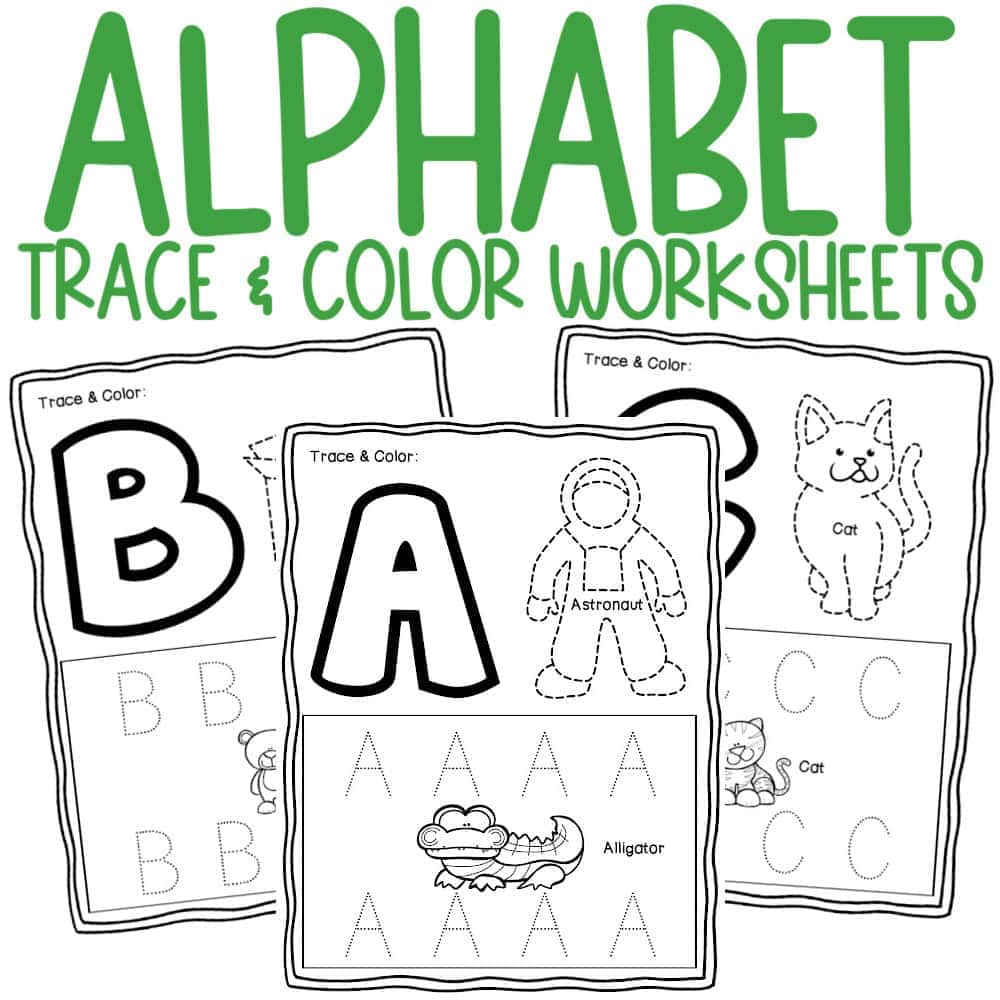
Students can trace the letters, color the large letter and pictures, say the words aloud, and talk about the beginning sound. It’s a great way to work on phonemic or phonological awareness. That gives you a few different ways to use the same page without turning it into an elaborate lesson plan.
Other Alphabet Activities (all free PDFs):
Alphabet Tracing Worksheets
This printable packet includes 26 alphabet tracing worksheets, one for every letter from A through Z. Each page includes uppercase letter tracing, a large letter to color, and picture vocabulary connected to the letter.
Parents can use them for extra practice at home or homeschool lessons, and teachers can use them for literacy centers, morning work, small groups, IEP interventions, special education, or individual practice.
Print the entire alphabet or just the letters your student is currently working on.
Download the free Alphabet Tracing Worksheets A-Z below.
What Skills Do Alphabet Tracing Worksheets Work On?
The obvious skill is letter formation, but there is more going on here than simply tracing dotted lines.
Tracing letters can give students practice with pencil control, visual-motor coordination, letter recognition, and the basic movements used in handwriting. Pairing each letter with pictures and printed words also gives parents and teachers an easy opening to work on beginning sounds and vocabulary.
That does not mean tracing alone teaches a child to write. It is one tool-students still need opportunities to form letters independently, use different writing materials, and practice letters in meaningful ways.
But sometimes we really can just let a worksheet be a worksheet.
How to Use These Alphabet Tracing Worksheets
You do not have to print the entire alphabet at once.
If a student is working on the letter M, print M. If they are confusing a handful of letters, pull those pages. If you are teaching one letter each week, use the corresponding worksheet as part of your routine.
You can also put the pages into dry erase sleeves and use them again with markers, which is especially useful for classrooms, therapy settings, homeschool, or anyone who would rather not keep feeding the printer every five minutes.
Each worksheet follows the same general format, which can be helpful for students who do better when an activity is predictable. Once they understand what to do on one page, they do not have to relearn the directions for every new letter.
Alphabet Tracing and Beginning Sounds
The picture vocabulary is one of my favorite parts of this packet because it gives you an easy way to connect handwriting with phonics.
Rather than having a student trace A eight times and call it a day, point to the alligator and astronaut and say the words together. Emphasize the beginning sound. Ask the student what else starts with that sound.
You can do the same thing throughout the alphabet. The pictures include familiar words such as cat, dog, fish, horse, kite, lion, monkey, rabbit, snake, turtle, whale and others.
For students who are not yet ready to answer open-ended questions, you can keep it simpler. Say the word, emphasize the first sound, and point to the matching letter. There is no prize for making an early literacy activity harder than it needs to be.
What Age Are Alphabet Tracing Worksheets For?
These worksheets will probably be most useful for preschool, Pre-K and kindergarten students who are learning uppercase letters and beginning handwriting skills.
That said, I would not get too hung up on age, especially for disabled students. Skill level matters more.
An older student who is still working on letter recognition, letter formation, fine motor skills or beginning literacy may benefit from this type of practice too. The goal is to use materials that match the skill being taught, not to reject something useful because the student has had another birthday.
For some older students, you may want to consider whether the graphics feel age-appropriate for that individual student. But academically, there is nothing about tracing an uppercase letter that suddenly becomes invalid after kindergarten.
Different Ways to Practice Letters
Tracing is useful, but it does not have to be the only way you practice.
After using a tracing page, try having the student form the letter with play dough, write it in sand or shaving cream, build it with craft sticks, or write it on a whiteboard. You can also look around the room for objects that begin with the same sound.
For students who need more repetition, using the same letter across several activities often works better than handing them five nearly identical worksheets.