Free Alphabet Clip Cards: A-Z Beginning Sound Activity
Learning the alphabet isn’t just about being able to sing the ABC song. Kids eventually need to recognize each letter, connect uppercase and lowercase letters, and understand that letters represent sounds.
These free alphabet clip cards give them a simple way to practice several of those skills at once.
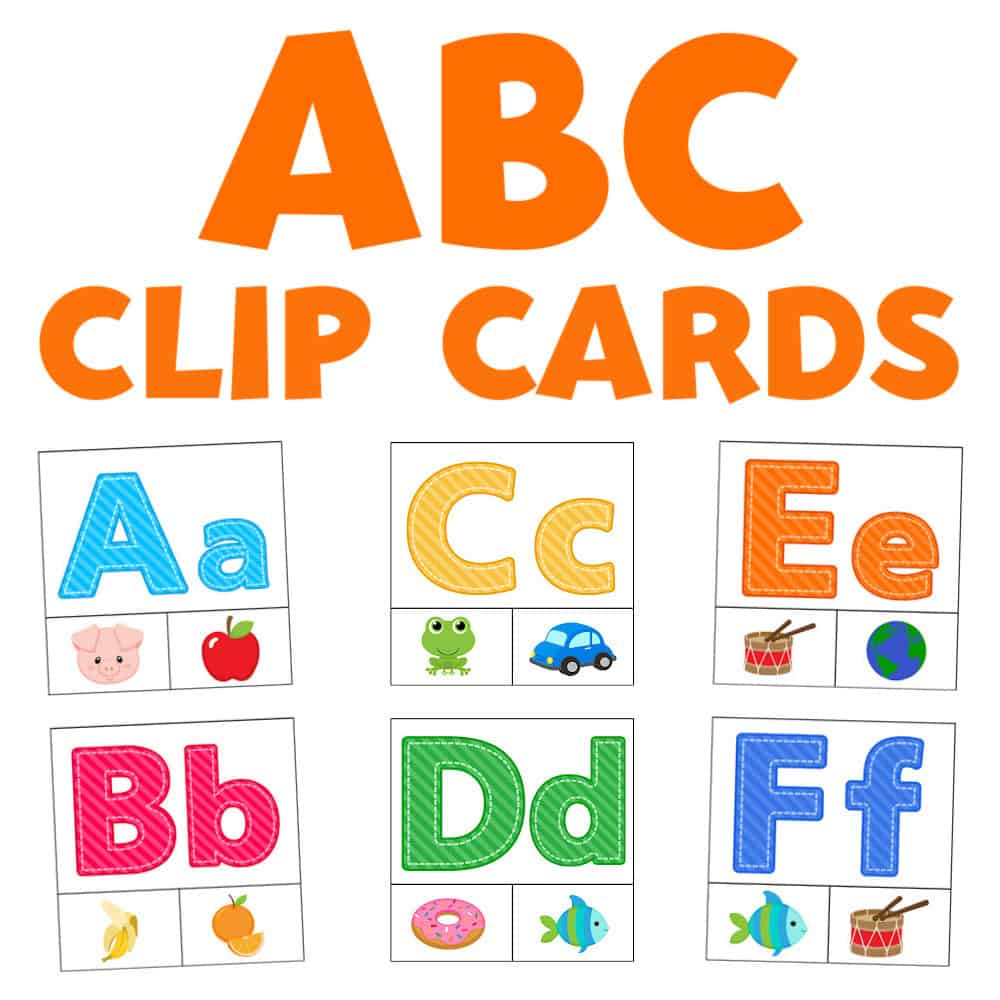
The printable includes cards for all 26 letters of the alphabet. Each card shows a large uppercase and lowercase letter along with two pictures. The student looks at the pictures and chooses the one that begins with the sound represented by the letter.
So for A, they’ll see a pig and an apple. Which one begins with A? For B, they choose between a banana and an orange. The same format continues throughout the alphabet.
Other Alphabet Activities (all free PDFs):
Free Printable Alphabet Clip Cards A-Z
This printable contains alphabet clip cards covering all 26 letters from A through Z, with uppercase and lowercase letters shown together and two picture choices on each card.
Print them on cardstock if you have it, laminate them for repeated use if that’s your thing, and add clothespins or another way for students to mark their answers. I get my clothespins at the Dollar Tree.
They’re an easy addition to alphabet practice at home, literacy centers, preschool and kindergarten activities, homeschool lessons, or special education instruction.
Download the free Alphabet Clip Cards below.
What Are Alphabet Clip Cards?
Alphabet clip cards are a hands-on alternative to a traditional alphabet worksheet.
Instead of writing an answer, the student can place a clothespin on the correct picture. You can print the cards, cut them apart and laminate them if you want to use them more than once.
And you don’t technically need clothespins. Kids can point, use a small counter, cover the answer with a bingo chip or circle it with a dry erase marker if you’ve laminated the cards.
Sometimes we buy the clothespins. Sometimes we cannot find the clothespins we know we bought.
Working on Letter Recognition and Beginning Sounds
What I like about these ABC clip cards is that they aren’t asking a child to do just one thing.
The student sees the uppercase and lowercase forms together, such as A and a, B and b, or M and m. Then they look at two images and determine which word begins with that letter sound.
That allows you to work on letter recognition, uppercase and lowercase letter matching, beginning sounds, picture identification and vocabulary with the same set of cards.
You can also add more language practice without creating an entirely separate activity. Have the student name both pictures before choosing an answer. Ask what sound each word starts with. Think of another word that begins with the target letter.
Of course, how much of that you add depends on the learner.
How to Use ABC Clip Cards
You can use these alphabet cards as one complete A-Z activity, but I probably wouldn’t start there with a child who is still learning the alphabet.
Pull out the letters they’re currently working on.
If you’re focusing on A through F, use those cards. If a student knows most of the alphabet but consistently struggles with a few letters, use only those. You can gradually add more cards as the skill becomes easier.
For classroom use, these work well for literacy centers, small groups, independent practice and early finisher activities. Parents can use them at home for short periods of alphabet practice, and they’re easy to add to homeschool lessons without creating an entire separate curriculum around them.
Add Fine Motor Practice With Clothespins
Using clothespins turns the activity into a little fine motor practice too. The student has to grasp the clothespin, squeeze it open and position it on the answer.
That doesn’t mean every student needs to use a clothespin.
If a child has difficulty manipulating one, let them point, place a counter on the answer or use another response method. The literacy skill here is identifying the beginning sound, not proving that you can operate a tiny wooden clamp.
This is particularly important for disabled students. If fine motor demands are getting in the way of demonstrating the skill you’re actually trying to assess or practice, change the response method.
What Age Are Alphabet Clip Cards For?
These alphabet clip cards are most likely to be used with preschool, Pre-K and kindergarten students who are learning letters and beginning sounds.
But, as always, I would focus more on skills than age for disabled students.
An older student who is still learning letter recognition or beginning letter-sound correspondence may benefit from them too. Instruction should meet the student where their skills are, rather than where a grade-level chart says those skills were supposed to have been mastered.
You may want to consider the graphics and presentation for an older student, but the underlying literacy skill does not have an expiration date.
More Ways to Use the Alphabet Cards
You don’t have to use these only as clip cards. Once they’re printed and cut apart, you essentially have a set of ABC printable cards that can be used in several ways.
Put a few around the room and turn it into a movement activity. Use them one-on-one and have the student say the letter and sound before choosing the picture. You could also use a small set as a quick check to see which letter sounds a student recognizes consistently and which ones still need instruction.
For students who need lots of repetition, changing how you use the same material can be much more useful than continually introducing something new.