RFK Jr.’s New Autism Plan Is Here, and It’s Worse Than Expected.
If you have an autistic child, you may have never heard of the Interagency Autism Coordinating Committee or IACC.
But this is one acronym families need to know right now.
The Interagency Autism Coordinating Committee is a federal advisory committee that helps shape the federal government’s priorities for autism research, services and policy. It advises the Secretary of Health and Human Services and develops a strategic plan for federal autism research.
In other words, this isn’t some random committee writing a report nobody will ever read.
- I Used to Be an Anti Vaxxer
- Grieving Your Child’s Disability Diagnosis: A Controversial Conversation
Its recommendations can help determine what the federal government decides is worth studying, what gets prioritized and, ultimately, where federal autism research dollars go.
And the newly reconstituted IACC has released a 336-page working draft of its 2026-2028 Strategic Plan.
I skimmed through the plan (as well as some synopses of it) and the analysis of it.
Parents need to know what’s happening.
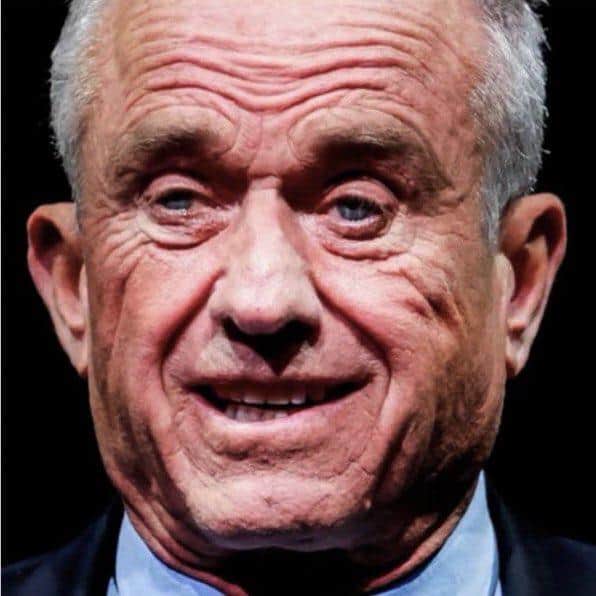
RFK Jr. Remade the IACC Committee
In January, Health and Human Services Secretary Robert F. Kennedy Jr. appointed 21 new public members to the IACC.
HHS said the appointments would bring autism research into alignment with “gold-standard science” and advance research into autism diagnosis, treatment and prevention.
But the appointments immediately raised alarms among autism researchers and disability advocates.
STAT reported that many of Kennedy’s appointees had publicly questioned vaccine safety or were associated with organizations that had questioned the established scientific consensus that vaccines do not cause autism. The BMJ reported that at least eight of the 21 appointees had questioned vaccine safety or had ties to organizations promoting vaccine-autism theories.
Kennedy has spent years promoting claims about vaccines and autism that are not supported by the scientific consensus. Now he is the Secretary of HHS.
And he got to choose the public members of the federal committee helping set America’s autism research priorities. See the problem yet?
The Connections Go Further Than That
An analysis published by 27 UNIHTED, an organization representing members of the NIH community, documented extensive political, organizational and personal connections between several new IACC members and Kennedy.
According to that analysis, some members participated in Kennedy campaign events, supported his presidential candidacy, participated in MAHA events or had connections to Children’s Health Defense, the organization Kennedy chaired before entering government.
The analysis also raises potential conflict-of-interest concerns involving committee members connected to clinics, organizations and businesses operating in areas that overlap with priorities contained in the new strategic plan.
Those are serious allegations and deserve serious scrutiny. We’re talking about people recommending how the United States government should prioritize hundreds of millions of dollars in autism research.
Follow the Money
This is the part I think parents really need to see.
According to 27 UNIHTED’s analysis of the proposed funding, the plan recommends $357 million in new funding.
Their breakdown includes:
- $45 million for immune, autoimmune, inflammatory and microglial biology
- $45 million for mitochondrial, redox, metabolic and endocrine biology
- $30 million for gastrointestinal and microbiome biology
- $15 million for folate and one-carbon biology
- $10 million for regression trajectory and stabilization
- another $57 million for a National Neurodevelopmental Regression Initiative
The plan also proposes a National Autism Precision Therapeutics Initiative, or NAPTI, designed to build infrastructure around clinical research, biomarkers, trials, regulatory science and eventually translating findings into clinical care.
And here’s the number that jumped out at me: $0.
According to 27 UNIHTED’s analysis, of the $357 million in proposed new funding, there is no dedicated budget line specifically earmarked for behavioral intervention research or services.
Behavioral approaches haven’t completely disappeared from the document. They appear within broader areas. But there isn’t a comparable, dedicated pile of new money for them.
My friend Susan (who is also my Mayor) often says, “Your budget reflects your priorities.”
Meanwhile, Families Need Help Right Now
This is where this whole thing makes me angry. I have spent more than 15 years working with families of disabled children.
You know what parents ask me about? Their child cannot communicate their needs at school.
Their teenager cannot read. Their child is having behaviors because their needs aren’t being met. Their child needs an AAC device.
Their school isn’t implementing the IEP. Their kid hasn’t made meaningful progress in three years.
They cannot find a therapist. They cannot get respite care.
Their adult child with disabilities needs housing. They’re terrified about what happens when they die.
They’re fighting Medicaid. They’re fighting insurance. They’re fighting the school.
They’re trying to figure out transition services.
They’re trying to keep their jobs while simultaneously being a case manager, nurse, advocate, transportation coordinator and unpaid expert in approximately 14 government systems.
You know what almost nobody has ever said to me?
“Lisa, if only the federal government would spend another $45 million studying microglial biology.”
Research absolutely matters of course it does. And understanding co-occurring medical conditions matters.
Research involving people with profound autism matters tremendously, because that population has historically been left out of far too much research.
But we can acknowledge all of those things and still ask a very obvious question: How does this improve the lives of autistic people who are here right now?
Autism Is Not a Problem Waiting to Be Eradicated
There’s another reason this shift matters: the way our government talks about disabled people matters.
Kennedy has repeatedly framed autism as a catastrophic epidemic. His public descriptions of autistic people have angered many autistic adults, parents and disability advocates because they paint an enormous, diverse population with the same bleak brush.
Yes, profound autism exists (I know this, my family lives it, every day). Yes, some autistic people require 24-hour support (again, raising my hand here because my son can not be left alone even for as long as it takes to put a load of laundry in).
Yes, some families are dealing with aggression, self-injury, elopement, epilepsy, severe communication disabilities and enormous caregiving demands.
Those families have spent years asking for more services, more research and better long-term supports.
So yes, let’s talk about profound autism. Let’s fund it. Let’s research the medical conditions that often come with autism.
But that’s not the same thing as treating autism itself like something we need to eradicate.
And given Kennedy’s history on autism, I don’t think families are wrong to be suspicious of where this is headed.
That’s very different from building federal autism policy around the premise that autistic people are a tragedy we need to prevent from existing.
Then There’s Institutionalization
The proposed plan has also raised alarms about residential services.
27 UNIHTED argues that language in the plan could make it easier to support disability-specific residential communities, including so-called “farmsteads,” rather than prioritizing integrated community-based living.
The group also alleges that at least one IACC member operates a residential program that could benefit from policies encouraging those models.
Again, that’s something that deserves scrutiny before this plan moves forward.
Because disability history has taught us what happens when “they’ll be better off somewhere else” becomes public policy. We should not need that lesson twice.
This Autism Plan Was Also Rushed Through Public Comment
The timeline for public comment didn’t exactly inspire confidence either. The IACC initially gave the public just a few days to review and comment on a 336-page federal autism strategy. Because apparently parents of disabled kids, autistic adults and the professionals who support them have nothing else going on in August.
After autism organizations pushed back, the public-comment period was extended to 30 days, with comments due August 20. The IACC is scheduled to meet August 27 to consider the plan.
The extension was necessary, but the original timeline is still worth noting. If the federal government is developing a plan that could influence autism research and policy for years, the people who will actually be affected by those decisions should have enough time to read it, understand it and weigh in. A public-comment period shouldn’t exist just so the government can say it offered one.
Next Steps for the IACC
The IACC cannot single-handedly make federal law or appropriate money. But don’t mistake “advisory” for “irrelevant.”
The committee exists specifically to advise HHS and coordinate federal autism priorities. Its strategic plan helps guide federal autism research.
And we now have an HHS secretary who radically remade that committee, appointed members whose backgrounds have alarmed scientists and disability advocates, and a proposed strategic plan that would put significant new federal attention and recommended funding toward biomedical research, regression and therapeutics.
I don’t think families should shrug at that. I also don’t think we need to pretend every autism research priority is equally valuable just because someone puts the word “science” after it.
Science requires evidence. Public policy requires accountability.
And disability policy should require something else that historically has been in painfully short supply: Listening to disabled people and their families.
Families have been asking for better special education, communication supports, health care, respite, employment services, housing and adult services for years. Parents of people with profound autism have also been begging policymakers to address what happens when their children age out of school and still need significant support.
None of this is new information.
So when the federal government proposes hundreds of millions of dollars in new autism research priorities, I think it’s fair to ask why these particular priorities were chosen, who chose them and who stands to benefit from them.
Those are questions worth asking before this plan becomes the roadmap for federal autism research for the next several years.