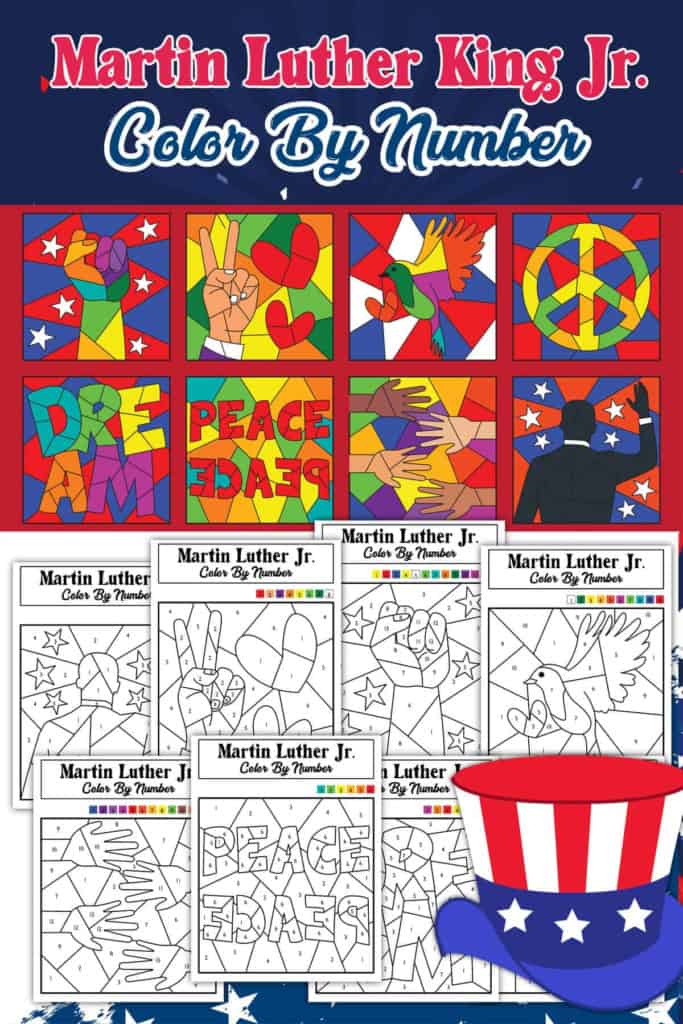
Free Martin Luther King Jr. Color by Number (Printable for Kids)
If you’re looking for a simple, meaningful activity for kids to do around Martin Luther King Jr. Day, this is an easy one to add to your plans.
These MLK color-by-number pages give kids something structured and calm to work on, while still opening the door to important conversations about fairness, kindness, and standing up for others.
Why use color-by-number pages?
Let’s be honest, kids don’t always sit down ready to talk about big topics like civil rights. And that’s okay.
Activities like this give them a starting point.
While they’re coloring, you can:
- Talk about who Martin Luther King Jr. was
- Discuss what it means to treat people fairly
- Ask simple questions about kindness and inclusion
- Connect it to what they see at school or in their daily lives
It doesn’t have to be a full lesson-even small conversations matter.
Download your free MLK color-by-number pages
Print them out, use them in your classroom or at home, and keep the conversation going in whatever way works for your kids.
Who this is for
These pages work well for:
- Elementary classrooms
- Special education settings
- Occupational therapy or fine motor practice
- Calm-down or independent work time
- Homeschool lessons
The structure of color-by-number is especially helpful for kids who need clear directions or benefit from predictable tasks.
Skills kids are practicing
Even though it looks like “just coloring,” there’s a lot going on here:
- Number recognition
- Color matching
- Following directions
- Fine motor skills
- Focus and attention
For some kids, this is exactly the kind of low-pressure activity that helps them stay regulated while still participating.
A quick note about MLK Day
Martin Luther King Jr. wasn’t just someone we learn about once a year.
His message about fairness, inclusion, and standing up for what’s right is something kids can understand in everyday terms:
- Including others at recess
- Speaking up when something isn’t fair
- Treating classmates with respect
You don’t need a perfect script. Just start where your child or students are.