Boycott: How to Survive and Thrive Without Big Corporations.
Over the past couple of years, there have been specific “blackout days” to protest corporate greed, unfair labor practices, and unethical business behaviors. The goal? To send a powerful message to major corporations that consumers hold the real power by choosing where (and if) they spend their money.
By opting out of unnecessary purchases for the day, citizens hope to highlight issues like economic inequality, price gouging, and the need for more ethical business practices.
But, what can often be more effective long term is to change your buying habits permanently, away from companies whose belief systems do not align with yours, and instead purchase from businesses that you want to support.
Do Boycotts Work?
Yes, boycotts can work, but their effectiveness depends on several factors:
- Size and Participation – A boycott needs a critical mass of people to make a financial dent. The more participants, the stronger the impact.
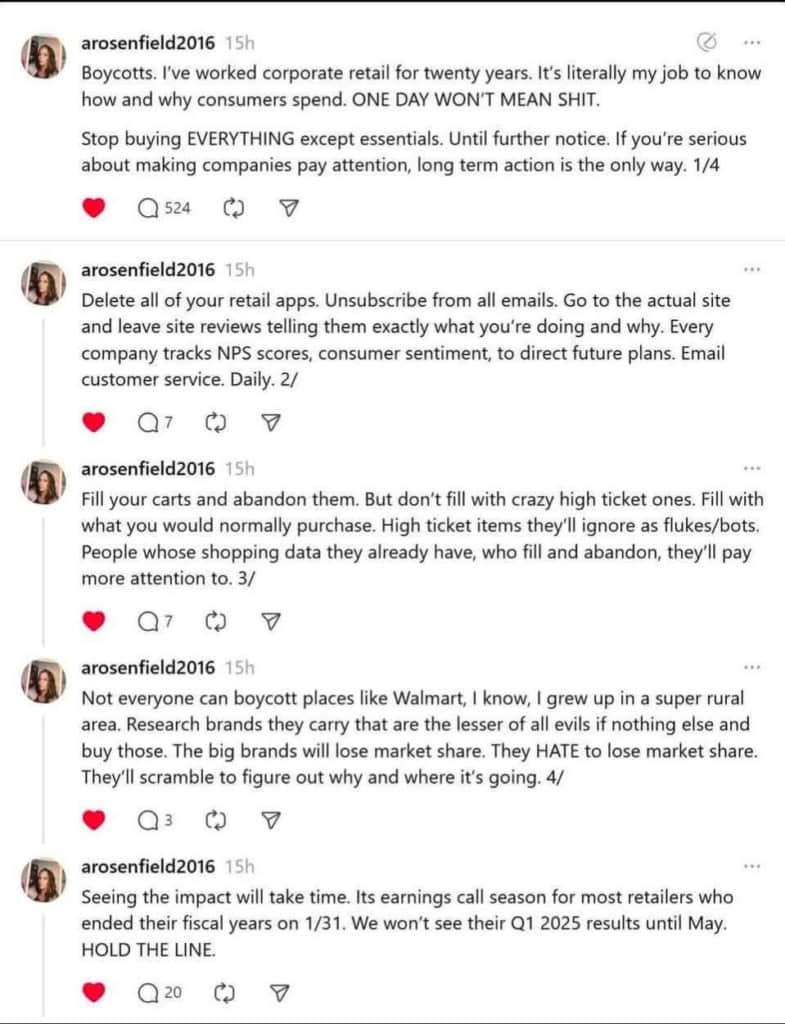
- Sustained Effort – One-day boycotts make a statement, but long-term changes (like permanently switching brands or products) have a greater impact.
- Clear Goals and Messaging – Successful boycotts have a specific demand, whether it’s better wages, policy changes, or corporate accountability.
- Media and Public Pressure – Companies are more likely to respond when there’s significant media coverage and public scrutiny.
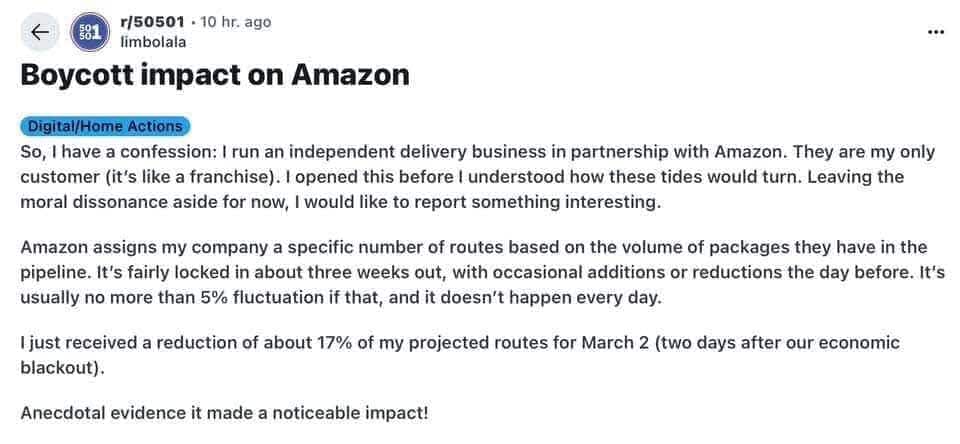
Short-term boycotts often raise awareness, but long-term ones that hit profits and reputation tend to drive real change. That said, in this day and age of corporate America, the stock market and quarterly earnings, companies are always watching their bottom line. Even a decrease in the single-digits % can have an impact, because they want to grow every quarter.
So, if you’re looking for ways to participate (or just want to be more mindful of your spending in general), I’ve put together a list of ideas.
The first step would be to review your bank statements, venmo history, receipts, or heck, just look in your kitchen cabinets and refrigerator, and take personal inventory.
What can you truly do without? What can be switched to a local brand?
Before anyone says, “but I don’t have any other options where I live,” I get it. Rural areas have been systematically stripped of local businesses and alternatives, which is exactly the problem. That’s by design. And it’s not going to change unless we start tackling the policies and power structures that put us here in the first place.
For rural families who rely on Walmart and Amazon (because, let’s be real, sometimes it’s the only option), here are some ways to participate in a boycott while still getting what you need:
- Shop Local When Possible – Check if there are small businesses, farm stands, or co-ops nearby for groceries and essentials. Even shifting some of your spending helps.
- Buy Direct from Brands – Many companies (like clothing brands or food producers) sell directly online, sometimes even cheaper than big-box stores. Do you really need that item the very next day? Or can it wait?
- Explore Online Alternatives – Sites like Thrive Market, Misfits Market, or local farm delivery services can replace some grocery shopping.
- Swap and Share – See if neighbors, family, or friends can trade items or make bulk purchases together from alternative sources.
- Use Walmart (or Amazon, etc.) Less Over Time – If an immediate, full boycott isn’t feasible, consider gradually shifting purchases elsewhere when you can. Change your buying habits for one product at a time, finding alternate sources.
For many rural families, avoiding Walmart or Amazon entirely isn’t realistic, but even small changes in spending habits can send a message over time.
Grocery shopping is one of the hardest things to boycott because the big food conglomerates own almost everything. But with some planning, you can cut them out as much as possible.
Shop Local Whenever Possible
- Farmers’ Markets and CSAs – Buy directly from farmers for fresh produce, eggs, dairy, and even meats.
- Co-ops and Small Grocers – Many towns have independent stores that carry local or ethical brands.
- Bakeries and Butcher Shops – Skip pre-packaged grocery store items and support small businesses instead.
- Ethnic and Specialty Stores – Often carry unique, high-quality foods from smaller producers, not just corporate giants.
Avoid These Grocery Giants
Most grocery store chains are owned by just a few companies:
- Walmart – Largest grocery retailer in the U.S., notorious for crushing small businesses.
- Kroger (owns Ralphs, Fred Meyer, Harris Teeter, etc.) – Controls a huge chunk of the market.
- Albertsons/Safeway – Another major player that makes it hard for local stores to compete.
- Amazon/Whole Foods – If you’re boycotting Amazon, that includes Whole Foods.
Brands to Think Twice About
Almost everything on grocery store shelves is owned by a handful of corporations:
Processed and Packaged Foods
- Nestlé – Owns Hot Pockets, Toll House, Stouffer’s, Perrier, Poland Spring, and more.
- PepsiCo – Includes Frito-Lay, Quaker, Gatorade, Tropicana, and more.
- General Mills – Owns Cheerios, Betty Crocker, Pillsbury, Annie’s, and more.
- Mondelez – Controls Oreo, Ritz, Triscuit, and Cadbury.
- Kraft Heinz – Ketchup, mac & cheese, Velveeta, Lunchables.
- Unilever – Ben & Jerry’s, Hellmann’s, Breyers, Lipton, and more.
Meat and Dairy
- Tyson Foods – One of the worst offenders for worker abuse and factory farming.
- JBS & Smithfield – Control most pork and beef production in the U.S.
- Dairy Farmers of America – A massive, monopolistic dairy co-op.
The grocery industry is heavily monopolized, but every shift away from big food makes a difference. Grocery also matters a lot because it’s a shopping category that we need to survive, and often a household’s top 5 expense.
Start small, maybe replace just one big-brand staple at a time. The more we opt out, the harder it becomes for these corporations to control our food supply.
Meal Planning Helps
Meal planning can be a game-changer for boycotts because it helps people avoid impulse purchases and reliance on big corporations. Here’s how:
- Reduce Grocery Store Trips – The fewer trips you make, the less likely you are to default to convenience stores that are on the boycott list. Planning meals ahead means you buy what you need in one go, ideally from local farmers, co-ops, or independent grocers.
- Buy Local and Seasonal – Meal planning lets you be intentional about sourcing ingredients from farmer’s markets, CSAs (community-supported agriculture), or smaller stores that aren’t tied to corporations you’re avoiding.
- Cook from Scratch – A well-thought-out meal plan means fewer pre-packaged, brand-name products that often come from the companies you’re trying to avoid. Cooking at home gives you control over where your ingredients come from.
- Batch Cooking and Freezing – If you’re used to relying on fast food or delivery (many of which are owned by massive chains), meal prepping and freezing homemade meals keeps you from caving when you’re too tired to cook.
- Save Money – Many people say boycotting is hard because alternatives can be more expensive. But meal planning reduces waste, helps you use what you buy efficiently, and prevents expensive impulse purchases.
Basically, meal planning gives you control over your food, your budget, and where your money goes. It makes it much easier to break free from corporate giants because you’re not left scrambling for convenience.
Want to make it even easier? Start small. Plan just two or three meals a week with only locally sourced or independent ingredients and build from there.
Buy, Sell, or Swap Instead of Shopping Big
Instead of running to Amazon or Walmart, check local buy/sell/trade groups for what you need. Need a new coffee maker, winter coat, or kids’ clothes? Someone in your community probably has one they’re looking to get rid of.
Join Freecycle or “Buy Nothing” Groups
These groups are gold for reducing dependence on major retailers. People give away everything from furniture to baby gear to unopened pantry staples—sometimes just because they’re decluttering.
Swap Services and Skills
Bartering is a lost art, but it shouldn’t be. If you’re a whiz at fixing things, baking, or tutoring, offer to trade your skills for something you need. Need a haircut? Maybe a local stylist will trade for babysitting or homemade bread.
Organize Bulk Buying with Others
If a small business or co-op has a minimum order, split it with friends. Get a group together to buy bulk grains, meat shares, or even handmade goods from a local craftsperson instead of supporting corporations.
Reduce Waste and Save Money
Reusing, repurposing, and trading keep money in your community and keep you from needing to buy new from corporations you’re trying to avoid. On average, Americans waste up to 40% of the food they buy, so by cutting back on that alone, you could see big savings.
Basically, the more we lean on each other instead of corporations, the easier boycotting becomes. It’s not just about where we don’t shop, it’s about where we do.
Dairy Products
Dairy is a tricky one because so many major brands are tied to big corporations, but there are plenty of ways to source it ethically and avoid the big guys. Here are some options:
Local Farms and CSAs
- Find a local dairy farm that sells milk, cheese, butter, or yogurt directly to consumers. Many small farms offer herd shares where you “buy into” a cow and get fresh dairy weekly.
- Farmers’ markets often have independent dairy vendors selling raw or minimally processed milk, cheese, and butter.
Regional and Small Brands
- Research independent dairies in your area. Some family-owned brands are still around, even in grocery stores. Look for ones that aren’t owned by major conglomerates like Dairy Farmers of America or Nestlé.
- Some grocery chains (especially co-ops or natural food stores) source from local or small-scale dairy farms. Check labels!
Make Your Own Dairy Products
- Butter – Buy local cream and churn your own. It’s easier than you think.
- Yogurt – A simple process that just requires milk and a starter culture. Bonus: No plastic tubs!
- Cheese – If you have access to local milk, you can make fresh cheeses like ricotta, paneer, or mozzarella at home.
The key with dairy is getting as close to the source as possible—whether that’s buying from a local farm, choosing independent brands, or making some of it yourself.
Coffee is another big one since so much of the industry is controlled by corporate giants (hello, Nestlé, Starbucks, and Keurig). But there are plenty of ethical, boycott-friendly options.
Buy From Local Roasters
- Most cities (even smaller towns) have at least one independent coffee roaster. Buying from them keeps money in your community and ensures better sourcing.
- Check farmer’s markets, co-ops, and specialty grocery stores.
Direct Trade and Small-Batch Coffee
- Look for brands that do direct trade (cutting out middlemen and paying farmers fairly).
- Some good ones:
- Counter Culture Coffee
- Equal Exchange
- Dean’s Beans
- Cafe Mam
- Many single-origin, small-batch roasters you can find online
Subscription Services for Ethical Coffee
- Companies like Trade Coffee or Atlas Coffee Club let you support small farms and roasters without relying on corporate chains.
Brew at Home, Skip Starbucks
- If you’re trying to boycott corporate coffee, making it at home is the best option.
- Get a French press, AeroPress, or pour-over setup, which is cheaper, better-tasting, and keeps money out of corporate pockets.
Fast Fashion
Most of us already have more clothes than we need. But, in the event you need something, stay away from fast fashion.
Clothing Stores: Where to Shop & What to Avoid
The fashion industry is a mess with rampant exploitation, environmental destruction, and billionaires raking it in while garment workers earn pennies. So, if you’re boycotting corporate giants, fast fashion is a great place to start.
Which Companies Are Fast Fashion?
Fast fashion brands crank out cheap, low-quality clothing at breakneck speed, relying on underpaid labor, environmental destruction, and planned obsolescence to keep profits high. Here are some of the biggest offenders:
Ultra-Fast Fashion (The Worst of the Worst)
- SHEIN – Steals designs, uses exploitative labor, and contributes massively to textile waste.
- Temu – Dirt-cheap, poor-quality clothing, with questionable supply chains.
- Romwe/ZAFUL/Forever 21 – Same deal as SHEIN—fast, cheap, disposable.
Traditional Fast Fashion (Still Bad, Just Not AS Fast)
- H&M – Claims “sustainability” while producing millions of garments per week.
- Zara – One of the original fast fashion brands, with major labor violations.
- Fashion Nova – Targets trendy shoppers but relies on sweatshop-like conditions.
- Uniqlo – Better quality than some, but still has serious ethical concerns.
- Old Navy, Gap, Banana Republic – All owned by Gap Inc., which has a long history of labor violations.
Sneaky “Greenwashing” Brands
Some brands pretend to be sustainable but still engage in fast fashion practices:
- Madewell and J.Crew – Higher price tags, same fast fashion model.
- Anthropologie and Urban Outfitters – Trendy, but still mass-producing under shady conditions.
Why Should We Stay Away?
- Labor Exploitation – Many fast fashion workers (including children) work in dangerous conditions for poverty wages—think Bangladesh factory collapses.
- Environmental Damage – Fast fashion is one of the biggest polluters, creating insane amounts of textile waste and toxic runoff from cheap dyes.
- Planned Obsolescence – Clothes are made to fall apart quickly, so you’re forced to keep buying more.
- Corporate Greed – Billionaire CEOs profit while paying workers pennies per garment.
Where to Shop Instead?
- Thrift and Secondhand – Goodwill, local thrift shops, online platforms like Poshmark, Depop, ThredUp, Facebook Marketplace.
- Slow Fashion and Sustainable Brands – Look for small, ethical brands like Pact, Christy Dawn, Kotn, Eileen Fisher (Renew), ABLE, and Patagonia’s Worn Wear program.
- Buy Less, Choose Well – Focus on quality over quantity. A well-made piece lasts years, while a $5 SHEIN top barely survives one wash.
- Clothing Swaps and Upcycling – Organize a clothing swap with friends or DIY new styles from old pieces.
Every time we buy fast fashion, we feed a system that thrives on exploitation, pollution, and waste. But the good news? We don’t need to buy into it. Shopping secondhand, supporting ethical brands, and simply buying less are all ways to fight back.
The Rest of the Worst
Here are a few other areas to consider for long-term boycotts:
Banking and Finance
- Big banks (Chase, Wells Fargo, Bank of America) are tied to corporate greed, fossil fuels, and shady practices.
- Alternatives: Credit unions, local banks, and ethical online banks (like Aspiration or Amalgamated Bank).
Internet and Tech
- Hard to avoid, but companies like Amazon (AWS), Google, and Meta dominate.
- Alternatives: DuckDuckGo for search, ProtonMail for email, Mastodon or Bluesky instead of Facebook/Twitter.
Streaming and Entertainment
- Disney, Amazon Prime, and Netflix are all corporate giants.
- Alternatives: Public libraries (for movies and books), local theaters, indie streaming services.
Transportation and Gas
- ExxonMobil, Chevron, Shell—huge corporate players.
- Alternatives: Support public transit, bike when possible, or choose independent gas stations.
Health, Household, Cleaning Products
- Procter & Gamble, Unilever, and SC Johnson own most mainstream brands. Alternatives: DIY cleaners (vinegar + baking soda), small eco-friendly brands, refill stations.
- Big Pharma is tricky to avoid, but you can research independent pharmacies or discount programs like GoodRx.
Sticking to a long-term boycott isn’t just about skipping Starbucks for a few weeks—it’s about retraining how we think about consumption. It’s easy to feel like one person’s choices don’t matter, but every dollar spent (or withheld) is a vote for the kind of world we want. Start small: replace one habit at a time and build from there.
Stay connected: join local groups, swap resources, and support each other. And most importantly, remember why you started. Corporations bank on us getting tired, distracted, and giving up. But real change happens when we refuse to go back to business as usual. Stay stubborn, stay committed, and know that every step, no matter how small, chips away at their power.