
Free Axolotl Coloring Pages (Cute Printable PDF)
A few years ago, hardly anyone outside the science world had heard of an axolotl. Now? Kids are obsessed.
Whether they discovered axolotls through books, video games, social media, or simply because they look like they’re always smiling, these unique amphibians have become one of the most requested animals in classrooms and at home.
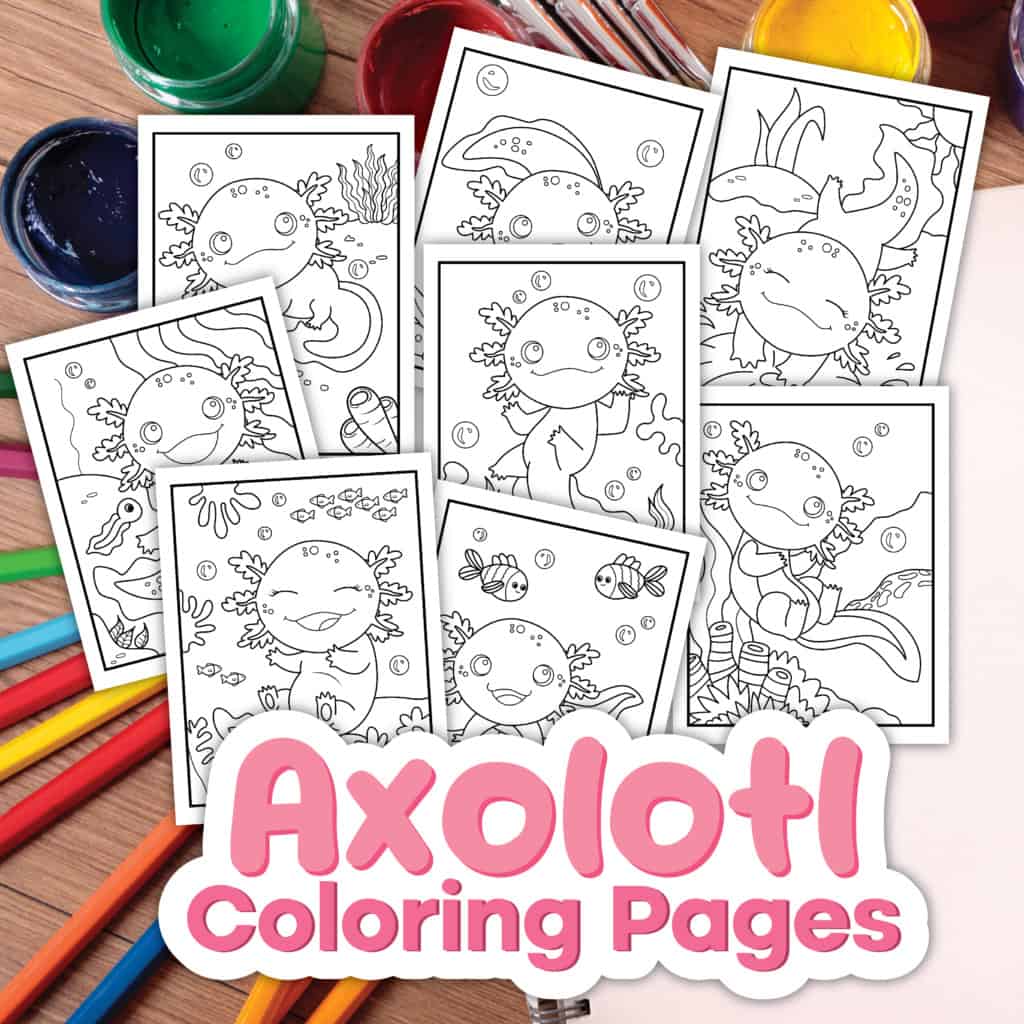
If your child can’t stop talking about axolotls, these free printable coloring pages are a fun way to keep that curiosity going. This printable set includes several adorable axolotl illustrations in different underwater scenes that are perfect for coloring at home or in the classroom.
You might also be interested in:
- Hungry Little Caterpillar Coloring Pages (go from amphibians to bugs!)
- Stingray Coloring Pages
- Princess Coloring Pages
- Dinosaur Coloring Pages
What Makes Axolotls So Special?
Unlike most amphibians, axolotls never completely grow out of their juvenile stage. Instead of losing their feathery external gills like salamanders usually do, axolotls keep them throughout their lives.
They’re also famous for something that sounds almost like science fiction.
If an axolotl loses a leg, part of its tail, or even parts of certain organs, it can regenerate them. Scientists continue to study axolotls because understanding how they heal may someday help advance human medicine.
No wonder kids think they’re cool.
Turn Coloring Time into Learning Time
Coloring pages don’t have to be just a quiet activity.
While children color, ask questions like:
- Where do axolotls live?
- Why do they have feathery gills?
- What color do you think a real axolotl is?
- What other animals live underwater?
It’s an easy way to build vocabulary, conversation skills, and curiosity without making it feel like another lesson.
If you’re studying habitats, amphibians, or endangered animals, these coloring pages also make a simple extension activity after reading a nonfiction book or watching a short nature video.
Cute Axolotl Coloring Pages
Not Just for Young Kids
Yes, younger children will enjoy coloring these smiling axolotls. But don’t stop there.
Many older students–including autistic learners and students with intellectual disabilities—love animals and benefit from activities that build fine motor skills, support conversation, and reduce anxiety. Coloring can be a calming brain break while still providing opportunities to practice language, answer WH questions, or learn interesting science facts. I always encourage choosing activities based on the skills you’re working on, not simply a student’s age.
Whether your child is fascinated by unusual animals or just loves anything adorable, these printable axolotl coloring pages are an easy, no-prep activity to keep on hand for classrooms, homeschool lessons, indoor recess, or rainy afternoons.
Fun Axolotl Facts for Kids
First things first… how do you even say axolotl? axolotl (AK-suh-LAH-tul)
Don’t worry if you stumble over it the first few times. Most adults do too!
Here are some fun facts to share while your child colors.
Axolotls are amphibians.
Even though they spend their entire lives in water, axolotls are amphibians. They’re closely related to salamanders, but they never go through the usual transformation into a land-dwelling adult.
They keep their feathery gills for life.
Those fluffy “feathers” sticking out from the sides of an axolotl’s head aren’t hair or ears—they’re actually external gills. Axolotls use them to breathe underwater.
They’re sometimes called the “walking fish.”
Here’s the funny part—they aren’t fish at all! They’re amphibians. People gave them the nickname because they spend their lives underwater and have little legs that make it look like they’re walking along the bottom of lakes.
Axolotls can regrow body parts.
This is probably the coolest axolotl fact of all. If an axolotl loses a leg, part of its tail, or even parts of certain organs, it can grow them back. Scientists study axolotls to learn more about regeneration and whether those discoveries might someday help people.
Wild axolotls are endangered.
You might see lots of axolotls online, but in the wild they’re actually very rare. They naturally live in only a small area near Mexico City, and habitat loss and pollution have made wild populations decline dramatically.
They come in more than one color.
The pink axolotl is the one you probably see most often in cartoons, toys, and video games. Real axolotls can also be brown, black, white, golden, or speckled. So if your child wants to color one bright blue with rainbow gills…I’d allow it. Sometimes creativity wins over scientific accuracy.
They always look like they’re smiling.
One reason axolotls have become so popular is their adorable faces. Their wide mouths and tiny eyes make them look like they’re smiling all the time, even when they’re just swimming around looking for a snack.
Try This While Coloring
Instead of simply handing your child a coloring page, turn it into a mini science lesson. Ask questions like:
- Why do you think the axolotl has gills instead of lungs?
- What other animals live underwater?
- If you could regenerate one thing like an axolotl, what would it be?
- Why do you think scientists are interested in studying axolotls?
A few simple questions can build vocabulary, encourage conversation, and spark curiosity—without making it feel like school. After all, that’s one of my favorite things about coloring pages. They’re fun first, and learning sneaks in while nobody’s looking.