Free PDF Emotions Coloring Pages for Kids (12 Emotions and Feelings)
Helping children identify, understand, and talk about their feelings is an important part of social-emotional development. These free printable emotions coloring pages can be used at home, in the classroom, during counseling sessions, or as part of social-emotional learning (SEL) activities.
Many children find it easier to talk about feelings when they are engaged in an activity. Coloring provides a low-pressure opportunity to discuss emotions, build emotional vocabulary, and practice recognizing facial expressions and body language associated with different feelings.
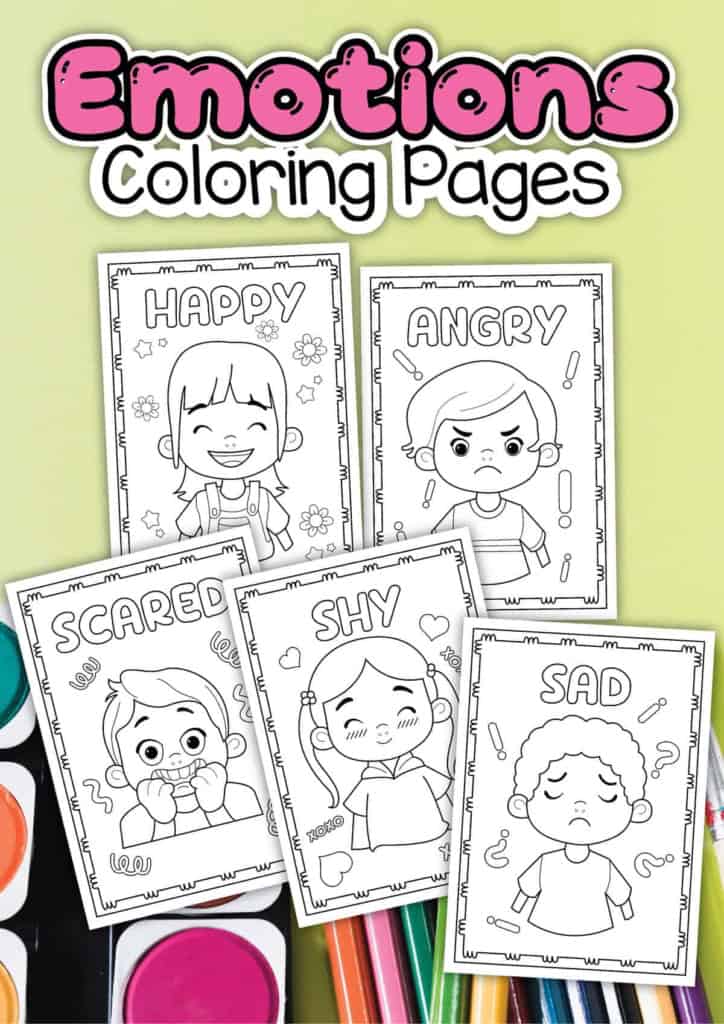
Whether you’re a parent, teacher, counselor, therapist, or caregiver, these feelings coloring pages for kids can be a helpful addition to your toolbox.
I have other therapy and SEL related coloring pages on this site, such as:
Download Your Free Printable Emotions Coloring Pages
Use the printable PDF below with students, clients, or your own children. These pages are intended to encourage conversations about emotions, build emotional vocabulary, and support social-emotional learning in a fun and engaging way.
How to Use Emotions Coloring Pages
These printable pages can be used in many different ways:
- Morning meeting or SEL lessons
- Calm-down corners and regulation stations
- School counseling groups
- Therapy sessions
- Social skills instruction
- Homeschool activities
- Preschool and kindergarten feelings lessons
As children color, ask open-ended questions such as:
- What feeling do you think this person is showing?
- When have you felt this way?
- What helps you when you feel this emotion?
- How can we tell how someone else is feeling?
These conversations help children develop emotional awareness and empathy.
Emotions Coloring Pages for Preschoolers
An emotions coloring page for preschoolers can help young children begin learning to identify basic feelings such as happy, sad, angry, worried, excited, and surprised.
Preschool-aged children are still developing the language needed to describe their emotions. Using simple coloring activities gives them a visual way to connect facial expressions with feeling words.
Teachers and parents can use these pages alongside books, songs, and classroom discussions about emotions to reinforce social-emotional learning skills.
Feelings Coloring Pages for Kids
Feelings coloring pages for kids can be especially helpful for children who struggle to express emotions verbally.
Many children can recognize that they feel “bad” or “upset” but have difficulty identifying whether they are frustrated, disappointed, embarrassed, nervous, or overwhelmed. Activities like coloring provide an opportunity to slow down and explore emotions in a supportive environment.
These printables can also be used to teach coping strategies, problem-solving skills, and self-regulation techniques.
Therapy Coloring Pages for Kids
Many counselors, psychologists, social workers, and therapists use coloring activities as part of their work with children.
Therapy coloring pages for kids can support conversations about emotions, coping skills, friendships, school challenges, family changes, and self-esteem. Coloring activities are often less intimidating than direct questioning and can help children feel more comfortable sharing their thoughts and feelings.
These pages work well for:
- School counseling sessions
- Individual therapy
- Small counseling groups
- Emotional regulation lessons
- Coping skills instruction
Therapy Coloring Sheets for Kids and Emotional Regulation
Therapy coloring sheets for kids can also be paired with emotional regulation activities. After identifying a feeling, children can discuss strategies that help them manage strong emotions.
For example:
- Deep breathing
- Taking a break
- Talking to a trusted adult
- Using positive self-talk
- Drawing or journaling
- Practicing mindfulness
The goal is not to eliminate emotions, but to help children recognize feelings and respond to them in healthy ways. Happy coloring!