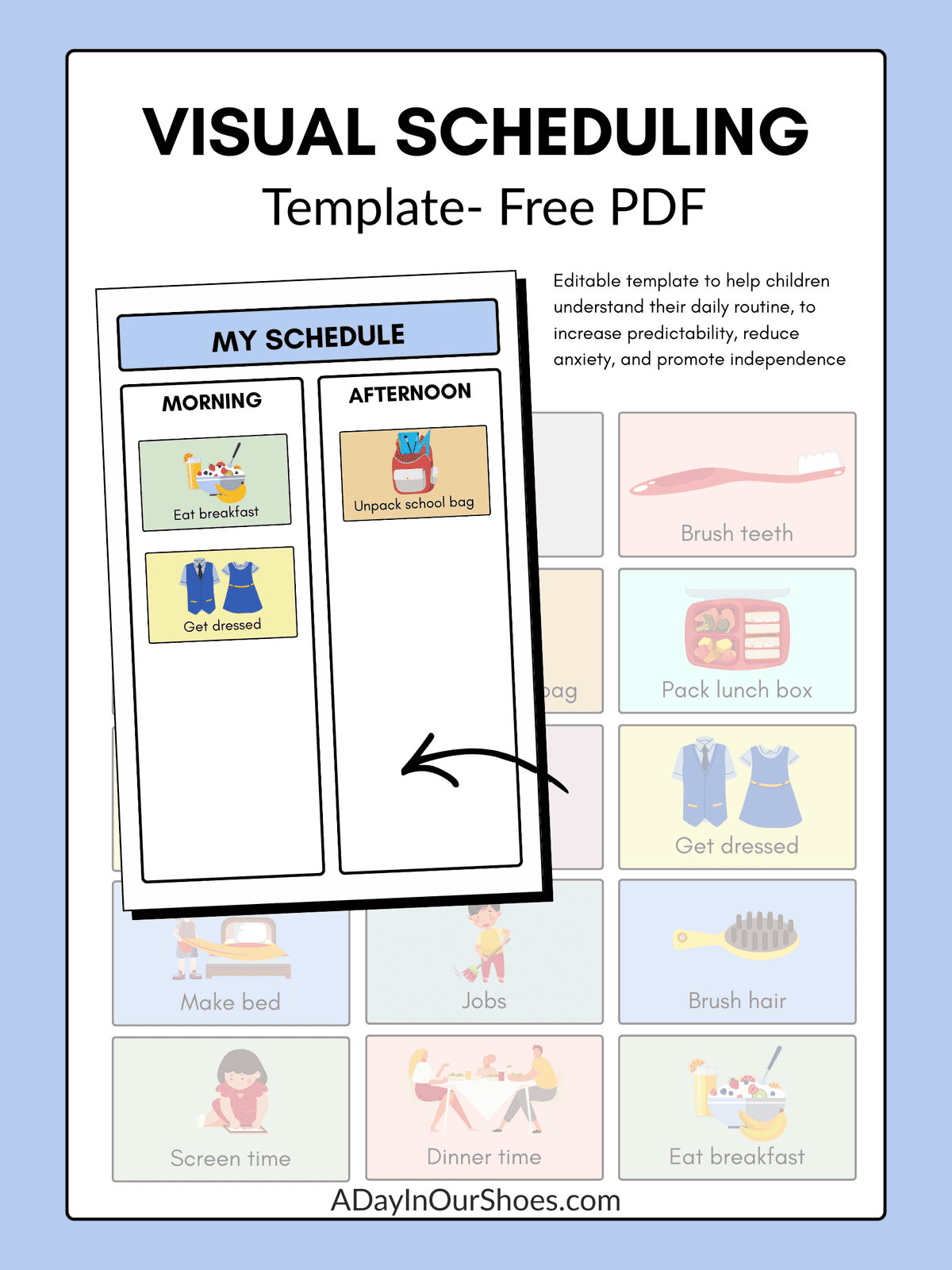
44 Free Visual Schedules and Templates (school or home)
Daily routines shouldn’t feel like a battle, but for many families, they do. Mornings, homework time, bedtime, getting out the door—these are things we do every single day. And yet, they’re often the most stressful parts of family life.
Many children use visual schedules successfully at school, but families aren’t always shown how to use them at home—or when they’re most helpful. These free printable visual schedules are designed to support daily routines when a child benefits from structure, predictability, and visual supports.
If routines regularly break down, feel overwhelming, or lead to meltdowns, visual schedules may help make expectations clearer and days a little calmer.
Many children have a harder time coping with unstructured or unpredictable parts of the day. When routines feel unclear, stress can build quickly—for kids and parents. Visual schedules can help by making expectations visible and consistent.
IEP Writing Shouldn’t Feel This Hard
IEP Data, Present Levels, goals, accommodations—
they’re supposed to connect. Most IEPs fall apart because they don’t.
This bundle shows you exactly what to write, where it goes, and why it works.
Printable schedules may be especially helpful for children who experience anxiety, executive functioning challenges, or difficulty transitioning between activities. Knowing what comes next can reduce uncertainty, even when the next activity is non-preferred. These visual schedules are free to download and use at home, and they’re meant to be flexible supports—not rigid rules.
If visual schedules don’t seem to help—or only help a little—it may be a sign that your child needs additional supports beyond routines alone.
Daily Visual Schedules
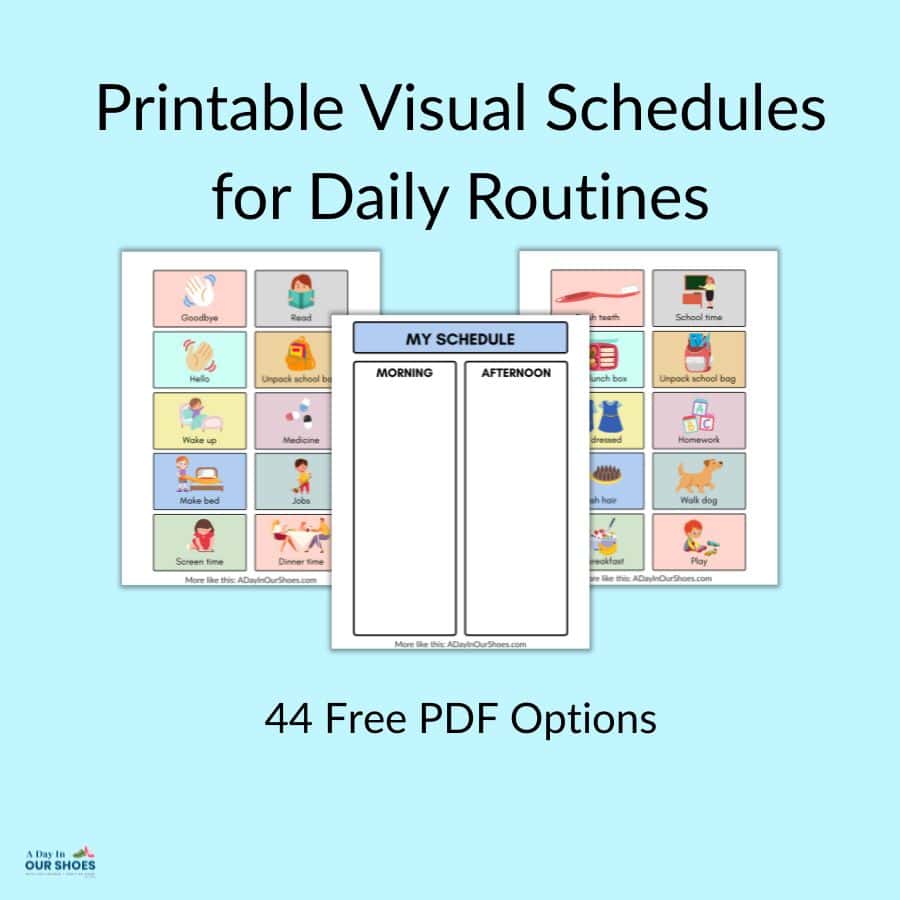
To make these visual schedules easier to use at home, all of the printables are organized into a small number of downloadable files. Instead of clicking through multiple PDFs, you can download a single file and print only the pages that fit your child’s routines.
The first file is brand new. There’s no expectation to use everything—most families start with one routine and build from there. And you can mix and match the picture icons from the various schedules.
If routines remain stressful even with visual supports, that information is helpful—it may point to other supports your child needs.
First Then Boards
The next file is the first then boards. Many of the images from the files can be cut out, laminated and used on the first then boards. They are the same size and meant to go together.
This daily schedule planner is intentionally simple. While it’s often helpful for autistic children, it can also support any child who feels overwhelmed by busy or unpredictable days.
You may notice that the schedule includes space for only a few activities. That’s by design. For children with executive functioning challenges, seeing too many steps at once can feel overwhelming. Starting with two or three key parts of the day can make routines feel more manageable. Additional activities can be added gradually as a child becomes more comfortable with the structure.
Printable Visual Schedules
Some kid may not be able to make the connection without the photo or item. My son needs the actual item. As in, we use actual Capri Sun pouches with velcro on them, rather than a picture of a Capri Sun.
First then boards can help kids learn sequencing, an important executive function.
When visual schedules make things harder, not easier
For some children—especially those with anxiety or a profile often described as Pathological Demand Avoidance (PDA)—traditional visual schedules can actually increase stress. What looks like resistance may be a nervous system response to perceived demands.
This video explains why that happens and what families can consider instead.
What is a visual schedule?
Visual schedules can be simple or detailed, depending on a child’s communication style, age, and needs. Some children use pictures, others prefer words, and many benefit from a combination of both.
A visual schedule uses pictures, words, or symbols to show the order of activities or the steps in a routine. Instead of relying only on verbal reminders, visual schedules make expectations visible—so a child can see what’s happening now and what comes next.
Are visual schedules only for autistic children?
No. While visual schedules are commonly associated with autism, many children benefit from them—especially those who struggle with transitions, anxiety, executive functioning, or understanding verbal instructions alone. Visual schedules support how information is processed, not a diagnosis.
Why visual schedules can help
Visual schedules can be helpful because they:
- Make expectations clearer by showing what comes next
- Support children who process information visually
- Reduce uncertainty during transitions
- Encourage independence by relying less on repeated verbal prompts
- Help some children feel more prepared for changes in routine
Using visual schedules at home
Setting up a visual schedule at home doesn’t have to be complicated or time-consuming. Many families start small—using schedules for one routine, like mornings or bedtime. Some children like helping choose the visuals, while others prefer adults to set things up ahead of time.
The goal isn’t perfection. It’s consistency and clarity. If a schedule isn’t helping, that information is useful too—it can help you decide what kind of support to try next.
Next Steps
If visual schedules don’t reduce stress or improve routines over time, it may be a sign that routines alone aren’t addressing the underlying challenge. It may be a sign that they are struggling with executive functioning skills. I have a great video and article on the site from an executive functioning expert, who really “gets it” as far as our kids’ struggles–Executive Functioning in Child Development. It might just be the “missing piece” as to why visual schedules aren’t working for your child.