
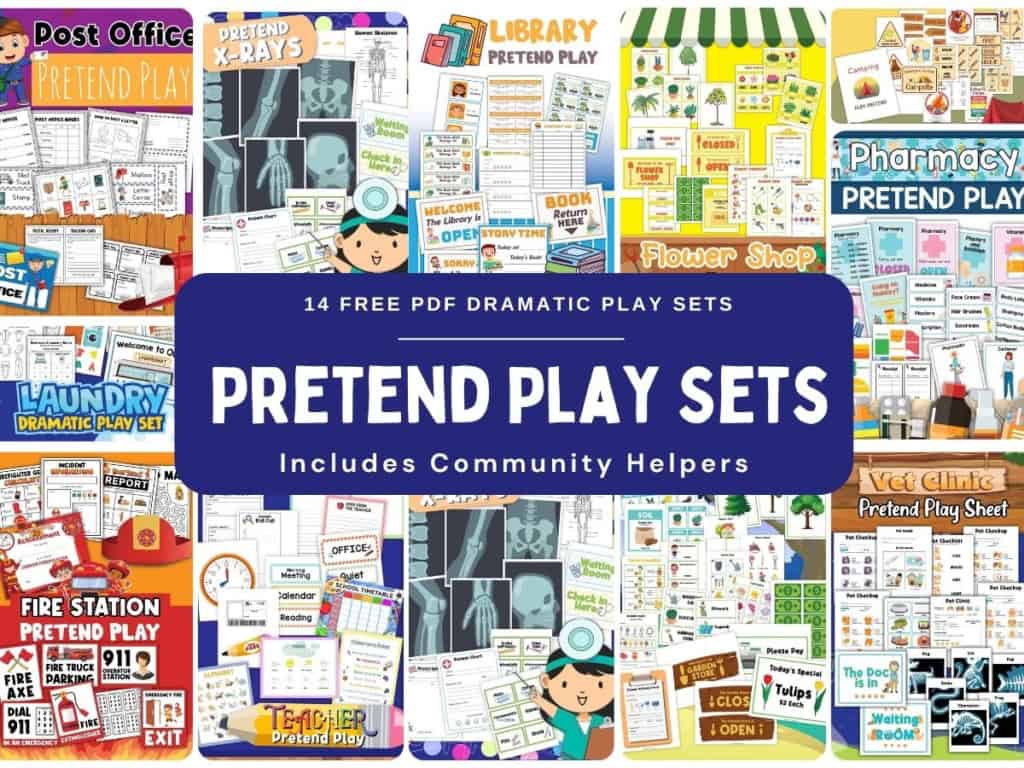
Play Pretend with 14 Free PDF Dramatic Play Centers (+ Community Helpers)
If you have an autistic child, it’s very likely that one of the first things that teachers and clinicians talk to you about is pretend play.
Especially high-functioning autism pretend play. It seems that educators really stick with this idea. Why is that? Does it matter if your autistic child can do pretend play?
Actually, it does matter. Pretend play (imaginative make-believe) helps children practice stepping into someone else’s shoes. Theory of mind is the cognitive ability to understand that other people have their own thoughts, beliefs, and desires, which may differ from one’s own. And pretend play can help develop that skill, which doesn’t always come easy for some kids.
You may also find the activities below a nice complement to playing pretend activities.
Community Helper Pretend Play Printables
- Dentist
- Eye Doctor
- Fire Station
- Library
- Pharmacy
- Post Office
- School
- Vet
- X-Ray
- Flower Shop
More Pretend Play Printables
- Camping
- Garden
- Laundry
- Zoo
Why Community Helper Pretend Play?
One thing I like about community helper activities is that they naturally teach more than pretend play. Children are building vocabulary, practicing conversation skills, learning about their neighborhoods, and beginning to understand that everyone has a role in a community. Whether they’re pretending to be a firefighter, veterinarian, librarian, or mail carrier, they’re learning about jobs they see every day.
That’s one reason community helper themes have stayed popular in preschool classrooms for decades—they’re familiar, engaging, and full of opportunities for language and social learning.
Playing Pretend
So why does it matter if a child does not engage in pretend play?
Pretend play is crucial for children’s development in several ways:
- Cognitive Development: Pretend play helps children develop cognitive skills such as problem-solving, decision-making, and creative thinking. They must use their imagination to create scenarios and come up with solutions within the context of their play.
- Language Development: Pretend play encourages language development as children engage in dialogue, negotiate roles, and express their thoughts and feelings. They often invent stories and narratives, which require them to use and understand language in meaningful ways.
- Social Development: Pretend play provides opportunities for children to practice social skills such as cooperation, empathy, and perspective-taking. They learn to take on different roles, understand others’ perspectives, and collaborate with peers to create and enact scenarios.
- Emotional Development: Pretend play allows children to explore and express their emotions in a safe and controlled environment. They can act out different feelings and learn to regulate their emotions as they navigate various scenarios and interactions.
While these pretend play printables are often used in preschool and kindergarten classrooms, I don’t get too attached to age recommendations. In special education, we teach the skills, not the birthday. If a student is working on language, social communication, life skills, or community awareness, these activities can be just as appropriate for an older learner as they are for a preschooler.
Most of these pretend play printables also fit nicely into a community helpers unit. You don’t have to use them all in the same week, either. Pull out the veterinarian set before a trip to the animal clinic, the post office after mailing holiday cards, or the library printables before story time. Kids learn best when activities connect to real life instead of living only inside a themed lesson plan.
Pretend Play Ideas PDF
One thing I appreciate about dramatic play is that it grows with the child. A preschooler might simply pretend to deliver mail or bandage a stuffed animal. An older student might practice taking turns in conversation, following a visual schedule, using functional vocabulary, or learning job-related life skills.
That’s why I don’t put strict age recommendations on pretend play activities. In special education especially, we teach the skill, not the grade level.
Pretend play does not have to be expensive or require any purchases at all!
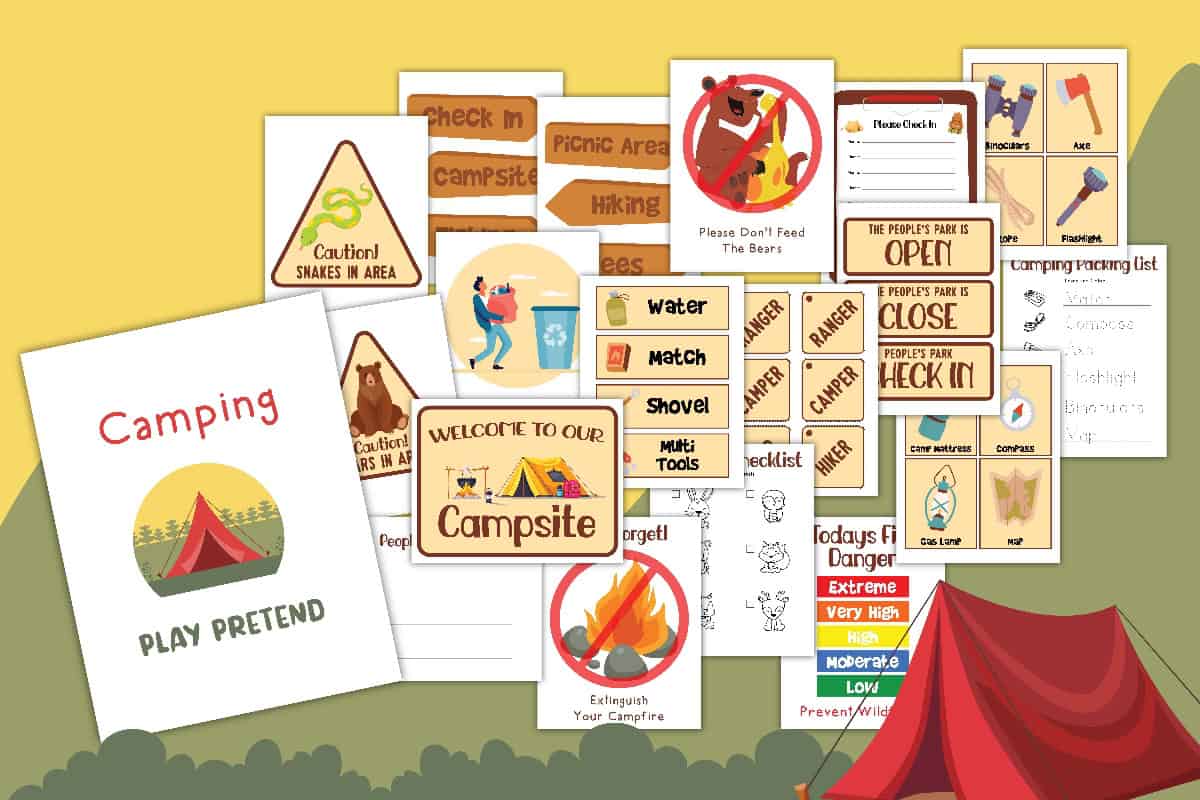
Camping Pretend Play
Click here to download: Pretend Camping PDFs
Dental Pretend Play
Click here to download: Pretend Dentist PDFs

Eye Doctor Pretend Play
Click here to download: Pretend Eye Doctor PDFs

Fire Station Pretend Play
Click here to download: Pretend Firefighter PDF

Flower Shop Pretend Play
Click here to download: Pretend Flower Shop PDF

Garden Pretend Play
Click here to download: Pretend Garden PDFs
You can always combine this with a sensory activity that includes dirt and seeds. Get the printable

Laundry Pretend Play
What a great way to introduce a child to helping with laundry. This makes great language activities and perfect for life skills too. Click here to download: Laundry PDFs

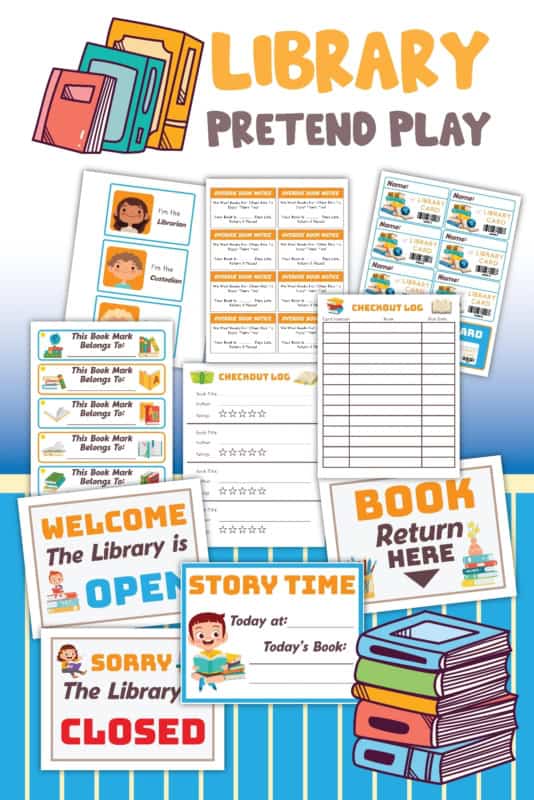
Library Pretend Play
Follow up this pretend play activity with a trip to the library
Click here to download: Pretend Library PDFs
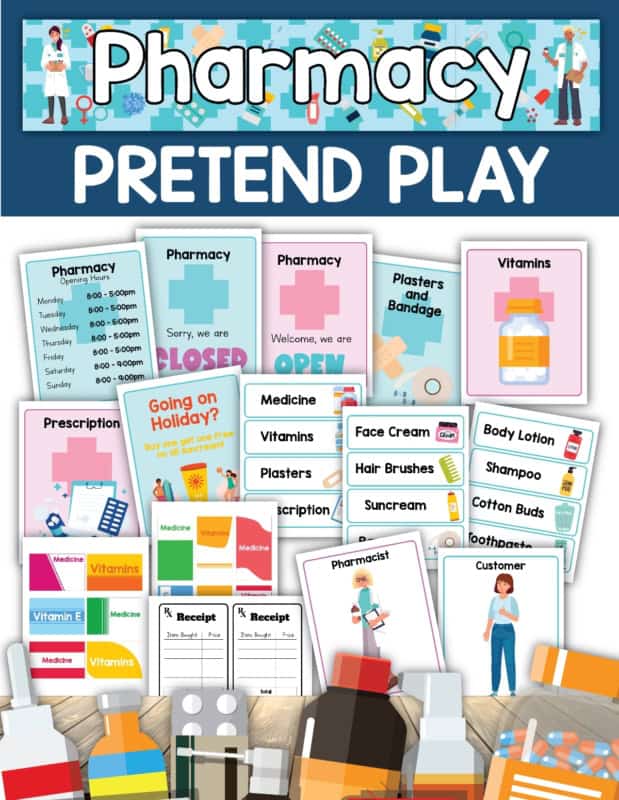
Pharmacy Pretend Play
Click here to download: Pretend Pharmacist PDFs
Post Office
Click here to download: Pretend Post Office PDF
I love that we can walk to our post office. Not everyone can do that. My boys loved putting letters in the slot when they were little.

School Pretend Play
Click here to download: Pretend Teacher and School Play PDF
Who doesn’t love “playing school?” A classic!

Vet Pretend Play
Click here to download: Pretend Vet PDF
Better to have pretend animals than real ones, sometimes.

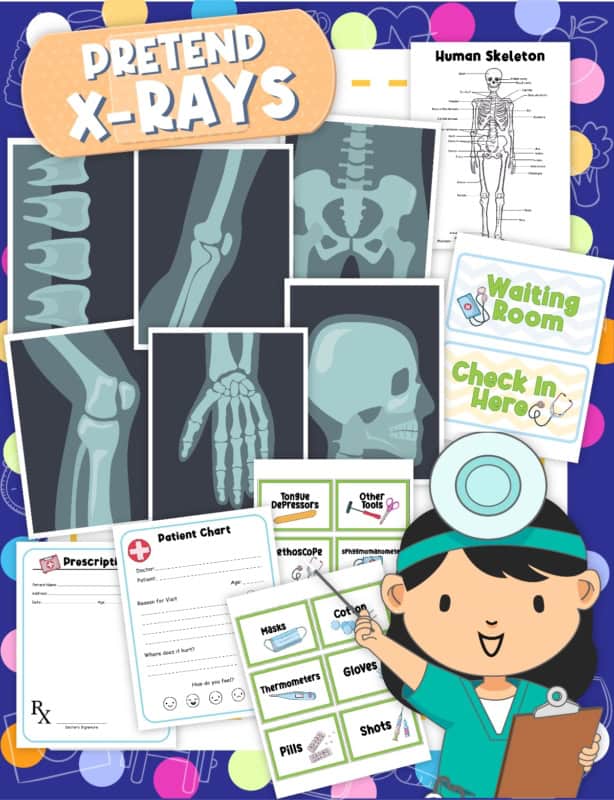
X-ray Pretend Play
Click here to download: Pretend X-Ray PDF
I love this one, because lying still or standing still for an x-ray is a real challenge for us.
Zoo Pretend Play
Click here to download: Pretend Zoo PDF
Perfect pre and post play activity for a trip to the zoo:

If you look through these printables, you’ll notice that many of them feature community helpers. That wasn’t an accident. Community helpers are some of the easiest dramatic play themes because children already have background knowledge. They’ve been to the doctor, seen firefighters, visited the library, or watched the mail carrier deliver letters. They don’t have to invent an imaginary world from scratch, they’re acting out experiences they’ve already had.
Community helper dramatic play also gives children a chance to practice much more than imaginative play. They’re learning new vocabulary, taking turns in conversation, following routines, solving problems, and understanding how different people contribute to a community. Whether they’re pretending to run a post office, examine a patient, or check out library books, they’re practicing real-world communication and social skills.