Transition Assessments for Students with Blindness or Severe Disabilities
Transition planning is one of the hardest parts of special education paperwork, especially when your student is blind, non-verbal, or requires total care.
A few weeks ago, a teacher emailed me asking for help:
“I’m a Special Education teacher and need guidance for one of my low-functioning blind students. What assessments are available for transition? The student is non-verbal, needs total care, can walk, and can use the bathroom with guidance. I’m at a loss when writing his IEP, especially for transition.”
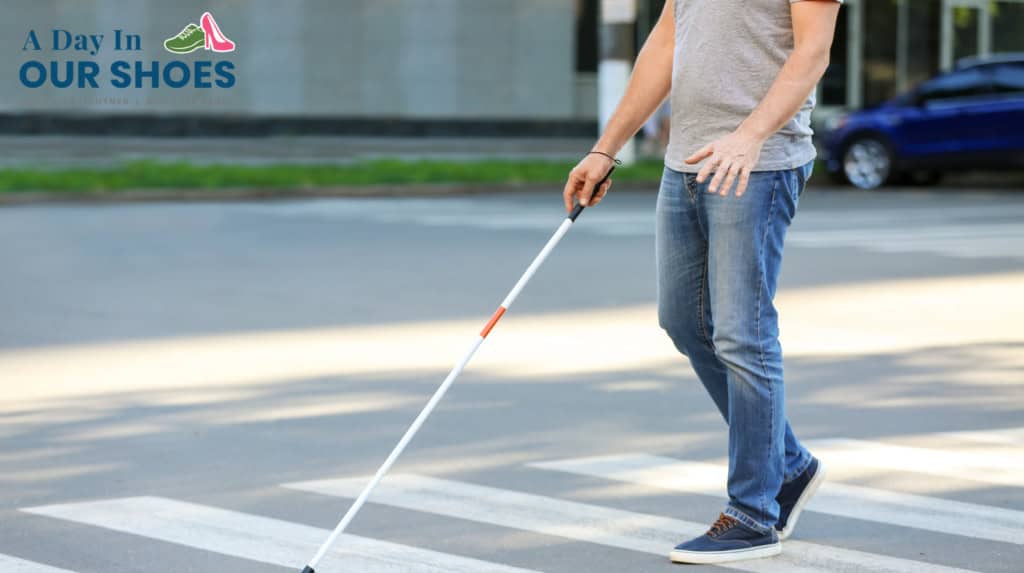
Writing meaningful transition goals for students with complex needs is tough work. But it’s also where we lay the foundation for adult life, communication, mobility, daily living, and dignity.
Since her question is one I get often, I’m turning my response into this guide for teachers who serve students with significant disabilities or visual impairments.
What to Assess (and Tools That Work)
Communication: The Foundation of Every Transition Plan
Even when students are non-verbal, they are communicating. Our job is to find out how and build on it.
- Communication Matrix: A structured caregiver/staff rating tool that maps communicative behaviors from pre-intentional gestures to symbolic communication. It’s one of the best starting points for non-verbal learners.
Vision-Specific and Mobility Skills
- Functional Vision Assessment (FVA) and Learning Media Assessment (LMA): Conducted by a Teacher of the Visually Impaired (TVI).
- Orientation & Mobility (O&M) Evaluation: Done by a Certified Orientation & Mobility Specialist (COMS) to assess safe travel and environmental access.
- Expanded Core Curriculum (ECC): Addresses nine skill areas essential for students with visual impairments, including compensatory access, social interaction, and independent living. The Texas School for the Blind and Visually Impaired (TSBVI) offers outstanding tools and checklists.
Transition Inventories for Significant Support Needs
When direct student self-reports aren’t feasible, use parent or educator rating tools.
- TRS 2.0 (updated ESTR-III): Measures employability, daily living, and community skills for learners with significant disabilities.
- TPI-2 (Transition Planning Inventory-2): A broad survey with a Modified Form for students with severe disabilities; staff and parent forms can replace self-input.
Related Services and Assistive Technology
- AAC and AT Assessments: Partner with your SLP and AT team to formalize access methods — tactile symbols, switches, auditory scanning, etc.
(TSBVI and Perkins School for the Blind both have strong guidance on AT evaluations.)
Turning the Results into a Transition IEP
Once you’ve gathered your assessments, it’s time to turn data into individualized, measurable goals.
Measurable Postsecondary Goals (Update Annually)
Each IEP should include post-school goals in Education/Training, Employment, and Independent Living. Use assessment results to make them specific and functional.
- Education/Training: “After exiting school, Student will participate in a community-based adult day program focusing on communication, mobility, and self-care using AAC and O&M supports.”
- Employment: “After exiting school, Student will engage in supported, non-competitive work tasks (e.g., switch-activated assembly) with systematic prompting in a center-based setting.”
- Independent Living: “After exiting school, Student will complete personal-care routines and leisure activities at home and in the community with partial assistance and tactile/auditory schedules.”
Annual IEP Goals (Linked to Assessment Baselines)
- Communication: “Given a partner-assisted auditory/tactile choice array of two, Student will indicate a preferred activity using an established response (e.g., hand reach or press) in 4 of 5 opportunities across two environments.”
- Mobility/Safety: “With COMS support and protective technique, Student will travel 20–30 feet in a familiar hallway using trailing and a human guide, requiring no more than partial physical prompts in 4 of 5 trials.”
- Independent Living: “Using a tactile schedule, Student will complete a 3-step personal-care routine with partial physical prompts fading to hand-under-hand in 3 of 5 sessions.”
Services and Activities
Include supports such as:
- Direct TVI minutes for access skills
- COMS minutes for travel and safety
- SLP for functional communication/AAC
- OT for positioning and environmental access
- Community-Based Instruction (CBI) linked to TRS/TPI-2 domains
- Family training on communication and O&M carryover
A Simple Workflow You Can Use This Week
- Assemble your team: TVI, COMS, SLP, OT. Choose tools like the Communication Matrix, O&M evaluation, ECC screen, and TRS 2.0 or TPI-2 Modified.
- Gather caregiver and staff input: Use parent and para rating forms to capture skills across environments.
- Draft the PLAAFP: Base it on concrete data: communication level (Matrix), O&M skills, ECC areas of need.
- Write postsecondary and annual goals: Keep them observable, teachable, and environment-based.
- Map services and activities: Add CBI, caregiver training, and agency linkages to each goal.
- Start agency connections early: Contact your state’s Vocational Rehabilitation and/or Blind Services agency before senior year to avoid eligibility delays.
Transition planning for students with blindness, deaf-blindness, or significant disabilities can feel overwhelming. But when you approach it through assessment → interpretation → goal-writing, it becomes both manageable and meaningful.
These students deserve transition plans built on communication, independence, and dignity, not checkboxes. And when we write from that mindset, we give them a real bridge to adult life.
You’re doing incredible work, and it matters, especially for students who depend on us to help them find their path forward.
Transition IEP Goals
- Community Safety and Transportation IEP Goals
- Independent Functioning and Independent Living IEP Goals (life skills goals)
- IEP Transition Goals Bank
- Low Functioning Students IEP Goals
- Money Skills IEP Goals
- Personal Hygiene and Health IEP Goals
- Postsecondary IEP Goals
- Self-Advocacy IEP Goals
- Vocational IEP Goals