25 Functional Life Skills Activities for IEP Students (+ How to Teach Them)
So your kid can recite every dinosaur that ever lived… but can’t microwave popcorn or tie their shoes. Or maybe they’re nailing math facts but completely melting down over brushing their teeth. Sound familiar?
If you’re here, you’re probably wondering how the heck you’re supposed to teach your kid all these “life skills” on top of everything else you’re already managing—like IEP meetings, behavior charts, and whatever sensory drama today brings. Spoiler alert: You’re not alone, and yes, you can teach life skills. Even the sticky, messy, meltdowny ones.
This isn’t some Pinterest-perfect list of activities that only work in theory. These are real-world, doable life skills that actually make a difference—for your kid, and for your sanity. From personal hygiene to folding laundry (yes, that’s a life skill), I’m breaking it down into simple tips and tools you can start using today.
Listen, I have a son with very high needs and a limited skill set. In addition to being an advocate, I’ve lived this life for 2 decades. It sneaks up on you. As our kids age, their lack of skills compounds and it feels like a mountain too impossible to climb. It’s not.
You Need IEP Data. You Also Need to Teach.
IEP progress monitoring has to get done, but it shouldn’t take hours. You need a system that’s simple enough to actually use in a real classroom.
Get teacher-created, ready-to-use tools that help you track IEP goals, document meaningful progress, and write progress reports faster, without adding more paperwork to your day. Save time, stay compliant.
Let’s get into it. But, before I start….here are is complementary information that you may want to come back to.
- Free: Online Modules that Teach Life Skills
- 100 Functional Life Skills IEP Goals | Independent Functioning
- What is a Life Skills Classroom? Is it the Same as a Resource Room?
- 50 Chores for Teenagers that Build Life Skills and Executive Functioning
- Printable Chore Chart that is skill based, rather than age based.
What are Life Skills Activities?
Life skills are exactly what they sound like, the stuff our kids need to function in the real world. Not just “someday,” but right now. We’re talking hygiene, independence, communication, and safety. The kind of things that give them confidence, a sense of control, and yes, give you one less thing to do for them.
Think: wiping instead of yelling for help in the bathroom. Pouring cereal without a flood. Crossing the street without giving you a heart attack. These aren’t just chores, they’re building blocks for independence. Transition services under IDEA may include Community-Based Instruction when students need hands-on learning in natural environments.
And here’s the thing: life skills can and should be part of your child’s IEP. If your kiddo has goals around independence, self-regulation, or daily functioning, these skills matter just as much—if not more—than their math fluency score.
Self-Care & Hygiene
- Brushing teeth
- Washing hands and face
- Brushing or combing hair
- Medication routines (taking meds on time, understanding dosage with help)
Clothing & Dressing
- Buttoning and zipping
- Putting on socks and shoes
- Choosing weather-appropriate clothes
- Folding and putting away laundry (yep, it’s both a dressing and household skill)
Household Tasks
- Sorting laundry by color
- Wiping down counters
- Folding towels or washcloths
- Taking out the trash (or at least knowing where it goes)
Cooking & Kitchen Skills
- Making toast or a sandwich
- Opening containers
- Pouring drinks without a tsunami
- Knowing how to get dishes clean
Money & Shopping
- Identifying coins and bills
- Making a grocery list
- Matching coupons or prices
- ‘Paying’ during pretend play or at real stores (hello, snack stand at the zoo)
Community & Safety
- Crossing the street safely
- Recognizing emergency services (fire, police, medical)
- Following directions in public spaces
- Public transportation basics (routes, stops, bus behavior)
- Emergency drills (what to do in fire, lockdown, or weather events)
Social & Emotional
- Role-playing greetings and conversations
- Identifying emotions in themselves and others
- Using visual aids or social stories to manage anxiety or behavior
- Asking for help or telling someone how they feel
Ok, it’s a pretty big list. So, where to begin?
How to Teach Life Skills at Home
Teaching life skills isn’t rocket science—but it’s not “just common sense,” either. Our kids need explicit, hands-on instruction. Repetition. Visuals. And sometimes, a whole lot of patience from you.
First, to make it easier for you, let me give you a great (and free!) recommendation. Life Skills Now is an online curriculum that is free. The assortment changes, but she has a finance track, neurodivergent track, kitchen skills, taking care of yourself and much more. Definitely check it out. Either you and your child can watch them together, or you can watch it and get ideas on how those experts are teaching the skills.
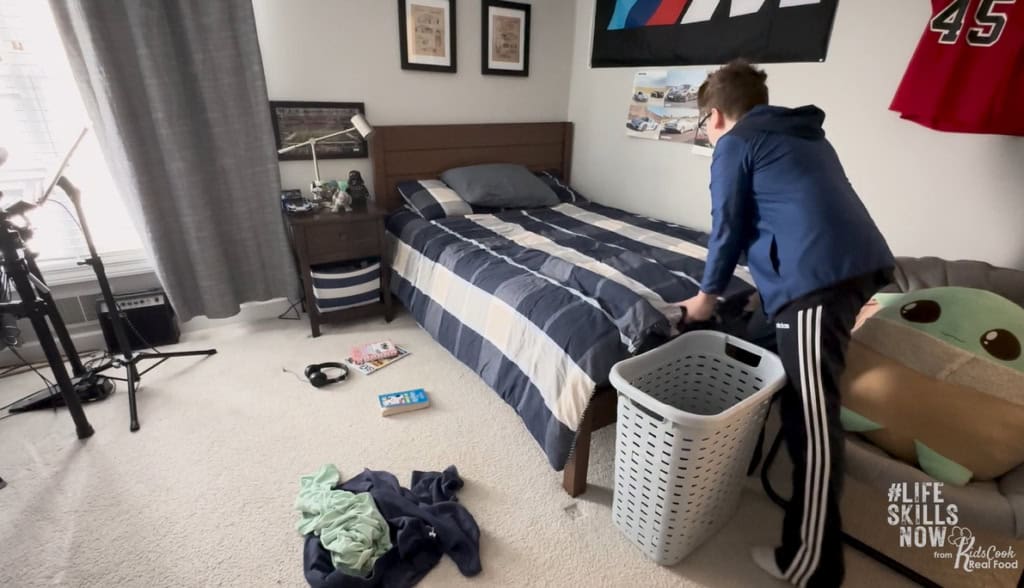
Here’s how to make it manageable:
1. Break it down: Every task can be broken into bite-sized steps. Folding a towel becomes: hold the corners, match the edges, smooth it down, fold again. Teach one step at a time. Model it. Then let them try.
2. Use visuals: Photos, videos, visual schedules, or even just a checklist with boxes to mark off—visuals give your child a roadmap. They also make you look super organized, even if you’re just winging it from the laundry pile.
3. Make it routine: Consistency matters more than perfection. Build skills into daily life—have them wipe the table after dinner every night, or practice sorting laundry every Sunday. Repetition = retention.
4. Celebrate the small wins: They turned on the water and tried to brush? Count it. These skills build slowly. Track progress (even the “not quite” attempts) and praise effort like it’s a championship.
If Your Child is in a Life Skills Classroom or SDC
You shouldn’t have to do this all alone. If your child is already in a self-contained (SDC) or life skills program, these skills should absolutely be part of their IEP and daily instruction. Even if they are not in a life skills program, IDEA is very clear about functional skills and IEPs.
Before agreeing to a life skills classroom placement, parents should ask whether the recommendation is based on evaluations and individualized needs or simply on labels, behavior concerns, or available programs.
You have every right to ask:
- What life skills are being taught?
- How is progress tracked and shared?
- Can we collaborate on what to practice and reinforce at home?
Ask the team how they’re teaching these skills and what supports are in place. You’re not just “asking too much”—you’re making sure your child is getting what IDEA promises.
For IEP Teams:
- Ask parents what their life skills priorities are—especially for kids with high or complex needs.
- Embed life skills goals into daily routines, not just isolated lessons or seat work.
- Track functional progress—messy attempts still count as growth.
Parent Questions about Life Skills
“How do I know if my child is ready for buttoning?” Great question. If they can pull up pants or show any interest in dressing themselves, they might be ready. Start by breaking it into steps: line up the buttons, poke it through, pull. Or use a dressing board first. If it turns into a meltdown, you’re early—no big deal. Try again later. Skills don’t have expiration dates.
“What if they refuse to participate?” Welcome to the club. First, don’t take it personally—it’s not a moral failing. Look at when and how you’re trying. Right before school? Probably not ideal. Can you make it fun, fast, or a game? Sometimes it’s sensory, sometimes it’s control. Meet them where they are, not where Pinterest says they should be.
“How do I blend discrete trials with real life?” Think: practice with structure, then sneak it into daily life. If you’re teaching tooth brushing, start with a step-by-step visual and repetition. Then back off as they learn. Prompt less. Cheer more. Blend it into the routine without making it feel like ABA boot camp.
“How do I track progress? Nothing’s perfect.” Exactly—forget perfect. We’re aiming for progress. Track small wins: Did they try today? Get 1 out of 3 buttons? Brush for 20 seconds without bolting? Use a simple checklist or goal tracker. Document what you see, even if it’s messy. Messy still counts.
Teaching life skills isn’t optional—it’s essential. Whether your child is just learning to brush their teeth or navigating public transit, these are the real-world wins that build confidence, independence, and dignity.
Start small. Use visuals. Build routines. And if your child’s in a life skills or SDC class, don’t assume it’s all covered—ask questions, get it in the IEP, and track progress.
Because it’s not just about “someday independence.” It’s about helping them thrive today—and every small step counts.
Need tools to get started? I’ve got visual schedules, trackers, and IEP goal templates ready to go. Just use the search bar up top or in the sidebar. You don’t have to wing this alone.
Independent Functioning and Life Skills
- Adaptive Phys Ed: 20 IEP Goals to Consider
- Assistive Technology IEP Goals and AAC Device Goal Examples
- Community Safety and Transportation IEP Goals
- Functional Communication IEP Goals (AAC, Autism, Speech, Transition)
- Independent Functioning and Independent Living IEP Goals (life skills goals)
- IEP Goals for Severe and Profound Students
- IEP Goals for Low Functioning Students
- Measurable Telling Time IEP Goals
- Money Skills IEP Goals (including functional math, budgeting, and banking)
- Personal Hygiene and Health IEP Goals
- Postsecondary IEP Goals
- Measurable IEP Goals for Self-Advocacy (edit and paste)
- Toileting IEP Goals
- Transition IEP Goal Bank
- Vocational IEP Goals (including job skills and work habits)