
ICE in Schools: Trauma-Informed Best Practices for Schools During ICE Activity.
Five-year-old Liam had just gotten home from preschool. Like a lot of kids that age, he was still wearing his backpack. He had been riding in the car with his dad after school. When they pulled into their driveway, immigration agents approached the vehicle and detained his father. Liam was taken as well and eventually transported with him to a detention facility in Texas.
School officials later said that agents even asked the little boy to knock on the door of his home to see if anyone else was inside, essentially using a five-year-old as bait. Imagine being five years old and suddenly surrounded by masked federal agents.
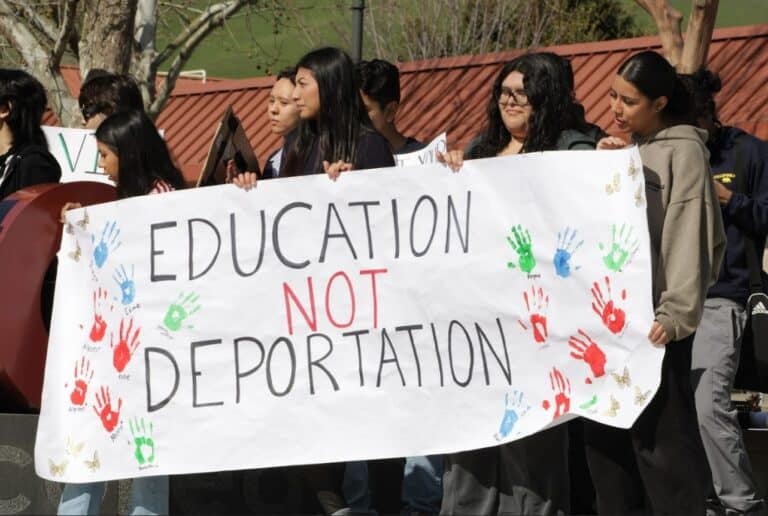
Imagine being the classmates who hear about it the next day. Or the teachers who have to help students process what just happened.
Unfortunately, Liam’s story is not an isolated one. In some communities, immigration enforcement activity has been increasing around schools and neighborhoods. School leaders in Minnesota reported agents following school buses, entering school parking lots, and detaining students or their family members nearby.
You Need IEP Data. You Also Need to Teach.
IEP progress monitoring has to get done, but it shouldn’t take hours. You need a system that’s simple enough to actually use in a real classroom.
Get teacher-created, ready-to-use tools that help you track IEP goals, document meaningful progress, and write progress reports faster, without adding more paperwork to your day. Save time, stay compliant.
When this happens, the ripple effects inside a school can be immediate.
Students may stop showing up to class because families are afraid to travel through their neighborhood. Teachers notice children who are suddenly distracted, withdrawn, or unusually emotional. Rumors spread quickly in hallways and group chats. Even students whose families are not directly affected can absorb the stress and fear circulating through their community.
For many children, school is supposed to be the safest and most predictable part of their day. When enforcement activity begins happening near schools (or when classmates suddenly disappear) the sense of safety can disappear with it.
That’s why trauma-informed practices matter so much in moments like these. Schools cannot control immigration policy or enforcement decisions. But they can control how they respond to the fear, uncertainty, and stress that students bring with them into the classroom.
And when communities are experiencing chaos and uncertainty, the way schools respond can make a real difference in whether students feel safe enough to learn.
What ICE Is Supposed to Do and Why That Matters in Schools
Immigration and Customs Enforcement (ICE) is the federal agency responsible for enforcing immigration laws in the United States. Their primary role is to identify, detain, and remove people who are believed to be violating immigration law.
One detail that many people don’t realize is that most immigration violations are civil offenses, not criminal ones. Simply being present in the United States without legal status is typically treated as a civil violation handled through immigration courts, not criminal court. It’s the same level offense as your car inspection being expired.
That means the process is technically similar to other civil legal matters (things like fines, regulatory violations, or administrative hearings) rather than criminal prosecution.
There are criminal immigration offenses, such as illegal re-entry after deportation or certain types of fraud. But for many people who end up in immigration proceedings, the underlying issue is a civil status violation like overstaying a visa or losing legal status.
Despite that distinction, immigration enforcement is often carried out by heavily armed, masked federal agents using tactics that look and feel very similar to criminal law enforcement. And in many communities right now, those tactics are happening in very public places such as neighborhoods, workplaces, court buildings, and sometimes even near schools.
Data from multiple analyses shows that most people (almost 80%) detained by ICE have no criminal convictions at all, meaning their only alleged violation is an immigration status issue. And of those who do have a criminal record, only 5% are violent criminals–most are traffic tickets and other minor offenses.
The end result of all of this chaos is something educators recognize immediately: community stress.
Schools may not control immigration policy, but they absolutely see the emotional and educational consequences inside their classrooms.
Is ICE even allowed in Schools?
Historically, immigration enforcement at schools was strongly discouraged. Since 2011, federal guidance treated places like schools, hospitals, and churches as “sensitive locations,” meaning Immigration and Customs Enforcement (ICE) agents were generally not supposed to conduct enforcement actions there except in very limited circumstances.
However, that guidance has recently changed. The federal government rescinded the sensitive locations policy, which means immigration agents are no longer formally restricted from making arrests at schools or other previously protected locations. In practice, agents are still expected to use discretion and follow the law, but schools are no longer automatically off-limits. Videos on social media show that there is a widespread pattern of this happening (not following the law, not having warrants, etc.)
While this activity is immoral and unethical, for the moment it remains legal.
That does not mean agents can freely enter classrooms or access students. Schools still have legal obligations to protect student privacy and safety. In most cases, law enforcement officials, including immigration agents, must present a valid judicial warrant or court order before school officials would allow them access to students or school records. Many districts also require that any request from law enforcement be reviewed by administrators or legal counsel before staff respond.
Because policies and procedures can vary by district and state, educators should follow their school’s official protocols and refer any law enforcement requests immediately to school administrators.
For many students—especially those from low-income families—schools provide critical supports like meals, counseling, and stability, making missed school days especially harmful. As a result, some school leaders are working to reassure families and clarify policies about student privacy and access to education, while others are still trying to figure out how to respond.
You may want to ask your local school board or district leaders what their policy is if immigration enforcement agents appear at or near a school. Many districts have procedures about who can interact with law enforcement, what documentation is required, and how student privacy is protected. Understanding those policies ahead of time can help families and staff know what to expect and ensure schools respond consistently and appropriately.
Why ICE Activity Can Be Traumatic for Students
Even when a child is not directly involved, immigration enforcement in a community can trigger intense stress.
Students may worry about:
• A parent being detained
• Family separation
• Losing housing or financial stability
• Friends suddenly disappearing from school
• Increased police or law enforcement presence
For some children, these fears lead to:
• anxiety and panic
• difficulty concentrating
• increased behavior issues
• sleep deprivation
• school avoidance or absenteeism
In other words, their nervous system is in survival mode, not learning mode.
Trauma-informed schools recognize this and respond accordingly.
What Educators Are Seeing in Schools
When immigration enforcement activity increases in a community, the impact often shows up in schools almost immediately.
Teachers and administrators in several districts have reported sudden drops in attendance after immigration raids or rumors of enforcement activity nearby. Some families choose to keep their children home because they are afraid to travel through their neighborhood, drive to school, or interact with authorities in public spaces. In other cases, students simply disappear from classrooms overnight when a parent has been detained or when families move quickly out of fear.
Even when enforcement actions do not happen directly at a school, the ripple effects can still be significant. Students talk to each other. They hear news reports at home or see posts on social media. Rumors spread quickly in hallways and group chats.
Teachers may start noticing changes in students who previously seemed settled and engaged. Some children become quieter or withdrawn. Others appear distracted or have difficulty concentrating during lessons. Emotional outbursts, increased anxiety, or sudden behavior changes can also appear when students are worried about what might happen to their family members.
School counselors often report an increase in students seeking reassurance or asking questions about whether their parents could be taken away. For younger children especially, the uncertainty can be confusing and frightening. They may not fully understand immigration policy, but they understand that adults around them are worried.
Educators in communities experiencing immigration enforcement activity frequently describe a sense of tension that spreads through the school environment. Even students whose families are not directly affected can absorb the stress circulating in their community.
When students are carrying fear or uncertainty, their ability to focus, regulate emotions, and engage in learning can be significantly affected. Schools that recognize these stress responses, and respond with support rather than punishment, are better able to help students regain a sense of safety and stability.
Trauma-Informed Recommendations for Supporting Students During ICE Activity
Trauma-informed practices can help schools maintain safe, stable learning environments, even when the broader community feels unpredictable.
Maintain Safe and Predictable Classrooms
Children feel safer when their day follows familiar patterns. During times of community stress, maintaining predictable routines can be one of the most powerful ways teachers support students.
Keeping the structure of the school day consistent helps reduce anxiety. Simple things (morning meetings, posted visual schedules, regular transitions) give students a sense that at least one part of their world is stable.
Teachers should communicate calmly and factually with students when questions arise. It is important to avoid repeating rumors or making promises about things that are outside the school’s control. If students express fear or uncertainty, acknowledging their feelings without escalating the situation can help them regulate emotionally.
Some students may also need brief breaks to calm down or regroup during the school day. Quiet, supervised spaces where students can step away and regulate their emotions can make a significant difference for children who are feeling overwhelmed.
Protect Student Privacy
Protecting student information becomes especially important when families are concerned about immigration enforcement.
Schools have legal obligations under federal privacy laws to safeguard student records. Teachers should never share personal information about students or their families with outside agencies unless required through proper legal channels.
If law enforcement or immigration officials request information from school staff, those inquiries should be directed immediately to designated administrators or district legal teams. Individual teachers should not feel responsible for handling those requests themselves.
Clear protocols help ensure that student privacy is respected and that staff members are protected as well.
Communicate Clearly With Families
Periods of uncertainty can lead to widespread rumors and misinformation within school communities. Clear communication from schools can help reduce fear and build trust with families.
When possible, schools should share updates through multiple channels and in the languages commonly spoken in the community. Providing consistent information about school policies, student privacy protections, and available supports can reassure families who may be worried about their children’s safety.
Some schools also connect families with community resources, including legal aid organizations, counseling services, and family support programs. While schools cannot provide legal advice, they can help ensure families know where to find reliable information.
Encouraging families to create emergency plans, such as identifying trusted caregivers for children and keeping important documents organized, can also help reduce stress during uncertain times. (That link has a blank template for an emergency plan)
Understand Your School’s Response Plan
Many districts have policies that outline how schools should respond if law enforcement or immigration officials appear on campus.
Teachers should be familiar with these procedures so they know what to do if enforcement activity occurs nearby. Understanding who to contact, how to report concerns, and how administrators will handle outside inquiries can help prevent confusion and unnecessary panic.
Having a clear response plan allows schools to respond calmly and consistently, rather than reacting to rumors or misinformation.
Strengthen Community Partnerships
Schools do not have to respond to these challenges alone.
Many communities have organizations that provide legal guidance, mental health support, and social services for immigrant families. Partnering with these organizations can help schools ensure families have access to reliable information and assistance when needed.
Cultural liaisons, community advocates, and family engagement coordinators can also help bridge communication gaps between schools and families who may feel hesitant to reach out.
Strong partnerships between schools and community organizations can provide an additional layer of support for students experiencing stress or uncertainty.
Support Students Academically During Difficult Times
When families are facing instability, students may struggle to keep up with academic expectations. Schools can help by offering reasonable flexibility without lowering overall learning goals.
Teachers may need to allow extra time for assignments, provide opportunities to make up missed work, or adjust deadlines when students are dealing with significant family stress. These adjustments recognize that circumstances outside of school can temporarily affect a student’s ability to focus on academics.
The goal is not to excuse learning altogether, but to ensure that students are not penalized for situations beyond their control.
When schools combine academic flexibility with emotional support, students are far more likely to stay engaged and continue making progress despite difficult circumstances.
Students With Anxiety, Depression, or Other Mental Health Needs
For some students, stress related to immigration enforcement doesn’t just create temporary worry, it can significantly worsen existing mental health challenges.
Many children already live with anxiety disorders, depression, ADHD, autism, or other emotional and behavioral needs. When something frightening is happening in their community, those challenges can become much more intense.
Students with anxiety may begin to perseverate on the possibility that something bad will happen to their family. They might repeatedly ask teachers questions about whether their parents will be safe, whether agents can come to school, or what happens if someone disappears. Even after being reassured, the thoughts can return again and again because, well, that’s how anxiety works.
Other students may show their stress differently. Some become withdrawn and quiet. Others become more irritable or emotional than usual. Teachers might notice a student who previously managed transitions well suddenly struggling with frustration, crying easily, or shutting down during class.
Depression can also surface during periods of uncertainty. Students may appear tired, disengaged, or uninterested in activities they previously enjoyed. They might struggle to focus on schoolwork or show little motivation to participate.
For students with disabilities, these reactions may be even more pronounced. A child who already has difficulty with emotional regulation, executive functioning, or sensory processing may find it much harder to cope when their sense of safety is disrupted.
This is why it is important for educators to recognize that sudden changes in behavior may not be a discipline issue, they may be a stress response.
When a student appears overwhelmed, connecting them with school counselors or mental health professionals can help them process their fears in a safe and supportive way. Teachers can also help by offering reassurance, maintaining predictable routines, and giving students space to calm down when emotions become intense.
In some cases, IEP teams may need to look closely at whether additional supports are needed. Counseling services, emotional regulation goals, or behavior supports may need to be adjusted when a student is experiencing heightened stress.
Above all, students who are perseverating on fears or showing signs of depression need to know that the adults around them are paying attention and taking their concerns seriously. A supportive school environment cannot remove the stress happening outside the building, but it can help students feel less alone while they navigate it.
IEP Considerations When ICE Raids are Affecting Students
When something significant is happening in a community—whether it’s immigration enforcement activity, community violence, or another stressful event—it can sometimes show up in a student’s behavior or emotional regulation at school. For students with IEPs, this may mean the team needs to take a closer look at whether current supports are still appropriate.
If a student already has anxiety or emotional regulation needs documented in their IEP, the first step may simply be to review the existing plan. Teams should consider whether new triggers or antecedents should be acknowledged. For example, if a student’s anxiety is now being triggered by fears related to family safety or immigration enforcement in the community, that context may need to be reflected in the student’s behavior plan or present levels. Identifying the trigger clearly can help ensure that staff understand why a behavior may be occurring and respond appropriately.
In some cases, the student’s existing supports may already address these concerns. Counseling services, check-ins with a trusted adult, access to calming spaces, or emotional regulation supports may already be built into the plan. When that is the case, the team may simply want to confirm that staff are aware of how those supports should be implemented when the student is experiencing increased stress.
For other students, community stress may bring about new behaviors or challenges that were not previously part of the IEP discussion. A student who previously managed well may suddenly show increased anxiety, difficulty focusing, emotional outbursts, or school avoidance. When this happens, the team should consider whether additional supports or adjustments are needed.
Trauma-informed practices can often be incorporated into an IEP as supports or accommodations. These might include access to a quiet regulation space, flexibility during periods of heightened stress, predictable routines, additional check-ins with staff, or counseling support. The goal is to help the student feel safe enough to re-engage with learning.
However, it is also worth noting that many of these strategies work best when they are implemented schoolwide. When trauma-informed practices are part of the broader school culture (consistent routines, supportive responses to behavior, and access to mental health supports) students often benefit without needing individualized accommodations for every element.
In those cases, the IEP team’s role may simply be to ensure that the student’s specific needs are still being monitored and that the school’s existing supports are working effectively. That said, I completely acknowledge that you can only hold a school or IEP team accountable to what is in the IEP, and it may make some parents uncomfortable to not have it in the IEP.
IEP teams should always focus on the same core question: What does this student need right now in order to access their education? When community stress begins affecting a child’s ability to learn, reviewing the IEP with that question in mind can help teams respond thoughtfully and appropriately.
How to Help
Most community efforts are at the grassroots level, so take a look at social media. There are groups providing groceries to families afraid to leave their homes. There are (white) parents who are driving their non-white neighborhood children to school, to lessen the chances of an interaction with ICE.
Many good things are happening, despite all this horror and tragedy and we mustn’t lose hope. Remember, only 22% of Americans voted for this. They are not, nor have they ever been, the majority. They’re loud–but they are not the majority.
Contacting Your Legislators About Immigration Enforcement Policies
Some families and educators also choose to raise their concerns with elected officials. Decisions about funding for agencies like Immigration and Customs Enforcement (ICE), as well as policies governing how immigration enforcement operates, are made at the federal level by Congress and the executive branch. That means U.S. senators and representatives ultimately decide how much funding the agency receives and what priorities that funding supports.
If community members believe current enforcement policies are affecting students, families, or schools, they can contact their legislators to share their perspective. This might include asking questions about immigration enforcement policies, requesting clarification about how federal funding is being used, or expressing support for changes to how enforcement is carried out. Constituents can typically reach their elected officials through phone calls, emails, town hall meetings, or written letters.
Again, don’t lose hope–most people do not want this. It will end. But let’s support our kids in the meantime.