Phonics Worksheets Bundle | CVC and Silent E Activities
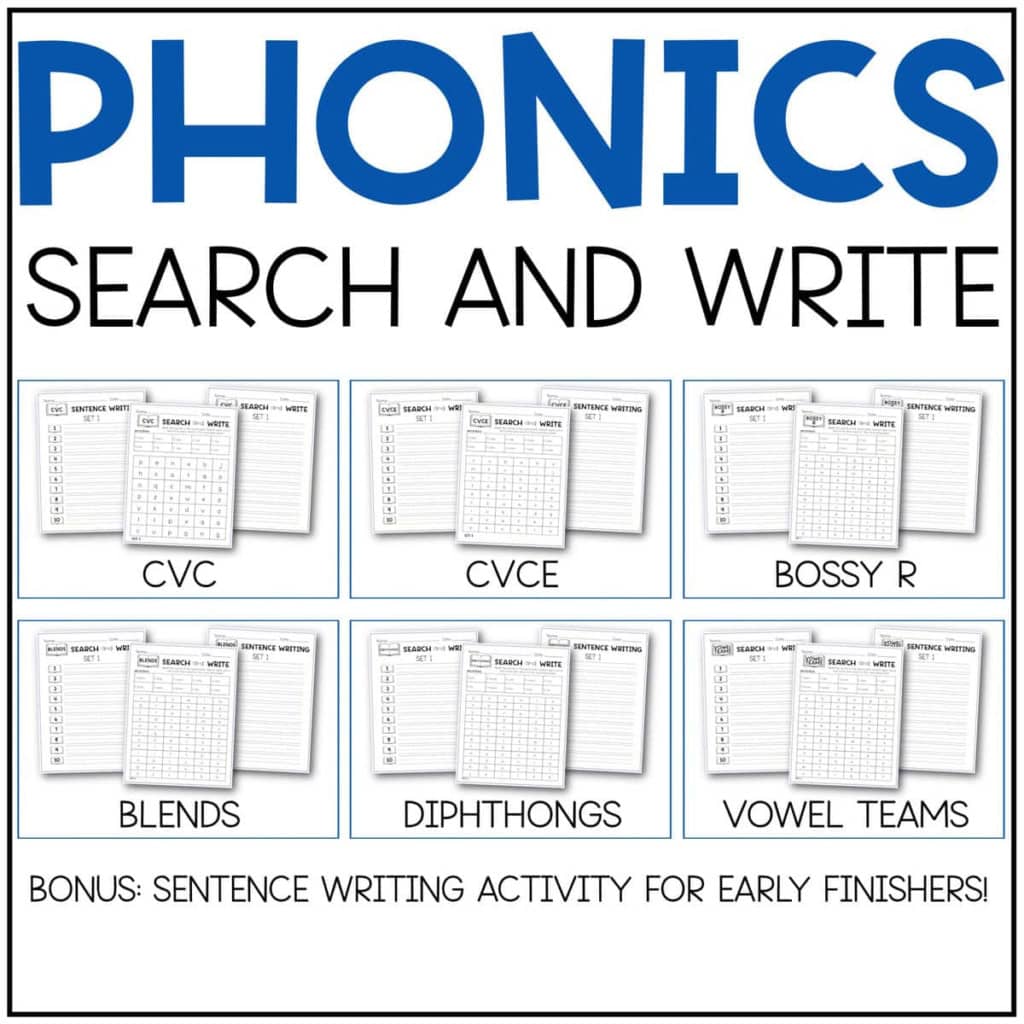
Looking for a low-prep phonics activity that helps students practice reading, spelling, and writing? This printable phonics worksheet packet includes over 100 no-prep pages designed to reinforce decoding skills while giving students meaningful opportunities to read, search for, write, and use words in sentences.
Students don’t just find the words—they record them and use them in writing, helping build both decoding and encoding skills.
These worksheets can complement kids who are working below grade level or struggling to crack the reading code. Whether you’re reinforcing decoding skills at home, supporting a dyslexia intervention, or trying to supplement what happens at school, having targeted practice like this in your back pocket is gold.
Phonics instruction isn’t just “nice to have,” it’s necessary for most struggling readers, especially those with dyslexia or language-based learning disabilities.
To complement these worksheets, you may want to use:
What I love most? These worksheets are super easy to use. No fancy instructions. Just simple, focused practice that builds on what a child actually needs.
Free PDF Phonics Worksheets
These worksheets require very little preparation, simply print and use. Answer keys are included, making them easy for classroom teachers, reading specialists, tutors, homeschool families, and substitute teachers.
What’s Included:
- CVC Word Searches
- CVC Sentence Writing
- CVC Recording Sheets
- Silent E Word Searches
- Silent E Sentence
- Writing
- Answer Keys Included
For Kindergarten:
- CCSS.ELA-LITERACY.RF.K.2 – Demonstrate understanding of spoken words, syllables, and sounds (phonemes).
- CCSS.ELA-LITERACY.RF.K.3 – Know and apply grade-level phonics and word analysis skills in decoding words.
- CCSS.ELA-LITERACY.RF.K.3.B – Associate the long and short sounds with common spellings.
- CCSS.ELA-LITERACY.RF.K.3.C – Read common high-frequency words by sight.
- CCSS.ELA-LITERACY.RF.K.3.D – Distinguish between similarly spelled words by identifying the sounds of the letters.
For Grade 1 (these are probably the strongest matches):
- CCSS.ELA-LITERACY.RF.1.2 – Demonstrate understanding of spoken words, syllables, and sounds.
- CCSS.ELA-LITERACY.RF.1.3 – Know and apply grade-level phonics and word analysis skills.
- CCSS.ELA-LITERACY.RF.1.3.A – Know the spelling-sound correspondences for common consonant digraphs (if your packet includes them).
- CCSS.ELA-LITERACY.RF.1.3.B – Decode regularly spelled one-syllable words.
- CCSS.ELA-LITERACY.RF.1.3.C – Know final -e and common vowel team conventions for long vowel sounds. (This covers your Silent E/CVCe activities.)
- CCSS.ELA-LITERACY.RF.1.3.G – Recognize and read grade-appropriate irregularly spelled words (only if you include any high-frequency words).
Writing (because students write words and sentences):
- CCSS.ELA-LITERACY.L.1.2 – Demonstrate command of capitalization, punctuation, and spelling when writing.
- CCSS.ELA-LITERACY.L.1.2.D – Use conventional spelling for words with common spelling patterns.