Fight, Flight, or Freeze in Autism: What It Means for IEP Behavior Plans
If you’ve ever been told your autistic child is “just doing it for attention,” or that elopement is “a behavior problem,” I want to slow that conversation down. Because sometimes it’s not attention-seeking.
Sometimes it’s a stress response. A nervous system response. The kind that shows up before your child has the skills (or the brain space) to make a different choice. And that matters, because it changes what the IEP team should do next.
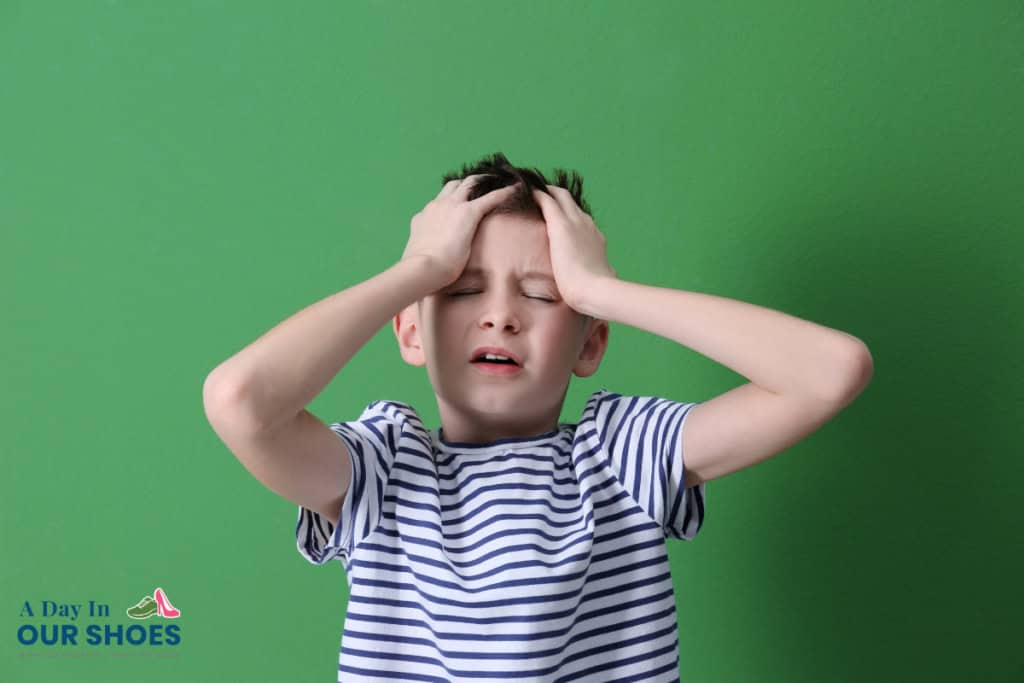
This isn’t about excusing unsafe behavior. It’s about understanding it well enough to plan for safety and teach replacement skills.
Autism Fight-or-Flight Isn’t Optional
Fight-or-flight is the body’s automatic survival response to a perceived threat. Automatic is the key word here. When the stress response kicks in, the body shifts into “survive” mode:
- Heart rate increases
- Muscles tense
- Blood flow changes
- Executive functioning drops
- Language can disappear
- Reasoning and “good choices” are suddenly out of reach
That’s why telling a dysregulated child to “calm down” rarely works. Their nervous system is already driving.
Neurotypical adults usually have a bigger toolbox for overriding that response. Many autistic kids don’t, especially if regulation and communication are delayed, or if the environment is repeatedly overwhelming.
Why Autistic Kids Elope
Autism Elopement is often the “flight” part of the stress response. And the trigger doesn’t have to be dramatic.
For an autistic child, “threat” can mean:
- Bright lights or visual clutter
- A sound no one else notices (humming, buzzing, scraping chairs)
- A room that feels too crowded, hot, or unpredictable
- Transitions that happen too fast
- Tasks they can’t do (or don’t understand) with no clear way to ask for help
- Anxiety, fatigue, hunger, a stomachache, bullying, or being corrected repeatedly
So yes, you may see “running.” But what’s often happening underneath is: “I need out of here right now.”
Impulse Control Isn’t a Switch
You know those videos where a toddler is told not to eat the candy… and then eats the candy? That’s not a character flaw. That’s impulse control developing in real time.
Impulse control is a skill. It’s learned over years. Many autistic kids struggle with:
- Pausing when stressed
- Predicting consequences in the moment
- Shifting from one demand to another
- Using language when overwhelmed
So elopement can look like “refusal” or “defiance,” but it often points to skill gaps:
- “I don’t know how to ask for a break.”
- “I don’t know how to tell you this hurts.”
- “I don’t know what you want, and I’m panicking.”
When the brain is flooded, the body moves first.
Don’t Forget Freeze
We talk about fight and flight a lot. But freeze is just as important and it gets missed because it looks quiet. Freeze can look like:
- Staring
- Shutting down
- Hiding under a desk
- Going silent or “nonverbal”
- Not responding to directions
- Appearing to “ignore” adults
This isn’t defiance. It’s the brakes slamming on. And it’s why behavior plans that only focus on stopping elopement can miss the bigger picture. Some kids run. Some melt down. Some go still.
All of them may be overwhelmed.
“Isn’t It Just Behavior?” Let’s Ask a Better Question
Sure. Sometimes it is behavior. But behavior is the what. It’s not the why. Example: a student bolts to the playground during math. The team says, “He’s avoiding work.”
Okay. But why?
- Is the work too hard?
- Is he missing foundational skills?
- Is the instruction inaccessible?
- Is the room overwhelming?
- Does he need movement before sitting?
- Is anxiety building every time math starts?
Avoidance is a message. Your job (and the IEP team’s job) is decoding it.
What This Means for FBAs and Behavior Plans
If a school team treats every incident as “noncompliance,” the plan usually becomes a list of consequences and adult control. And that often makes things worse. A strong plan starts with data and patterns:
- What happens right before the behavior?
- What does the student get or escape afterward?
- What setting factors are present (noise, transitions, unstructured time, task demands)?
- What skills are missing (communication, regulation, flexibility, coping strategies)?
That’s why a thorough Functional Behavior Assessment matters. Not a checkbox form. Not “he doesn’t like math.” A real look at triggers, function, and skill deficits.
What Helps (And What Usually Doesn’t)
If the entire plan is “verbal reminders,” you’re not solving the problem. You’re reacting to it. Supports that actually help tend to include:
- A thorough FBA that identifies the function and triggers
- Present Levels that include real data (frequency, location, time of day, patterns)
- Goals that teach replacement skills (asking for help, requesting breaks, self-regulation)
- Accommodations that prevent overload (visual supports, modified demands, transition supports)
- OT input when sensory or interoception needs are part of the pattern
- A safety plan that is written, specific, and realistic for the building
And yes: if it’s not written into the IEP, it’s not protected. It becomes optional. It becomes “when we can.”
Behavior Isn’t Disobedience
If your child was gagging or coughing from distress, no one would call that “attention-seeking.” When distress shows up as running, shutting down, or refusing, it’s easy for adults to misread it.
But the nervous system doesn’t care how the distress looks. Fight, flight, and freeze are reflexes. The “behavior” is the smoke.
The job is finding the fire, and then teaching safer, more sustainable ways to cope. If your child is eloping at school, make sure you also read: Elopement IEP Goals.