
Acquaintance vs Friendship: Teaching Friendship to Kids Who Struggle Socially.
Many kids struggle to tell the difference between someone who is being friendly and someone who is actually a friend. This matters more than most adults realize.
I work with families whose children assume that anyone who talks to them, sits near them, or jokes with them is a friend. Sometimes that misunderstanding leads to hurt feelings or confusion. Other times, it leads to children being teased, manipulated, or pulled into situations they don’t fully understand.
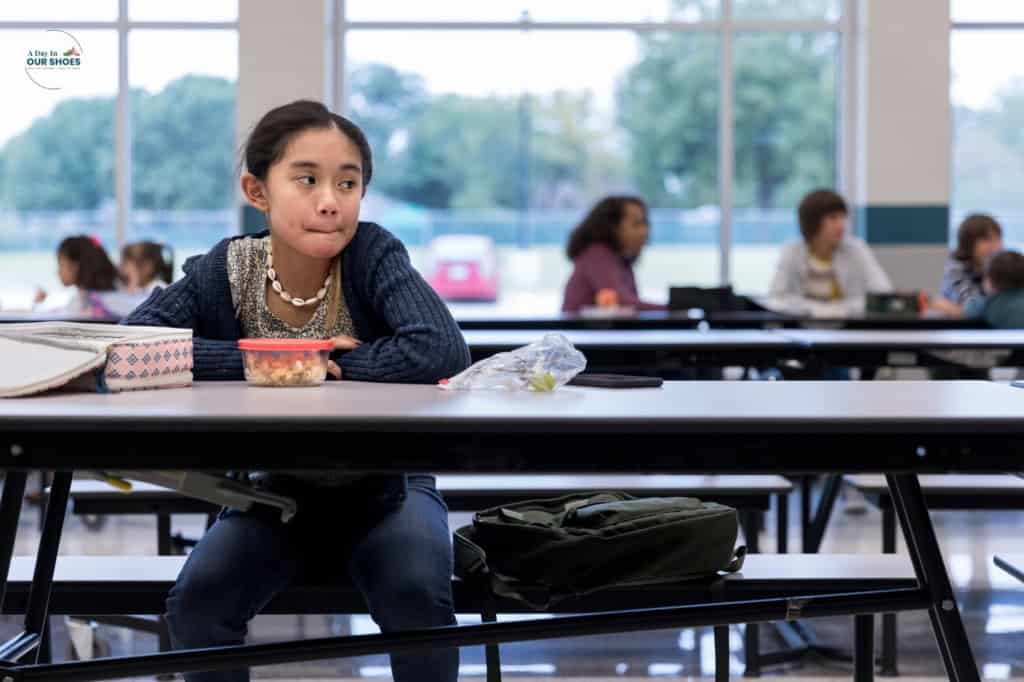
This post is for parents, educators, and caregivers who are trying to help kids—especially those who struggle with social cues, sarcasm, pragmatic language or peer dynamics—understand the difference between an acquaintance and a friend. Many parents don’t realize that difficulty making friends, reading social cues, or joining conversations can all be signs of a teenager struggling socially.
Acquaintances and friends are both part of a child’s social world, but they are not the same. Knowing how to tell the difference is an important social skill that affects safety, emotional well-being, and peer relationships over time.
- PDF: Social Skills Questions for Kids
- Improving Social Communication Skills (Pragmatics)
- PDF Social Stories about Friendship (Elementary and Middle/High School)
Why the Difference Between Acquaintances and Friends Matters
Defining acquaintances and friendships isn’t always straightforward. People use these words differently, and kids often assume they mean the same thing. But there are some common patterns that can help distinguish one type of relationship from the other.
An acquaintance is someone a child knows but does not know well. These relationships usually involve casual or situational interactions—seeing the same person at school, in an activity, or in a shared space. Conversations tend to stay on the surface, contact is infrequent, and there is little expectation of emotional support.
A friend, on the other hand, is someone a child has a deeper connection with. Friendships typically include shared interests, mutual effort, emotional support, and more consistent communication. Friends spend time together by choice, not just because they happen to be in the same place.
For many kids, especially those who struggle with social cues, this distinction is not obvious.
To help distinguish between the two, here are some key differences between acquaintances and friends:
| Acquaintances | Friends |
|---|---|
| Limited interactions | Regular interactions |
| Surface-level conversations | Deeper conversations |
| No emotional bond | Emotional bond |
| There is no obligation to spend time together | Desire to spend time together |
| No shared experiences | Shared experiences |
It’s important to note that these are generalizations; not everyone’s relationships fit neatly into these categories. Some people might have acquaintances with whom they are very close, while others might have friends with whom they do not share a strong emotional bond.
Why This Is Hard for Some Kids
Many children do not naturally display the social behaviors that are often expected in friendships. Skills like turn-taking in conversation, noticing another person’s interests, or recognizing when someone is being sarcastic or unkind can be difficult.
Some kids may focus intensely on their own interests and talk primarily about those topics, without realizing how that affects the interaction. Others may struggle with planning and initiation—things like suggesting an activity, organizing plans, or reaching out consistently. These challenges can make it harder to build and maintain friendships, even when the desire for connection is there.
And yet, these kids often need strong social connections more than anyone else. If you watch Forrest Gump as a special needs parent, it hits different than it did 30 years ago. There are moments when people are sarcastic, dismissive, or even cruel toward Forrest—but he interprets their words literally and assumes they are being friendly. It’s a familiar pattern for many kids who struggle with social cues, especially when intent and tone don’t match the words being used.
Why Friendships Matter Long-Term
If you follow this site, you know I pay attention to the work of Dan Buettner and his research on the Blue Zones—regions of the world where people live the longest, healthiest lives. Across cultures and continents, one factor consistently rises to the top: meaningful social relationships.
Healthy food, exercise, and medical care all matter. But long-term studies show that strong social connections and friendships play an even larger role in health and longevity. Chronic loneliness isn’t just emotionally painful, it has real consequences for mental and physical health over time.
That’s why helping kids understand the difference between acquaintances and friends isn’t about labeling relationships or forcing social behavior. It’s about teaching awareness, boundaries, and realistic expectations—skills that support emotional well-being now and into adulthood.
Characteristics of Acquaintances (and Why They Matter)
Acquaintances are people a child recognizes and interacts with in limited, situational ways. These relationships usually exist because of shared environments—school, activities, work, or social groups—not because of a close personal bond.
For kids, especially those who struggle with social cues, understanding what an acquaintance is helps set healthy boundaries.
Common features of acquaintances include:
- Surface-level interactions: Conversations tend to stay brief and factual. Topics might include shared activities, schoolwork, hobbies, or current events, but not personal feelings or private information.
- Limited emotional connection: Acquaintances are not the people a child turns to for comfort, advice, or emotional support. There is no expectation of confidentiality or loyalty.
- Context-dependent contact: These relationships usually exist only in certain settings. A child may chat easily with someone at school or an activity but have little interaction outside that environment.
Teaching kids to recognize acquaintances helps them understand who gets access to their time, emotions, and personal information—and who does not. This is a safety skill as much as a social one.
Characteristics of Friendship (and How They Develop)
Friendship is a deeper relationship that develops gradually through shared experiences, mutual effort, and trust. Unlike acquaintanceships, friendships are not defined by location or circumstance—they continue because both people choose to maintain them.
Key features of friendship include:
- Emotional connection and trust: Friends can share thoughts and feelings with each other and expect care, respect, and appropriate boundaries in return.
- Consistent, two-way communication: Friends check in with each other over time. Communication doesn’t have to be constant, but it is intentional. I often remind parents that all behavior is communication—including when someone does not respond or follow up.
- Shared experiences: Friendships grow through doing things together: playing games, working on projects, attending activities, or simply spending time side by side.
- Mutual support and respect: Friends respect each other’s boundaries, celebrate successes, and offer support during difficult moments.
Importantly, these skills do not appear all at once. Friendship is built in stages, and many kids need direct teaching and guided practice to move through those stages successfully.
When Friendship Reciprocity Is Hard: Theory of Mind and Social Understanding
Some kids genuinely want friends but struggle to reciprocate friendship skills in ways others expect. This is especially common for autistic kids and other children who struggle with social reasoning—not because they are uncaring, but because they experience social interactions differently.
One factor that often plays a role is theory of mind—the ability to recognize that other people have thoughts, feelings, perspectives, and expectations that may be different from one’s own.
When theory of mind is still developing, kids may not automatically notice:
- whether the other person is enjoying the conversation
- when it’s time to take turns speaking
- that someone else may want to talk about their own interests
- how their actions are being interpreted socially
This can make friendship feel confusing on both sides.
What This Looks Like in Real Life
Kids who struggle with reciprocity may:
- talk at length about their own interests without realizing the other person has disengaged
- assume that spending time near someone means a friendship already exists
- miss subtle cues like boredom, sarcasm, or discomfort
- expect loyalty or closeness before a relationship has had time to develop
None of this means the child is selfish or intentionally ignoring others. It means the social rules are not intuitive and must be taught explicitly.
Why “Just Be a Friend” Doesn’t Work
Well-meaning adults often tell kids:
- “You have to be a friend to have a friend”
- “Just listen more”
- “Think about how they feel”
For kids with theory-of-mind challenges, these statements are too abstract to be useful.
They need:
- concrete examples
- explicit instruction
- visual or verbal cues
- guided practice with feedback
Friendship skills aren’t absorbed through observation alone. They require teaching, repetition, and support.
Teaching Reciprocity Without Shame
The goal is not to force kids to mask or perform social behaviors that feel unnatural. The goal is to help them understand what others might expect in shared interactions, so they can make informed choices.
Helpful teaching approaches include:
- naming what the other person might be thinking or feeling
- pointing out cues in the moment (“Notice how they’re looking away”)
- practicing turn-taking in conversation with clear structure
- separating intent (“You weren’t being rude”) from impact (“They may have felt ignored”)
This keeps the focus on learning, not blame.
Teaching Personal Boundaries Without Offending Others
Many kids understand what a boundary is, but struggle to enforce one. Not because they don’t know their limits, but because they worry about hurting someone’s feelings, being seen as rude, or losing the relationship altogether. Most kids don’t avoid boundaries because they don’t need them; they avoid them because they’re afraid of social fallout.
For kids who already feel socially vulnerable, setting boundaries can feel risky. That’s why boundary-setting needs to be taught as a neutral social skill, not a confrontation.
Reframe Boundaries as Information, Not Rejection
One of the most helpful things we can teach kids is that a boundary is not an insult. It’s information.
Saying:
- “I don’t want to talk about that”
- “I need a break”
- “I’m not comfortable with that”
does not mean “I don’t like you.” It means “This doesn’t work for me right now.” Helping kids separate the message from the meaning they assume others will hear reduces anxiety and increases follow-through.
Teach Polite, Predictable Boundary Language
Many kids don’t set boundaries because they don’t know how to say it. Providing rehearsed, neutral phrases gives them a script to fall back on when emotions run high.
Examples include:
- “I’m not up for that today.”
- “I like hanging out, but I need some space right now.”
- “That topic makes me uncomfortable.”
- “I’m going to sit somewhere else for a bit.”
These statements are clear, respectful, and do not require justification.
Normalize That Discomfort Is Part of the Process
It’s important to tell kids the truth: Setting a boundary can feel awkward even when it’s appropriate. The goal is not to eliminate discomfort. The goal is to choose safety and self-respect over avoiding awkwardness.
Let kids know:
- feeling nervous doesn’t mean the boundary is wrong
- people who respect boundaries are showing you who they are
- discomfort fades faster than resentment or burnout
Practice Boundaries in Low-Stakes Situations
Boundary-setting is a skill. Skills improve with practice. Start with situations that feel manageable:
- choosing where to sit
- ending a conversation politely
- declining an invitation
- asking for quiet or space
Role-play these scenarios at home or in therapy so the language becomes familiar before it’s needed in real time.
Teach Kids What to Watch For After a Boundary Is Set
How someone responds to a boundary provides important information. Kids can be taught to notice:
- Does the person respect the limit?
- Do they push, guilt, or tease?
- Do they adjust their behavior?
This helps children learn that friendship includes respect, and that repeated boundary violations are a sign to reassess the relationship, not to try harder.
Why This Matters for Growing Friendships
Healthy friendships don’t form because kids never say no. They form because both people feel safe being honest.
When kids learn to set boundaries clearly and calmly, they’re not pushing people away—they’re creating the conditions for trust, mutual respect, and sustainable friendships. That’s not rude–it’s a life skill.
Teaching the Transition: From Acquaintance to Friend
Making friends is hard—even for adults. Moving from acquaintance to friendship takes time, effort, and emotional energy. For kids who already find social interaction exhausting or confusing, this process can feel overwhelming.
That doesn’t mean it’s impossible. It means it needs to be taught intentionally.
Increase Interaction (Without Overdoing It)
Friendships usually start with shared interests. Help your child notice what they have in common with others and practice low-pressure ways to interact more often.
Parents often need to create these opportunities:
- clubs or community groups
- library programs
- interest-based activities (LEGO clubs, gaming groups, sports, art)
You may also need to provide conversation starters or sentence frames, especially at first. For example:
- “Did you see the new movie/game?”
- “What did you think of that activity?”
- “Do you want to sit together at lunch?”
The goal is practice, not perfection.
Teach Reciprocity Explicitly
Friendship is a two-way relationship. This is an area where many kids struggle—not because they don’t care, but because reciprocity is abstract.
Parents can help by asking concrete questions:
- Did anyone seem interested in you today?
- Did someone text you? How did you respond?
- Who did you sit with? What did you talk about?
You can also help your child reflect on how it feels when someone shows interest in them, and how showing interest in others can build connection.
To have a friend, you have to practice being one.
Build Trust Slowly
Trust is an advanced friendship skill. It develops over time through reliability, honesty, and respectful behavior.
This includes:
- keeping promises
- respecting boundaries
- listening without judgment
- showing support when it’s appropriate
Not every acquaintance becomes a friend, and that’s okay. Before focusing on trust and emotional sharing, make sure your child has a solid foundation in conversation skills, boundaries, and recognizing social roles.
Social Circles Matter
Everyone needs a social circle, but building one can be harder for kids who communicate differently, look different, or process the world differently.
Sometimes parents have to help build the structure first. In many communities, parent-created groups—bowling leagues, gaming meetups, hobby clubs—become places where real friendships eventually grow.
The goal isn’t to force friendships. It’s to create opportunities for connection.
Acquaintances and Friends Serve Different Purposes
Acquaintances provide:
- exposure to different perspectives
- casual social interaction
- access to broader social networks
Friends provide:
- emotional support
- trust and belonging
- accountability and encouragement
Kids need both. Teaching the difference helps them set realistic expectations and avoid unnecessary hurt or confusion.
Can Friendship Be Addressed in an IEP?
Yes, but usually indirectly.
IEP teams are often hesitant to write goals that depend on another person’s behavior. However, schools can support friendship development by building in opportunities.
This might include:
- structured peer activities
- supported social groups
- clubs or shared-interest opportunities
- adult-guided practice with conversation and interaction
Kids don’t learn friendship skills in isolation. They learn them through guided experience. And experience requires opportunity.
Friendships grow when both people feel seen and valued. When kids understand that relationships involve shared attention, shared effort, and shared decision-making, they are better able to move from acquaintance-level interactions toward real connection.
For autistic kids and other social skills strugglers, learning reciprocity is not about changing who they are. It’s about giving them access to the unwritten rules that others often take for granted.
And like any complex skill, it improves with time, support, and meaningful opportunities to practice.